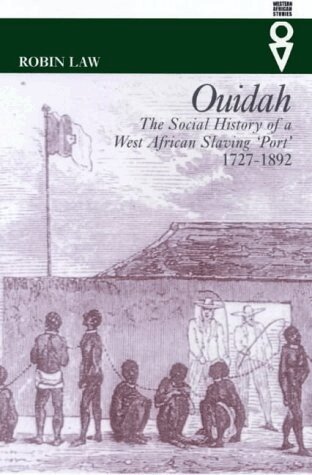
Häftad, Engelska, 2004
Ouidah
The Social History of a West African Slaving Port 1727-1892
Av Robin Law
Del i serien Western African Studies
367 kr
Beställningsvara. Skickas inom 7-10 vardagar. Fri frakt över 249 kr.
Beskrivning
Ouidah, an African town in Dahomey, now Benin, was the principal pre-colonial commercial centre of its region and this is the first detailed study of the town's history and its role in the Atlantic slave trade.Ouidah, an indigenous African town in the modern Republic of Benin, was the principal pre-colonial commercial centre of its region, and the second most important town of the Dahomey kingdom. It served as a major outlet for the export of slaves for the trans- Atlantic trade. Between the seventeenth and the nineteenth centuries Ouidah was the most important embarkation point for slaves in the region of West Africa known to outsiders as the 'Slave Coast'. Exporting over a million slaves, it was second only to Luanda in Angola for the embarkation of slaves in the whole of Africa.The author's central concerns are the organization of the African end of the slave trade, and the impact participation in the trade had on the historical development of the African societies involved. It shifts the focus from the viewpoint of the Dahomian monarchy, represented in previous studies, to the coast. Here is a well documented case study of pre-colonial urbanism, of the evolution of a merchant community, and in particular the growth of a group of private traders whose relations with the Dahomian monarchy grew increasingly problematic over time.North America: Ohio U Press
Produktinformation
- Utgivningsdatum: 2004-11-09
- Mått: 156 x 234 x 25 mm
- Vikt: 480 g
- Format: Häftad
- Språk: Engelska
- Serie: Western African Studies
- Antal sidor: 320
- Förlag: James Currey
- ISBN: 9780852554975
Utforska kategorier
Mer om författaren
Robin Law is Professor of African History at the University of Stirling.
Recensioner i media
This work is a masterful chronological history of a community, especially the history of its merchant families. Although grounded in archival research, the book's collection of oral traditions from descendants of the Ouidah merchants makes this study of an urban community unique. Especially important is the history of the Brazilians among them, because many of these merchants were ex-slaves themselves and Portuguese was the lingua franca.
Betyg & recensioner
0 recensioner
Inga recensioner tillgängliga.