• Fri frakt över 249 kr
  • •
  • Snabba leveranser
  • •
  • Billiga böcker
Kundservice

Du är på sajten för privatpersoner.

Företag, bibliotek eller offentlig verksamhet?

Du handlar på classic.bokus.com, där alla dina funktioner finns intakta.
Till classic.bokus.com
Bokus logotyp. Gå till startsidan.
  • Erbjudanden
  • Student
  • Topplistor
  • Barn & ungdom
  • Bokus Play
  • E-böcker
  • Ljudböcker
  • Pocketböcker
  • Spel och pussel

Pocketfynda! Hundratals böcker för 49 kr/st →

Sidfot

Mina sidor

    Hjälp

    • Kundservice
    • Vanliga frågor och svar
    • Frakt och leverans
    • Retur vid ångerrätt
    • Reklamera vara
    • Betalning
    • Köpvillkor
    • Allmänna villkor
    • Information om webbplatsens tillgänglighet

    Om Bokus

    • Om oss
    • Pressrum
    • För studenter
    • För företag
    • För bibliotek och offentlig verksamhet
    • För leverantörer
    • Hållbarhet

    Populärt

    • Aktuella erbjudanden
    • Presentkort
    • Studentlitteratur
    • Nya böcker
    • Topplistor
    • Signerade böcker
    • Engelska böcker

    Inspiration

    • Boktips
    • BookTok
    • Barnbokskaraktärer
    • Populära författare
    Logotyp för Bokus
    Följ oss på Facebook (extern länk)Följ oss på Instagram (extern länk)Följ oss på YouTube (extern länk)Följ oss på TikTok (extern länk)
    bokus @ CookiesAnpassa cookiesIntegritetspolicyKöpvillkor
    Till Citymail hemsida (extern länk)Till Budbee hemsida (extern länk)Till Postnord hemsida (extern länk)Till Schenker hemsida (extern länk)Till Early Bird hemsida (extern länk)Till Walleys hemsida (extern länk)
    1. Naturvetenskap och teknik
    2. Teknik och industri
    3. Tillverkningsteknik

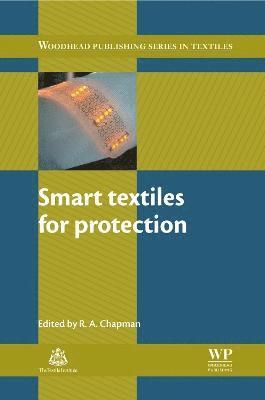
    Smart Textiles for Protection

    AvR Chapman

    Inbunden, Engelska, 2012

    Del i serien Woodhead Publishing Series in Textiles

    2 070 kr

    Beställningsvara. Skickas inom 10-15 vardagar. Fri frakt över 249 kr.

    Beskrivning

    Smart textiles are materials and structures that sense and react to environmental conditions or stimuli, and their integration into protective clothing has led to the development of products with greatly enhanced protective capabilities in hazardous situations. Smart textiles for protection provides a comprehensive analysis of smart materials used in producing protective textiles, and explores a wide range of end-use protective applications.

    Part one reviews smart materials and technologies. Beginning with an overview of smart textiles for protection, this section goes on to discuss types of materials, surface treatments and the use of nanofibres and smart barrier membranes. The application of sensors, actuators and computer systems in smart protective textiles is explored, followed by a review of biomimetic approaches to design. Part two investigates specific applications of smart textiles for protection. Smart technology for personal protective equipment and clothing, smart protective textiles for older people and smart high-performance textiles for protection in construction and geotechnical applications are all discussed in depth, as is the use of smart textiles in the protection of armoured vehicles and in protective clothing for fire fighters and first responders. The final chapter describes recent advances in chemical and biological protective clothing.

    With its distinguished editor and international team of expert contributors, Smart textiles for protection is an essential guide for all those involved in the design, development and application of protective smart textiles.

    • Provides a comprehensive analysis of smart materials used in producing protective textiles, and explores a wide range of end-use protective applications
    • Discusses types of materials, surface treatments and the use of nanofibres and smart barrier membranes as well as the application of sensors, actuators and computer systems in smart protective textiles
    • Investigates specific applications of smart textiles for protection, including smart high-performance textiles for protection in construction and geotechnical applications

    Produktinformation

    • Utgivningsdatum:2012-12-10
    • Mått:156 x 234 x undefined mm
    • Vikt:760 g
    • Format:Inbunden
    • Språk:Engelska
    • Serie:Woodhead Publishing Series in Textiles
    • Antal sidor:416
    • Förlag:Elsevier Science
    • ISBN:9780857090560

    Utforska kategorier

    • Tillverkningsteknik inom Naturvetenskap och teknik

    Mer om författaren

    Roger Chapman is a Technical Consultant based in Warwickshire. His background is in innovation in fibres and fabrics, especially for technical textiles. Prior to setting up his own company he was R&D Manager at Courtaulds. He is a chartered textile technologist with degrees in physics and business administration.

    Innehållsförteckning

    • Contributor contact detailsWoodhead Publishing Series in TextilesPart I: Smart materials and technologiesChapter 1: Smart textiles for protection: an overviewAbstract:1.1 Introduction1.2 Smart textile functions for protection1.3 European projects on smart protective textiles1.4 Protective textiles and comfort1.5 Other functions of smart textile systems1.6 Systex – a European coordination action for enhancing the breakthrough of intelligent textile systemsChapter 2: Types of smart materials for protectionAbstract:2.1 Introduction: smart materials for protection2.2 High-performance fibres for protective textiles2.3 Piezoelectric fibres, phase-change materials, and shape memory fibres2.4 Woven and knitted structures for protective textiles2.5 Nonwovens2.6 Barrier films and nanofibre membranes2.7 Carbon nanotubes2.8 Conclusion and future trendsChapter 3: Smart surface treatments for textiles for protectionAbstract:3.1 Introduction: the role of surfaces in smart fabrics for protection3.2 Surface grafting3.3 Coating techniques3.4 Other surface treatment methods3.5 Conclusion and future trendsChapter 4: The use of nanomaterials in smart protective clothingAbstract:4.1 Introduction4.2 Conventional materials used in protective clothing4.3 Use of nanoparticles in protective clothing4.4 Use of electrospun nanofibers and nanoparticles in protective clothing4.5 Applications of nanoparticles in protective textiles4.6 Smart textiles using nanoparticles4.7 Chameleon fibers4.8 Conclusion and future trends4.9 Sources of further information and adviceChapter 5: Smart barrier membranes for protective clothingAbstract:5.1 Introduction5.2 Principles and types of responsive barriers5.3 Principles and types of self-decontaminating barriers5.4 Advantages and challenges of responsive and self-decontaminating barriers5.5 Applications of responsive and self-decontaminating barriers5.6 Conclusion and future trends5.7 Sources of further information and advice5.8 AcknowledgmentsChapter 6: Sensors, actuators and computing systems for smart textiles for protectionAbstract:6.1 Introduction6.2 When textiles meet electronics6.3 Sensors in textiles6.4 Actuators in textiles6.5 Power6.6 Networks6.7 Future trends6.8 Design case study: neonatal monitoring6.9 Sources of further information and adviceChapter 7: Biomimetic approaches to the design of smart textiles for protectionAbstract:7.1 Introduction: smart material design in nature7.2 Biomimicry of smart protective textiles7.3 Conclusion and future trends7.4 AcknowledgementsPart II: Applications of smart textiles for protectionChapter 8: Smart technology for personal protective equipment and clothingAbstract:8.1 Introduction8.2 Types of personal protective equipment and clothing8.3 Applications of smart clothing in personal protective equipment8.4 Conclusion and future trends8.5 Sources of further information and adviceChapter 9: Smart protective textiles for older peopleAbstract:9.1 Introduction9.2 The demands of the changing body9.3 The clothing layering system9.4 Smart protective textiles for older people9.5 Usability of the technology interface9.6 Conclusion9.7 Sources of further information and adviceChapter 10: Smart high-performance textiles for protection in construction and geotechnical applicationsAbstract:10.1 Introduction10.2 Technical textiles for the construction and geotechnical sectors10.3 Incorporating sensors into smart textiles through the use of optical fibres10.4 Applications of smart textiles in construction10.5 Future trends: the Industrial Smart Materials Applications (ISMA) initiative10.6 Sources of further information and adviceChapter 11: Smart textiles for the protection of armoured vehiclesAbstract:11.1 Introduction11.2 Understanding impact behaviour11.3 Bullet-proof textile composites for armoured vehicles11.4 Using sensor networks in composites to measure impact behaviour and material performance in situ11.5 Conclusion11.6 Future trendsChapter 12: Protective clothing for firefighters and rescue workersAbstract:12.1 Introduction12.2 The Protection e-Textiles (PROeTEX) project12.3 Other firefighter-related European projects12.4 Simulation of the firefighter market12.5 The Viking fire protection suit with built-in thermal sensor technology12.6 The Tecknisolar firefighter garment12.7 ConclusionChapter 13: Advances in chemical and biological protective clothingAbstract:13.1 Introduction13.2 Current chemical and biological (CB) protective clothing13.3 Materials for chemical and biological (CB) protective clothing13.4 Technologies for next generation chemical and biological (CB) clothingIndex