• Fri frakt över 249 kr
  • •
  • Snabba leveranser
  • •
  • Billiga böcker
Kundservice

Du är på sajten för privatpersoner.

Företag, bibliotek eller offentlig verksamhet?

Du handlar på classic.bokus.com, där alla dina funktioner finns intakta.
Till classic.bokus.com
Bokus logotyp. Gå till startsidan.
  • Erbjudanden
  • Nyheter
  • Student
  • Topplistor
  • Barn & ungdom
  • Bokus Play
  • E-böcker
  • Pocketböcker
  • Spel & pussel

10% rabatt på allt med kod: NYSTART10 →

Sidfot

Mina sidor

    Hjälp

    • Kundservice
    • Vanliga frågor och svar
    • Frakt och leverans
    • Retur vid ångerrätt
    • Reklamera vara
    • Betalning
    • Köpvillkor
    • Allmänna villkor
    • Information om webbplatsens tillgänglighet

    Om Bokus

    • Om oss
    • Pressrum
    • För studenter
    • För företag
    • För bibliotek och offentlig verksamhet
    • För leverantörer
    • Hållbarhet

    Populärt

    • Aktuella erbjudanden
    • Presentkort
    • Studentlitteratur
    • Nya böcker
    • Topplistor
    • Signerade böcker
    • Engelska böcker

    Inspiration

    • Boktips
    • BookTok
    • Populära bokserier
    • Barnbokskaraktärer
    • Populära författare
    Logotyp för Bokus
    Följ oss på Facebook (extern länk)Följ oss på Instagram (extern länk)Följ oss på YouTube (extern länk)Följ oss på TikTok (extern länk)
    bokus @ CookiesAnpassa cookiesIntegritetspolicyKöpvillkor
    Till Citymail hemsida (extern länk)Till Budbee hemsida (extern länk)Till Postnord hemsida (extern länk)Till Schenker hemsida (extern länk)Till Early Bird hemsida (extern länk)Till Walleys hemsida (extern länk)
    1. Historia och arkeologi
    2. Historia
    3. Europas historia

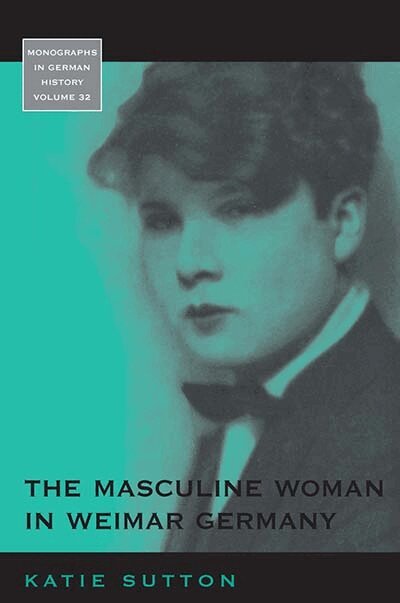
    Masculine Woman in Weimar Germany

    AvKatie Sutton

    Inbunden, Engelska, 2011

    Del i serien Monographs in German History

    1 916 kr

    Beställningsvara. Skickas inom 5-8 vardagar. Fri frakt över 249 kr.

    Fler format och utgåvor

    E-bok

    325 kr

    Häftad

    526 kr

    Beskrivning

    Throughout the Weimar period the so-called “masculinization of woman” was much more than merely an outsider or subcultural phenomenon; it was central to representations of the changing female ideal, and fed into wider debates concerning the health and fertility of the German “race” following the rupture of war. Drawing on recent developments within the history of sexuality, this book sheds new light on representations and discussions of the masculine woman within the Weimar print media from 1918–1933. It traces the connotations and controversies surrounding this figure from her rise to media prominence in the early 1920s until the beginning of the Nazi period, considering questions of race, class, sexuality, and geography. By focusing on styles, bodies and identities that did not conform to societal norms of binary gender or heterosexuality, this book contributes to our understanding of gendered lives and experiences at this pivotal juncture in German history.

    Produktinformation

    • Utgivningsdatum:2011-04-01
    • Mått:152 x 229 x 16 mm
    • Vikt:408 g
    • Format:Inbunden
    • Språk:Engelska
    • Serie:Monographs in German History
    • Antal sidor:220
    • Förlag:Berghahn Books
    • ISBN:9780857451200

    Utforska kategorier

    • Europas historia inom Historia och arkeologi
    • Genusvetenskap inom Samhälle och politik

    Mer om författaren

    Katie Sutton is Associate Professor of German and Gender Studies at the Australian National University, Australia. She is also the author of Sex between Body and Mind (2019) and Sexuality in Modern German History (2023), and numerous articles on German queer, trans and gender history and culture, as well as on and the history of sexual science.

    Recensioner i media

    “…a valuable contribution both to studies in cultural history and to the history of gender and sexuality in Weimar Germany, which will be of interest to scholars and students alike. Sutton's clearly written prose renders the book very accessible. By shifting the focus onto a previously largely neglected area, the study invites further examination of queer genders, both female and male, in pre-Nazi Germany, which, one hopes, will appear before long.”  ·  Seminar. Journal of Germanic Studies“Sutton has written an eloquent and theoretically sophisticated book documenting convincingly the ubiquity of the masculine woman in Weimar-era print media. By systematically combining analysis of mainstream media commentary with an examination of discussions within the female homosexual subculture, she adds an important new facet to the historiography on the New Woman.”  ·  Women’s History Review“…the author has produced a fine work that, as she notes, reinforces the virtues of gender as a useful category of historical analysis.”  ·  The Historian“..an important addition to the history of Germany and the history of human actors. It complements  an emerging body of literature that seeks to explore the complicated and often contradictory nature of Weimar’s social values, demonstrating that while the progressive democracy did much to modernize German society, it did not uniformly enable or support more liberal policies and outlooks.”  ·  American Historical Review“Sutton’s examination of women adopting male roles...teases out a series of fascinating paradoxes surrounding their enactment of greater sexual freedoms…[Her] work, beyond being a clearly written and compelling read, is also an important intervention into a largely unfamiliar body of Weimar literature, and her approach produces an in-depth and nuanced reading of the masculine woman.”  ·  The German Quarterly“The material, on which the research is based, is used in a novel way, as is the subject matter; both are convincingly linked through the theoretical framework. In this way the study not only offers a contribution to the cultural history, but also to sexuality and ‘queer’ gender analysis in the Weimar Republic. Of further merit is the exploration of continuities and changes with regard to National Socialism.”  ·  German Studies Review“Sutton’s study…engages well with relevant historiography…her reading of sub-cultural magazines to reveal the complexity of female masculinities in the Weimar Republic also provides evidence to support a belief in the Republic’s modernity. Her study, in an under-researched and specialist aspect of the New Woman, is a welcome addition to the ever-growing body of work on women and sexuality in the Weimar Republic and to Weimar’s cultural history.”  ·  German History“This meticulously researched study sheds new light on the dynamics of gender and the figure of the new woman in interwar Germany…[It] firmly situates the masculine woman within Weimar gender politics while providing a highly readable cultural history that resonates with present-day discourses of gender performance and flexibility. Highly recommended.”  ·  Choice“The author makes an important contribution to the scholarship in that she has worked through the printed material systematically to give an authoritative account of a female sub-culture under the republic. As far as I am aware, she is the first to do so in the English language. The book therefore fills an important gap in Weimar cultural/gender studies.”  ·  Anthony McElligott, University of Limerick“This work is a worthwhile examination of the masculine woman in an emergent field of female masculinity, a category that has not been addressed in the literature on Weimar to the extent that this work does. Sutton's text denies the reader the comfort of binary sexualities and instead unpacks the many-layered complexities and interplays of (mostly female) queer genders and sexualities."  ·  Vibeke Rützou Petersen, Drake University

    Innehållsförteckning

    • List of FiguresAcknowledgmentsIntroduction: "The Masculinization of Woman"Chapter 1. "Which One is the Man?" The Masculinization of Women's FashionsChapter 2. "In the Beginning there was Sport": The Masculinized Female AthleteChapter 3. "My Emil is Different": Queer Female Masculinities in the Weimar MediaChapter 4. The Trouser Role: Female Masculinity as PerformanceChapter 5. Beyond Berlin: Female Masculinities in Weimar FictionConclusionBibliography