• Fri frakt över 249 kr
  • •
  • Snabba leveranser
  • •
  • Billiga böcker
Kundservice

Du är på sajten för privatpersoner.

Företag, bibliotek eller offentlig verksamhet?

Du handlar på classic.bokus.com, där alla dina funktioner finns intakta.
Till classic.bokus.com
Bokus logotyp. Gå till startsidan.
  • Erbjudanden
  • Nyheter
  • Student
  • Topplistor
  • Barn & ungdom
  • Bokus Play
  • E-böcker
  • Pocketböcker
  • Spel & pussel

10% rabatt på allt med kod NYSTART10 →

Sidfot

Mina sidor

    Hjälp

    • Kundservice
    • Vanliga frågor och svar
    • Frakt och leverans
    • Retur vid ångerrätt
    • Reklamera vara
    • Betalning
    • Köpvillkor
    • Allmänna villkor
    • Information om webbplatsens tillgänglighet

    Om Bokus

    • Om oss
    • Pressrum
    • För studenter
    • För företag
    • För bibliotek och offentlig verksamhet
    • För leverantörer
    • Hållbarhet

    Populärt

    • Aktuella erbjudanden
    • Presentkort
    • Studentlitteratur
    • Nya böcker
    • Topplistor
    • Signerade böcker
    • Engelska böcker

    Inspiration

    • Boktips
    • BookTok
    • Populära bokserier
    • Barnbokskaraktärer
    • Populära författare
    Logotyp för Bokus
    Följ oss på Facebook (extern länk)Följ oss på Instagram (extern länk)Följ oss på YouTube (extern länk)Följ oss på TikTok (extern länk)
    bokus @ CookiesAnpassa cookiesIntegritetspolicyKöpvillkor
    Till Citymail hemsida (extern länk)Till Budbee hemsida (extern länk)Till Postnord hemsida (extern länk)Till Schenker hemsida (extern länk)Till Early Bird hemsida (extern länk)Till Walleys hemsida (extern länk)
    1. Samhälle och politik
    2. Sociologi och antropologi
    3. Sociologi

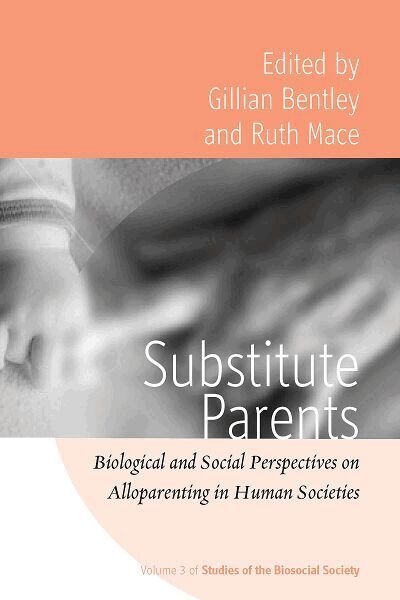
    Substitute Parents

    Biological and Social Perspectives on Alloparenting in Human Societies

    AvGillian Bentley,Ruth Mace

    Häftad, Engelska, 2012

    Del i serien Rethinking Biosocial Anthropology

    582 kr

    Beställningsvara. Skickas inom 5-8 vardagar. Fri frakt över 249 kr.

    Beskrivning

    From a comparative perspective, human life histories are unique and raising offspring is unusually costly: humans have relatively short birth intervals compared to other apes, childhood is long, mothers care simultaneously for many dependent children (other apes raise one offspring at a time), infant mortality is high in natural fertility/mortality populations, and human females have a long post-reproductive lifespan. These features conspire to make child raising very burdensome. Mothers frequently defray these costs with paternal help (not usual in other ape species), although this contribution is not always enough. Grandmothers, elder siblings, paid allocarers, or society as a whole, help to defray the costs of childcare, both in our evolutionary past and now. Studying offspring care in a various human societies, and other mammalian species, a wide range of specialists such as anthropologists, psychologists, animal behaviorists, evolutionary ecologists, economists and sociologists, have contributed to this volume, offering new insights into and a better understanding of one of the key areas of human society.

    Produktinformation

    • Utgivningsdatum:2012-04-01
    • Mått:152 x 229 x 20 mm
    • Vikt:499 g
    • Format:Häftad
    • Språk:Engelska
    • Serie:Rethinking Biosocial Anthropology
    • Antal sidor:372
    • Förlag:Berghahn Books
    • ISBN:9780857456410

    Utforska kategorier

    • Sociologi inom Samhälle och politik

    Mer om författaren

    Gillian Bentley is a biological anthropologist and reproductive ecologist and a Royal Society Research Fellow at University College London. Her prior work focused on explaining why different human populations occupying a range of environments have varying levels of reproductive hormones. She now directs projects that interface with reproduction and reproductive health, working with the migrant Bangladeshi community in London. Recent publications include Infertility in the Modern World: Present and Future Prospects, edited with C.G.N. Mascie-Taylor (Cambridge University Press, 2000).

    Recensioner i media

    “[This book] brings together high-quality papers from many different fields: endocrinology, evolutionary biology, demography, economics, psychology, sociology, anthropology… It can be seen as a practical tool for researchers in the field, and it provides a large amount of data across a wide range of populations and helps to find a common ground between theories emerging from different fields. It is the kind of book that will never end up in the last dusty row of your shelves because you will continually refer to it, picking up here and there empirical and theoretical data for the next decades.”  ·  BioOne. Research Evolved

    Innehållsförteckning

    • PrefacePrologueSarah HardyIntroductionGillian R. Bentley and Ruth MacePART I: ALLOPARENTAL STRATEGIESChapter 1. Biological basis of alloparental behaviour in animalsNancy G. Solomon and Loren D. HayesChapter 2. Family matters: kin, demography and child health in a rural Gambian populationRebecca Sear and Ruth MaceChapter 3. Does it take a family to raise a child? Cooperative breeding in humans using the example of Maya subsistence agriculturalistsKaren L. KramerChapter 4. Changing times for the Argentine Toba: Who cares for the baby now?Claudia ValeggiaChapter 5. Who minds the baby? Beng perspectives on mothers, neighbours, and strangers as caretakersAlma GottliebChapter 6. Economic perspectives on alloparentingGillian PaullChapter 7. The school as parentBerry MayallChapter 8. The parenting and substitute parenting of young childrenHelen PennChapter 9. Adoption, adopters and adopted childrenDavid HoweChapter 10. Surrogacy: The experiences of commissioning couples and surrogate mothersEmma LycettPART II: THE EFFECT OF ALLOPARENTING ON CHILDRENChapter 11. Alloparenting in the context of HIV/AIDS in southern Africa: Complex strategies for CareLorraine van Blerk and Nicola AnsellChapter 12. Alloparenting and the ontogeny of HPA stress response among stepchildrenMark V. FlinnChapter 13. Separation stress in early childhood: Harmless side effect of modern caregiving practices or risk factor for development?Joachim BenselChapter 14. Quality, quantity and type Of child care: Effects on child development in the USAJay BelskyChapter 15. ‘It feels normal that other people are split up but not YOUR Mum and Dad’: Divorce through the Eyes of ChildrenMargaret RobinsonBibliographyIndex