• Fri frakt över 249 kr
  • •
  • Snabba leveranser
  • •
  • Billiga böcker
Kundservice

Du är på sajten för privatpersoner.

Företag, bibliotek eller offentlig verksamhet?

Du handlar på classic.bokus.com, där alla dina funktioner finns intakta.
Till classic.bokus.com
Bokus logotyp. Gå till startsidan.
  • Erbjudanden
  • Nyheter
  • Student
  • Topplistor
  • Barn & ungdom
  • Bokus Play
  • E-böcker
  • Pocketböcker
  • Spel & pussel

10% studentrabatt med kod TERM26

Sidfot

Mina sidor

    Hjälp

    • Kundservice
    • Vanliga frågor och svar
    • Frakt och leverans
    • Retur vid ångerrätt
    • Reklamera vara
    • Betalning
    • Köpvillkor
    • Allmänna villkor
    • Information om webbplatsens tillgänglighet

    Om Bokus

    • Om oss
    • Pressrum
    • För studenter
    • För företag
    • För bibliotek och offentlig verksamhet
    • För leverantörer
    • Hållbarhet

    Populärt

    • Aktuella erbjudanden
    • Presentkort
    • Studentlitteratur
    • Nya böcker
    • Topplistor
    • Signerade böcker
    • Engelska böcker

    Inspiration

    • Boktips
    • BookTok
    • Populära bokserier
    • Barnbokskaraktärer
    • Populära författare
    Logotyp för Bokus
    Följ oss på Facebook (extern länk)Följ oss på Instagram (extern länk)Följ oss på YouTube (extern länk)Följ oss på TikTok (extern länk)
    bokus @ CookiesAnpassa cookiesIntegritetspolicyKöpvillkor
    Till Citymail hemsida (extern länk)Till Budbee hemsida (extern länk)Till Postnord hemsida (extern länk)Till Schenker hemsida (extern länk)Till Early Bird hemsida (extern länk)Till Walleys hemsida (extern länk)
    1. Ekonomi och Ledarskap
    2. Nationalekonomi

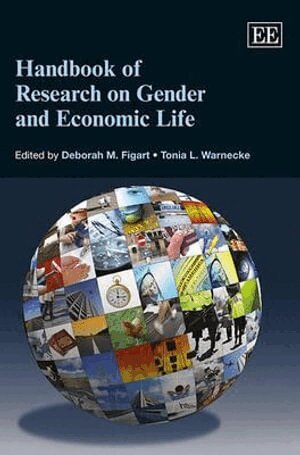
    Handbook of Research on Gender and Economic Life

    AvDeborah M. Figart,Tonia Warnecke

    Inbunden, Engelska, 2013

    3 983 kr

    Beställningsvara. Skickas inom 5-8 vardagar. Fri frakt över 249 kr.

    Beskrivning

    The excellent list of themes and chapters in this volume reflects the maturity reached by feminist economics in its different dimensions. Based on the notion of social provisioning for all as the basic objective of economics, they represent a challenge to conventional economic thought and they show the importance of understanding theory, institutions, empirical work, and policy from a gender perspective. The global perspective provided through themes and authors is a very useful contribution to the literature.'- Lourdes Benería, Cornell University, US'Standard economics has a narrow and distorted vision of what 'the economy' is, and how it works. Gender scholars are on the forefront of developing better, more encompassing models of human provisioning for well-being. This volume presents a wonderful sampling of these new theoretical and empirical developments.'- Paula England, New York University, US'This is an impressive collection that delves deeply and broadly into the myriad ways that gender shapes and alters economic lives and illuminates complex facets of the economic and social provisioning process across the globe. The chapters, by an exciting variety of researchers, policy analysts, and practitioners from numerous fields, present a consistent and persuasive vision of economic well-being as critical to the flourishing of all people.'- Myra H. Strober, Stanford University, USIn the aftermath of global economic downturn, it has never been more important to understand how gender relates to economic life and well-being. This interdisciplinary collection of original research details key areas of intersection, provides a comprehensive overview of the current state of research and proposes avenues for further investigation.The Handbook illuminates complex facets of the economic and social provisioning process across the globe. The contributors - academics, policy analysts and practitioners from wide-ranging areas of expertise - discuss the methodological approaches to, and analytical tools for, conducting research on the gender dimension of economic life. They also provide analyses of major issues facing both developed and developing countries. Topics explored include civil society, discrimination, informal work, working time, central bank policy, health, education, food security, poverty, migration, environmental activism and the financial crisis.Economists, sociologists and political scientists will find this book to be an invaluable research tool, as will academics, researchers and students with an interest in economics - particularly feminist economics - gender studies and global studies.Contributors: R. Albelda, N. Banks, D.K. Barker, S. Bergeron, H. Boushey, E. Braunstein, S. Charusheela, Z. Emami, D.M. Figart, A. Gaye, J. Ham, C. Harders, A. Hegewisch, E. Hirsh, H. Hollingdale, B.E. Hopkins, M. Kim, E.M. King, J. Klugman, M. Kovacevic, K. Krupp, D. Lallement, H. Liepmann, P. Madhivanan, N. Mansour, E. McCrate, L. McIntyre, N. Menon, J.A. Nelson, V.T. Nguyen, A. North, P.E. Perkins, V.S. Peterson, A. Philipose, J. Plantenga, M. Power, C. Remery, K. Rondeau, M. Saffar, S. Seguino, N. Stecy-Hildebrandt, E. Unterhalter, Y. van der Meulen Rodgers, I. van Staveren, T.L. Warnecke, R. Watterson, D. Weichselbaumer, B. Young, E. Zambrano

    Produktinformation

    • Utgivningsdatum:2013-08-30
    • Mått:169 x 244 x undefined mm
    • Format:Inbunden
    • Språk:Engelska
    • Förlag:Edward Elgar Publishing Ltd
    • ISBN:9780857930941

    Utforska kategorier

    • Nationalekonomi inom Ekonomi och Ledarskap
    • Genusvetenskap inom Samhälle och politik

    Mer om författaren

    Edited by Deborah M. Figart, The Richard Stockton College of New Jersey, US and Tonia Warnecke, George D. and Harriet W. Cornell Chair and Professor of Social Entrepreneurship, Department of Social Entrepreneurship, Rollins College, USA

    Recensioner i media

    This volume brings together various theoretical and empirical contributions of well-known feminist economists covering a wide range of time-appropriate topics across countries. They include formal and informal labor market participation, the care economy, employment policies that affect women, and education, health and welfare. A must read for faculty, students, and practitioners of economics, feminist economics, sociology, and public and health policy... Highly recommended. --S. Chaudhuri, ChoiceThe Handbook of Research on Gender and Economic Life edited by Debrorah Figart and Tonia Warnecke is an insightful compilation of 33 articles describing the research on the interactions between gender and economic life. It seeks to show how gender permeates every facet of economic life (the ''process of provisioning for well-being'') even though it is routinely disregarded by mainstream neoclassical models. The Handbook of Research on Gender and Economic Life is a grand success. Each chapter evaluates an area where gender is missing in economic models, where policy need to be addressed, and/or where stylized facts exemplify the central role gender plays. The strength of the Handbook of Research on Gender and Economic Life lies in its breadth of coverage. The easy-to-read, well-written, and non-technical chapters would be ideal for a class on gender economics, globalization, or women's studies. The Handbook of Research on Gender and Economic Life provides a comprehensive evaluation of gender economics. It would be difficult to find a student who could not find a topic appealing to his or her particular interests. --Erin George, Eastern Economic Journal

    Innehållsförteckning

    • Contents:ForewordDiane ElsonIntroductionDeborah M. Figart and Tonia L. WarneckePART I: ANALYTICAL TOOLS1. A Social Provisioning Approach to Gender and Economic LifeMarilyn Power2. Feminist Economics as a Theory and MethodDrucilla K. Barker3. IntersectionalityS. Charusheela4. Gender, Well-being and Civil SocietyNisrine Mansour5. Gender and CaringJulie A. Nelson6. Teaching and Learning for Economic LifeZohreh EmamiPART II: INSTITUTIONAL CONTEXTS FOR PROVISIONING7. Gender and Provisioning under Different Capitalisms Barbara E. Hopkins8. International Development Institutions, Gender and Economic LifeSuzanne Bergeron9. Infrastructure and Gender EquityDominique Lallement10. How Gendered Institutions Constrain Women’s EmpowermentIrene van StaverenPART III: INFORMAL AND FORMAL WORK11. Informal WorkV. Spike Peterson12. Gender Inequality in the Workplace Elizabeth Hirsh, Hazel Hollingdale and Natasha Stecy-Hildebrandt13. Occupational Segregation and the Gender Wage Gap in the USAriane Hegewisch and Hannah Liepmann14. Race and Ethnicity in the WorkplaceMarlene Kim15. Discrimination in Gay and Lesbian LivesDoris WeichselbaumerPART IV: EMPLOYMENT POLICIES16. Low-wage Mothers on the Edge in the USRandy Albelda17. Employer-oriented Schedule Flexibility, Gender and Family CareElaine McCrate18. Work–Family Reconciliation Policies in EuropeJanneke Plantenga and Chantal Remery19. The Role of the Government in Work–Family Conflict in the USHeather BousheyPART V: MACROECONOMIC POLICIES, FINANCE AND CREDIT20. From Micro-level Gender Relations to the Macro Economy and Back AgainStephanie Seguino21. Central Bank Policy and GenderElissa Braunstein22. Credit and Self-employmentNidhiya Menon and Yana van der Meulen Rodgers23. Gender, Debt and the Housing/Financial CrisisBrigitte YoungPART VI: HUMAN DEVELOPMENT, EDUCATION AND HEALTH24. Measuring Gender Disparities in Human DevelopmentAmie Gaye, Jeni Klugman, Milorad Kovacevic, Sarah Twigg and Eduardo Zambrano25. Girls’ Schooling and the Global Education and Development AgendaElaine Unterhalter and Amy North26. Intersecting Sources of Education InequalityElizabeth M. King and Vy T. Nguyen27. The Health of the World’s WomenPurnima Madhivanan and Karl Krupp28. A Case of Gendered Hazards and Health Effects for Ultra-poor WomenRita Watterson, Lynn McIntyre and Krista Rondeau29. Gender and Food SecurityAnandita Philipose and Mishka SaffarPART VII: CONTEMPORARY GLOBAL ISSUES30. Family Migration in the USNina Banks31. Environmental Activism and GenderPatricia E. Perkins32. Engendering Peace, Conflict and ViolenceCilja Harders33. Trafficking and GenderJulie HamIndex