• Fri frakt över 249 kr
  • •
  • Snabba leveranser
  • •
  • Billiga böcker
Kundservice

Du är på sajten för privatpersoner.

Företag, bibliotek eller offentlig verksamhet?

Du handlar på classic.bokus.com, där alla dina funktioner finns intakta.
Till classic.bokus.com
Bokus logotyp. Gå till startsidan.
  • Erbjudanden
  • Nyheter
  • Student
  • Topplistor
  • Barn & ungdom
  • Bokus Play
  • E-böcker
  • Pocketböcker
  • Spel & pussel

10% rabatt på allt med kod NYSTART10 →

Sidfot

Mina sidor

    Hjälp

    • Kundservice
    • Vanliga frågor och svar
    • Frakt och leverans
    • Retur vid ångerrätt
    • Reklamera vara
    • Betalning
    • Köpvillkor
    • Allmänna villkor
    • Information om webbplatsens tillgänglighet

    Om Bokus

    • Om oss
    • Pressrum
    • För studenter
    • För företag
    • För bibliotek och offentlig verksamhet
    • För leverantörer
    • Hållbarhet

    Populärt

    • Aktuella erbjudanden
    • Presentkort
    • Studentlitteratur
    • Nya böcker
    • Topplistor
    • Signerade böcker
    • Engelska böcker

    Inspiration

    • Boktips
    • BookTok
    • Populära bokserier
    • Barnbokskaraktärer
    • Populära författare
    Logotyp för Bokus
    Följ oss på Facebook (extern länk)Följ oss på Instagram (extern länk)Följ oss på YouTube (extern länk)Följ oss på TikTok (extern länk)
    bokus @ CookiesAnpassa cookiesIntegritetspolicyKöpvillkor
    Till Citymail hemsida (extern länk)Till Budbee hemsida (extern länk)Till Postnord hemsida (extern länk)Till Schenker hemsida (extern länk)Till Early Bird hemsida (extern länk)Till Walleys hemsida (extern länk)
    1. Naturvetenskap och teknik
    2. Geovetenskap
    3. Miljövetenskap och miljöpolitik

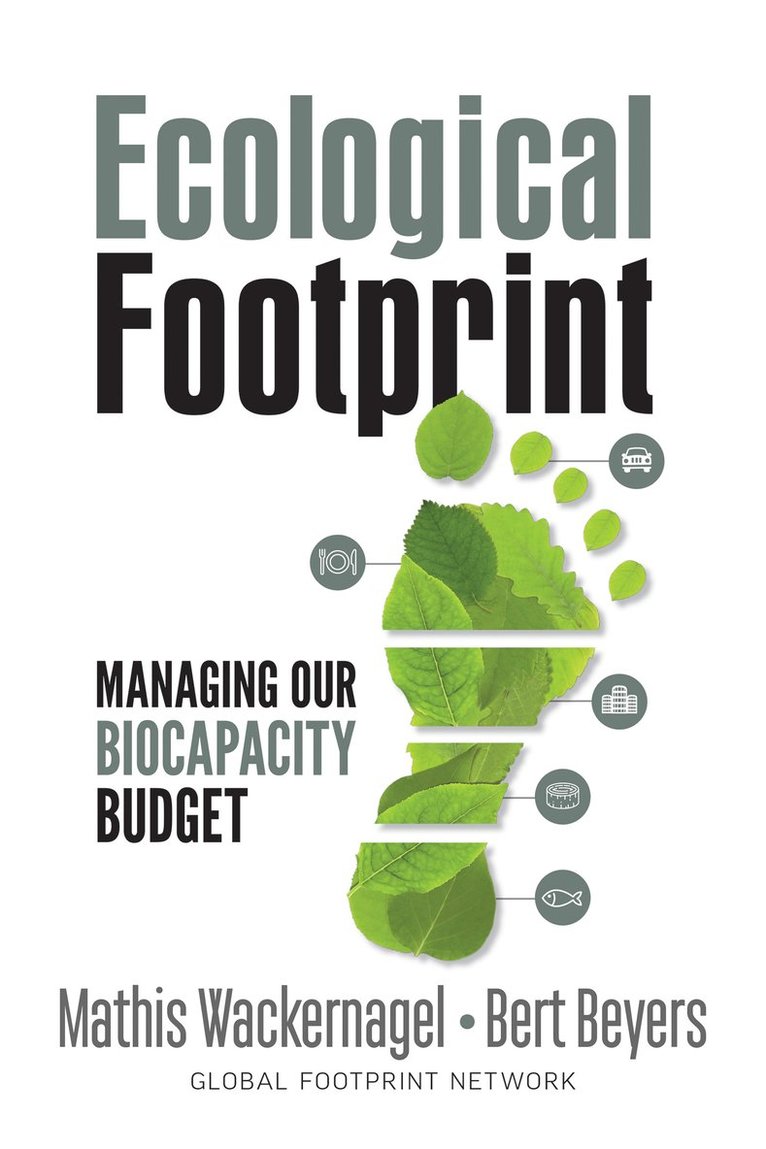
    Ecological Footprint

    Managing Our Biocapacity Budget

    AvMathis Wackernagel,Bert Beyers

    Häftad, Engelska, 2019

    188 kr

    Beställningsvara. Skickas inom 5-8 vardagar. Fri frakt över 249 kr.

    Beskrivning

    The only metric that tracks how much nature we have – and how much nature we useEcological Footprint accounting, first introduced in the 1990s and continuously developed, continues to be the only metric that compares overall human demand on nature with what our planet can renew — its biocapacity — and distils this into one number: how many Earths we use.Our economy is running a Bernie Madoff-style Ponzi scheme with the planet. We use future resources to run the present, using more than Earth can replenish. Like any such scheme, this works for a limited time, followed by a crash.Avoiding ecological bankruptcy requires rigorous resource accounting — a challenging task, but doable with the right tools.Ecological Footprint provides a complete introduction, covering:Footprint and biocapacity accountingData and key findings for nationsWorldwide examples including businesses, cities, and countriesStrategies for creating regenerative economiesWhether you’re a student, business leader, future-oriented city planner, economist, or have an abiding interest in humanity’s future, Footprint and biocapacity are key parameters to be reckoned with and Ecological Footprint is your essential guide.AWARDSSILVER | 2020 Eric Zencey PrizeSILVER | 2019 Nautilus Book Awards: Ecology & EnvironmentFINALIST | 2019 Foreword INDIES: Ecology & Environment

    Produktinformation

    • Utgivningsdatum:2019-09-03
    • Mått:152 x 229 x 14 mm
    • Vikt:585 g
    • Format:Häftad
    • Språk:Engelska
    • Antal sidor:288
    • Förlag:New Society Publishers
    • ISBN:9780865719118
    • Originaltitel:Footprint
    • Översättare:Katharina Rout
    • Utmärkelser:Short-listed for Foreword INDIE 2019 (United States)

    Utforska kategorier

    • Miljövetenskap och miljöpolitik inom Naturvetenskap och teknik
    • Miljöekonomi inom Ekonomi och Ledarskap

    Mer om författaren

    Mathis Wackernagel, born in Basel, Switzerland, is co-creator of the Ecological Footprint and president of Global Footprint Network, which was named one of the World’s 100 Top NGOs by The Global Journal. Wackernagel has worked on sustainability with governments, corporations, and international NGOs on six continents, and has lectured at more than a hundred universities. He previously served as the director of the Sustainability Program at Redefining Progress in California and ran the Centro de Estudios para la Sustentabilidad at Anáhuac University in Mexico. Wackernagel has authored or contributed to over one hundred peer-reviewed papers, numerous articles and reports, and various books on sustainability including the bestselling Our Ecological Footprint. With dozens of international awards and accolades for his pioneering work, he has been identified as a leader who is driving the world’s most significant problems to zero. He lives in Oakland, CA. www.footprintnetwork.org Bert Beyers, born in Mönchengladbach, Germany, is a senior editor at the Norddeutscher Rundfunk in Hamburg. For several decades, questions of ecology and future have been his professional passion. He has published widely including a book with Franz Josef Radermacher on survival in the 21st century entitled Welt mit Zukunft: Die ökozoziale Perspektive. He lives in Hamburg, Germany.

    Innehållsförteckning

    • Prelude Footprint — Why? (Introduction) Part I: Footprint — The Tool1. Area as Currency — How Much Biocapacity Does a Person Need? 2. Ecological Hinterland — How Much Biocapacity Does a City Need? 3. Croplands, Forests, and Oceans — How Much Biocapacity Do We Have? 4. One Planet — Ecological Limits and Then What? 5. Footprint as Compass — How Much Biocapacity Do We Need for a Good Life? Part II: Footprint — Challenges Defining the 21st Century6. End Overshoot! — Communication Is Key 7. Winners and Losers — Strategies for Countries to Consider 8. Footprint Scenarios — Ways out of Global Overshoot Part III: Footprint — Case Studies9. Footprint Calculations — Individuals, Cities, Countries, Products, and Companies 10. Footprint in Architecture and City Planning— BedZED, Masdar City, and Peter Seidel 11. China — A New Model of Development? 12. Africa — Protecting One's Resources 13. Footprint — A Conversation Acknowledgments: Who is Powering All This? Glossary Notes Index About the Authors About New Society Publishers