• Fri frakt över 249 kr
  • •
  • Snabba leveranser
  • •
  • Billiga böcker
Kundservice

Du är på sajten för privatpersoner.

Företag, bibliotek eller offentlig verksamhet?

Du handlar på classic.bokus.com, där alla dina funktioner finns intakta.
Till classic.bokus.com
Bokus logotyp. Gå till startsidan.
  • Erbjudanden
  • Nyheter
  • Student
  • Topplistor
  • Barn & ungdom
  • Bokus Play
  • E-böcker
  • Pocketböcker
  • Spel & pussel

10% rabatt på allt med kod NYSTART10 →

Sidfot

Mina sidor

    Hjälp

    • Kundservice
    • Vanliga frågor och svar
    • Frakt och leverans
    • Retur vid ångerrätt
    • Reklamera vara
    • Betalning
    • Köpvillkor
    • Allmänna villkor
    • Information om webbplatsens tillgänglighet

    Om Bokus

    • Om oss
    • Pressrum
    • För studenter
    • För företag
    • För bibliotek och offentlig verksamhet
    • För leverantörer
    • Hållbarhet

    Populärt

    • Aktuella erbjudanden
    • Presentkort
    • Studentlitteratur
    • Nya böcker
    • Topplistor
    • Signerade böcker
    • Engelska böcker

    Inspiration

    • Boktips
    • BookTok
    • Populära bokserier
    • Barnbokskaraktärer
    • Populära författare
    Logotyp för Bokus
    Följ oss på Facebook (extern länk)Följ oss på Instagram (extern länk)Följ oss på YouTube (extern länk)Följ oss på TikTok (extern länk)
    bokus @ CookiesAnpassa cookiesIntegritetspolicyKöpvillkor
    Till Citymail hemsida (extern länk)Till Budbee hemsida (extern länk)Till Postnord hemsida (extern länk)Till Schenker hemsida (extern länk)Till Early Bird hemsida (extern länk)Till Walleys hemsida (extern länk)
    1. Historia och arkeologi
    2. Arkeologi
    3. Arkeologiska perioder och områden

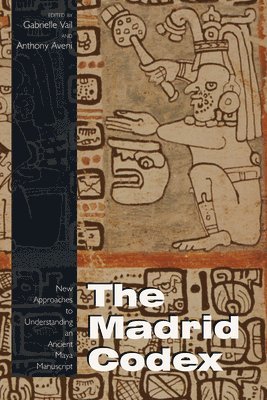
    Madrid Codex

    New Approaches to Understanding an Ancient Maya Manuscript

    AvGabrielle Vail,Anthony Aveni

    Häftad, Engelska, 2009

    394 kr

    Tillfälligt slut

    Beskrivning

    This volume offers new calendrical models and methodologies for reading, dating, and interpreting the general significance of the Madrid Codex. The longest of the surviving Maya codices, this manuscript includes texts and images painted by scribes conversant in Maya hieroglyphic writing, a written means of communication practiced by Maya elites from the second to the fifteenth centuries A.D. Some scholars have recently argued that the Madrid Codex originated in the Petén region of Guatemala and postdates European contact. The contributors to this volume challenge that view by demonstrating convincingly that it originated in northern Yucatán and was painted in the Pre-Columbian era. In addition, several contributors reveal provocative connections among the Madrid and Borgia group of codices from Central Mexico.Contributors include: Harvey M. Bricker, Victoria R. Bricker, John F. Chuchiak IV, Christine L. Hernández, Bryan R. Just, Merideth Paxton, and John Pohl. Additional support for this publication was generously provided by the Eugene M. Kayden Fund at the University of Colorado.

    Produktinformation

    • Utgivningsdatum:2009-03-31
    • Mått:152 x 229 x 25 mm
    • Vikt:631 g
    • Format:Häftad
    • Språk:Engelska
    • Antal sidor:468
    • Förlag:University Press of Colorado
    • ISBN:9780870819391

    Utforska kategorier

    • Arkeologiska perioder och områden inom Historia och arkeologi
    • Språkvetenskap och lingvistik inom Språk och ordböcker
    • Amerikas historia inom Historia och arkeologi

    Mer om författaren

    Gabrielle Vail is a research scholar at New College of Florida and a specialist in Maya hieroglyphic writing. She is the coeditor of Papers on the Madrid Codex (with Victoria Bricker). Anthony Aveni is the Russell Colgate Distinguished University Professor of Astronomy, Anthropolgy, and Native Amerifan Studies at Colgate University. He has researched and written about Maya Astronomy for more than four decades. He was named a U.S. National Professor of the year and has been awarded the H.B. Nicholson Medal for Excellence in Research in Mesoamerican Studies by Harvard's Peabody Museum.

    Innehållsförteckning

    • ContentsList of IllustrationsForeword by Davíd Carrasco and Eduardo Matos MoctezumaPrefaceAcknowledgmentsList of ContributorsList of Abbreviations1 Research Methodologies and New Approaches to Interpreting the Madrid Codex, Gabrielle Vail and Anthony F. AveniPart I Provenience and Dating of the Madrid Codex2 The Paper Patch on Page 56 of the Madrid Codex, Harvey M. Bricker3 Papal Bulls, Extirpators, and the Madrid Codex: The Content and Probable Provenience of the M. 56 Patch, John F. Chuchiak4 Tayasal Origin of the Madrid Codex: Further Consideration of the Theory, Merideth PaxtonPart II Calendrical Models and Methodologies for Examining the Madrid Almanacs5 Maya Calendars and Dates: Interpreting the Calendrical Structure of Maya Almanacs, Gabrielle Vail and Anthony F. Aveni6 Intervallic Structure and Cognate Almanacs in the Madrid and Dresden Codices, Anthony F. Aveni7 Haab Dates in the Madrid Codex, Gabrielle Vail and Victoria R. Bricker8 A Reinterpretation of Tzolk'in Almanacs in the Madrid Codex, Gabrielle VailPart III Connections Among the Madrid and Borgia Group Codices9 In Extenso Almanacs in the Madrid Codex, Bryan R. Just10 The Inauguration of Planting in the Borgia and Madrid Codices, Christine Hern ndez and Victoria R. Bricker11 "Yearbearer Pages" and Their Connection to Planting Almanacs in the Borgia Codex, Christine Hern ndezPart IV The Madrid Codex in the Context of Mesoamerican Traditions12 Screenfold Manuscripts of Highland Mexico and Their Possible Influence on Codex Madrid: A Summary, John M.D. PohlIndex