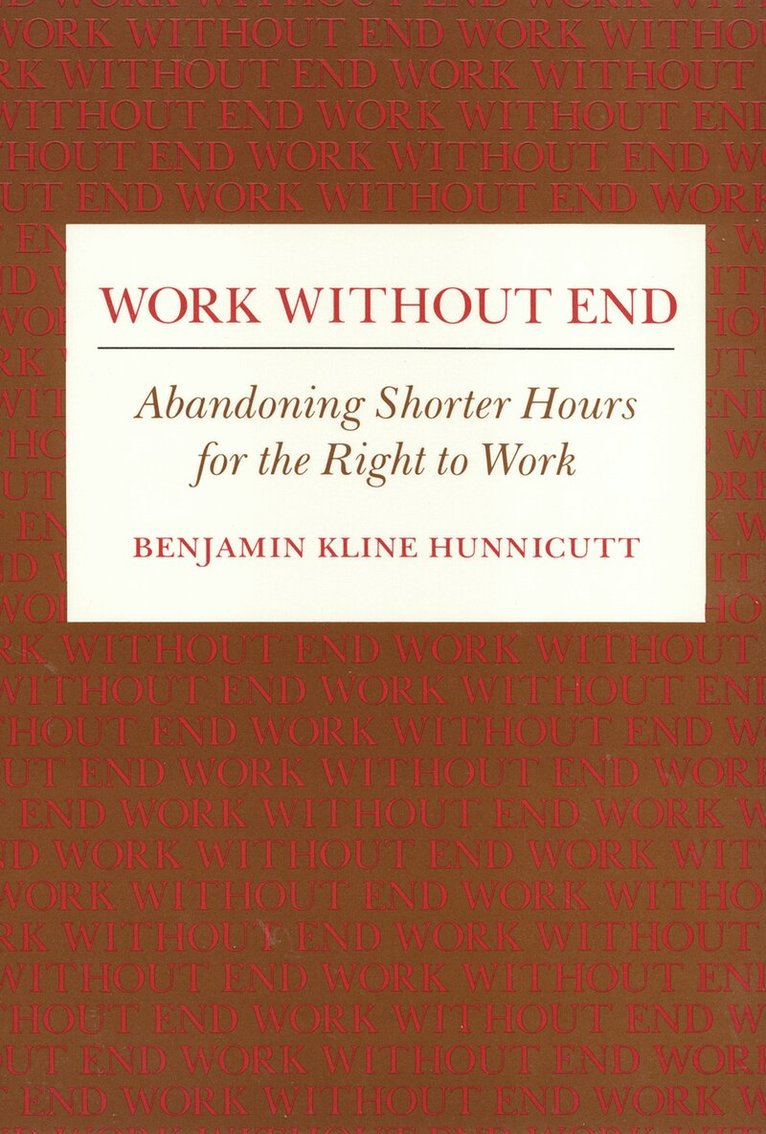
Benjamin Kline Hunnicutt is Professor of Leisure Studies at the University of Iowa.
Recensioner i media
"An extraordinarily informative scholarly history of the debate over working hours from 1920 to 1940."-New York Times Book Review "Work Without End presents a compelling history of the rise and fall of the 40-hour work week, explains bow Americans became trapped in a prison of work that allows little room for family, bobbies or civic participation and suggests bow they can free themselves from relentless overwork. [This book] is a sober reconsideration of a topic that is critical to America’s future. It suggests that progress doesn’t mean much if there is not time for love as well as work, and liberation is an empty achievement if the work it frees one to do is truly without end."-The Washington Post"Hunnicutt, with this excellent book, becomes the first United States historian to examine fully why this momentous change occurred."-The Journal of American History
Innehållsförteckning
Acknowledgments Introduction 1. The Century of Shorter Hours and Work Reduction 2. The New Economic Gospel of Consumption 3. Leisure for Labor 4. Leisure for Culture and Progress 5. Shorter Hours in the Early Depression 6. FDR Counters Shorter Hours 7. Idleness Reemployed: Public Works and Deficit Spending 8. Social Security and the Fair Labor Standards Act 9. Intellectuals and Reformers Abandon Shorter Hours 10. A Case in Point: Scientists 11. The Age of Work Notes Index