• Fri frakt över 249 kr
  • •
  • Snabba leveranser
  • •
  • Billiga böcker
Kundservice

Du är på sajten för privatpersoner.

Företag, bibliotek eller offentlig verksamhet?

Du handlar på classic.bokus.com, där alla dina funktioner finns intakta.
Till classic.bokus.com
Bokus logotyp. Gå till startsidan.
  • Erbjudanden
  • Nyheter
  • Student
  • Topplistor
  • Barn & ungdom
  • Bokus Play
  • E-böcker
  • Pocketböcker
  • Spel & pussel

Må bättre, för mindre! Upp till 50% rabatt på hälsoböcker

Sidfot

Mina sidor

    Hjälp

    • Kundservice
    • Vanliga frågor och svar
    • Frakt och leverans
    • Retur vid ångerrätt
    • Reklamera vara
    • Betalning
    • Köpvillkor
    • Allmänna villkor
    • Information om webbplatsens tillgänglighet

    Om Bokus

    • Om oss
    • Pressrum
    • För studenter
    • För företag
    • För bibliotek och offentlig verksamhet
    • För leverantörer
    • Hållbarhet

    Populärt

    • Aktuella erbjudanden
    • Presentkort
    • Studentlitteratur
    • Nya böcker
    • Topplistor
    • Signerade böcker
    • Engelska böcker

    Inspiration

    • Boktips
    • BookTok
    • Populära bokserier
    • Barnbokskaraktärer
    • Populära författare
    Logotyp för Bokus
    Följ oss på Facebook (extern länk)Följ oss på Instagram (extern länk)Följ oss på YouTube (extern länk)Följ oss på TikTok (extern länk)
    bokus @ CookiesAnpassa cookiesIntegritetspolicyKöpvillkor
    Till Citymail hemsida (extern länk)Till Budbee hemsida (extern länk)Till Postnord hemsida (extern länk)Till Schenker hemsida (extern länk)Till Early Bird hemsida (extern länk)Till Walleys hemsida (extern länk)
    1. Filosofi och religion
    2. Filosofi

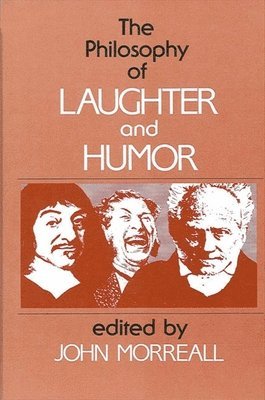
    Philosophy of Laughter and Humor

    AvJohn Morreall

    Häftad, Engelska, 1986

    Del i serien SUNY series in Philosophy

    472 kr

    Beställningsvara. Skickas inom 5-8 vardagar. Fri frakt över 249 kr.

    Beskrivning

    This book assesses the adequacy of the traditional theories of laughter and humor, suggests revised theories, and explores such areas as the aesthetics and ethics of humor, and the relation of amusement to other mental states.Theories of laughter and humor originated in ancient times with the view that laughter is an expression of feelings of superiority over another person. This superiority theory was held by Plato, Aristotle, and Hobbes. Another aspect of laughter, noted by Aristotle and Cicero and neglected until Kant and Schopenhauer developed it into the incongruity theory, is that laughter is often a reaction to the perception of some incongruity. According to the third and latest traditional theory, the relief theory of Herbert Spencer and Freud, laughter is the venting of superfluous nervous energy. Historical examples of all these theories are presented along with hybrid theories such as those of Descartes and Bergson. The book also features traditional explorations of the place of humor in aesthetics, drama, and literature.This is the first work in the last fifty years to include the classic sources in the philosophy of humor and the first to present theories by contemporary philosophers.

    Produktinformation

    • Utgivningsdatum:1986-12-05
    • Mått:150 x 230 x 15 mm
    • Vikt:440 g
    • Format:Häftad
    • Språk:Engelska
    • Serie:SUNY series in Philosophy
    • Antal sidor:285
    • Förlag:State University of New York Press
    • ISBN:9780887063275

    Utforska kategorier

    • Filosofi inom Filosofi och religion

    Mer om författaren

    John Morreall is Associate Professor of Philosophy at Rochester Institute of Technology. He has written widely in philosophy, religion, and linguistics, and is the author of Taking Laughter Seriously, published by SUNY Press, and Analogy and Talking about God.

    Recensioner i media

    "There has long been a need for a source book of classical writings on the nature of humor and laughter. The Morreall book fills this long-standing need. In what other single book can one find out what made Hobbes, Descartes, Kant, and Schopenhauer laugh? And in what other book can one learn what they (and many other philosophers) believed to be the essence of laughter?" — Jeffrey H. Goldstein, Temple University