• Fri frakt över 249 kr
  • •
  • Snabba leveranser
  • •
  • Billiga böcker
Kundservice

Du är på sajten för privatpersoner.

Företag, bibliotek eller offentlig verksamhet?

Du handlar på classic.bokus.com, där alla dina funktioner finns intakta.
Till classic.bokus.com
Bokus logotyp. Gå till startsidan.
  • Erbjudanden
  • Nyheter
  • Student
  • Topplistor
  • Barn & ungdom
  • Bokus Play
  • E-böcker
  • Pocketböcker
  • Spel & pussel

10% rabatt på allt med kod: NYSTART10 →

Sidfot

Mina sidor

    Hjälp

    • Kundservice
    • Vanliga frågor och svar
    • Frakt och leverans
    • Retur vid ångerrätt
    • Reklamera vara
    • Betalning
    • Köpvillkor
    • Allmänna villkor
    • Information om webbplatsens tillgänglighet

    Om Bokus

    • Om oss
    • Pressrum
    • För studenter
    • För företag
    • För bibliotek och offentlig verksamhet
    • För leverantörer
    • Hållbarhet

    Populärt

    • Aktuella erbjudanden
    • Presentkort
    • Studentlitteratur
    • Nya böcker
    • Topplistor
    • Signerade böcker
    • Engelska böcker

    Inspiration

    • Boktips
    • BookTok
    • Populära bokserier
    • Barnbokskaraktärer
    • Populära författare
    Logotyp för Bokus
    Följ oss på Facebook (extern länk)Följ oss på Instagram (extern länk)Följ oss på YouTube (extern länk)Följ oss på TikTok (extern länk)
    bokus @ CookiesAnpassa cookiesIntegritetspolicyKöpvillkor
    Till Citymail hemsida (extern länk)Till Budbee hemsida (extern länk)Till Postnord hemsida (extern länk)Till Schenker hemsida (extern länk)Till Early Bird hemsida (extern länk)Till Walleys hemsida (extern länk)
    1. Kultur
    2. Designböcker
    3. Formgivare

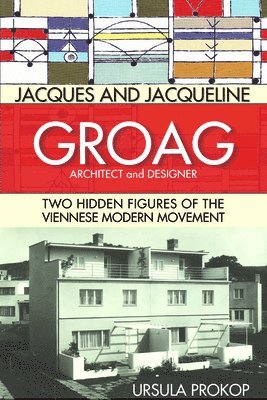
    Jacques and Jacqueline Groag, Architect and Designer

    Two Hidden Figures of the Viennese Modern Movement

    AvUrsula Prokop

    Inbunden, Engelska, 2019

    340 kr

    Tillfälligt slut

    Beskrivning

    Prokop’s meticulous history restores Jacques and Jacqueline Groag to their rightful places in the pantheon of Viennese Modernists. Prokop explores their individual careers in Vienna and Czechoslovakia, their early collaborations in the 1930s, their lives as Jewish émigrés, and the couple’s unique contributions in Britain for postwar exhibitions, monuments, furniture and textile design, even a dress for future-queen Elizabeth II. Full color edition, supported by a grant from the Graham Foundation for Advanced Studies in the Fine Arts.

    Produktinformation

    • Utgivningsdatum:2019-08-15
    • Mått:152 x 228 x 23 mm
    • Vikt:726 g
    • Format:Inbunden
    • Språk:Engelska
    • Antal sidor:272
    • Förlag:DoppelHouse Press
    • ISBN:9780999754436
    • Översättare:Jonee Tiedemann, Laura McGuire

    Utforska kategorier

    • Formgivare inom Kultur

    Mer om författaren

    Laura McGuire is Assistant Professor of Architecture at the University of Hawaii’s School of Architecture in Manoa. She specializes in early- and mid-century architecture and design history with a combined Ph.D. in those fields from University of Texas, Austin. A Fulbright Scholar in Austria in 2009, she has spent the last decade working on exhibitions, articles, book chapters, and other editorial projects that reflect on Vienna’s unique cultural contributions through immigrant and exiled cultural figures, including designer Paul T. Frankl, architect/artist Frederick Kiesler, and philosopher Otto Neurath.

    Recensioner i media

    The houses of Groag with the beautiful terraces impress because of their clever balance. They radiate comfort.—Neue Freie Presse

    Innehållsförteckning

    • IntroductionThe Early Years The background and education of Jacques GroagWorld War I and professional beginningsThe First ProjectsCollaboration on the Wittgenstein House, 1926–29The Moller Villa, 1927–1928The first independent project: The Groag Villa in Olmütz, 1927–1928Vienna´s artistic environmentThe Artistic BreakthroughProjects in Vienna and Moravia – first success as an interior architectGetting to know Hilde BlumbergerThe duplex at the Vienna Werkbundsiedlung, 1931–1932Furniture and interiorsThe Gustav Stern House in Perchtoldsdorf, 1932/33The Paula and Hans Briess Villa in Olmütz, 1933Projects in the Late 1930sIng. Rudolf Seidler Villa in Olmütz, 1935Conversion and furnishings of the Paula Wessely Villa in Vienna-Grinzing, 1935Otto Eisler country house in Ostravice, 1935–1939The late 1930s – various projects in Moravia-Ostrau and BrnoDisplacement and intermezzo in Prague, 1938–1939Emigration and a New Beginning in EnglandEscape and a difficult startThe end of the war – an urban planning project for Soho, 1945Jacqueline Groag establishes herself as a textile designerThe emigrants in England – a problematic situationThe Groags After the War – Utility Furniture and Exhibition DesignThe utility furniture program – a new arenaThe first postwar exhibitions – Modern Homes and Britain Can Make It, 1946 Further exhibitions – Ideal Home, 1949 and British Industries Fair, 1950The end of the postwar era – The Festival of Britain, 1951The 1950s – Jacques Groag’s interiors and painting as therapyThe late work of Jacqueline GroagConclusionJacques Groag – Catalog of WorksArchitecture, interior design and furniture designPainting and graphic artProfessional articles and publicationsBibliographyMonographs, catalogs, and articlesUnpublished typescripts and manuscriptsPeriodicals – Jacques GroagPeriodicals – Jacqueline GroagArchives and private sources