• Fri frakt över 249 kr
  • •
  • Snabba leveranser
  • •
  • Billiga böcker
Kundservice

Du är på sajten för privatpersoner.

Företag, bibliotek eller offentlig verksamhet?

Du handlar på classic.bokus.com, där alla dina funktioner finns intakta.
Till classic.bokus.com
Bokus logotyp. Gå till startsidan.
  • Erbjudanden
  • Nyheter
  • Student
  • Topplistor
  • Barn & ungdom
  • Bokus Play
  • E-böcker
  • Pocketböcker
  • Spel & pussel

10% rabatt på allt med kod: NYSTART10 →

Sidfot

Mina sidor

    Hjälp

    • Kundservice
    • Vanliga frågor och svar
    • Frakt och leverans
    • Retur vid ångerrätt
    • Reklamera vara
    • Betalning
    • Köpvillkor
    • Allmänna villkor
    • Information om webbplatsens tillgänglighet

    Om Bokus

    • Om oss
    • Pressrum
    • För studenter
    • För företag
    • För bibliotek och offentlig verksamhet
    • För leverantörer
    • Hållbarhet

    Populärt

    • Aktuella erbjudanden
    • Presentkort
    • Studentlitteratur
    • Nya böcker
    • Topplistor
    • Signerade böcker
    • Engelska böcker

    Inspiration

    • Boktips
    • BookTok
    • Populära bokserier
    • Barnbokskaraktärer
    • Populära författare
    Logotyp för Bokus
    Följ oss på Facebook (extern länk)Följ oss på Instagram (extern länk)Följ oss på YouTube (extern länk)Följ oss på TikTok (extern länk)
    bokus @ CookiesAnpassa cookiesIntegritetspolicyKöpvillkor
    Till Citymail hemsida (extern länk)Till Budbee hemsida (extern länk)Till Postnord hemsida (extern länk)Till Schenker hemsida (extern länk)Till Early Bird hemsida (extern länk)Till Walleys hemsida (extern länk)
    1. Ekonomi och Ledarskap
    2. Nationalekonomi

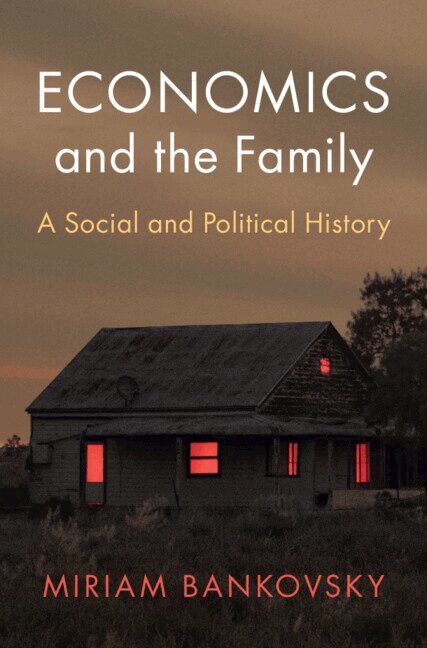
    Economics and the Family

    A Social and Political History

    AvMiriam Bankovsky

    Inbunden, Engelska, 2025

    Del i serien Historical Perspectives on Modern Economics

    1 348 kr

    Beställningsvara. Skickas inom 10-15 vardagar. Fri frakt över 249 kr.

    Fler format och utgåvor

    E-bok

    1 583 kr

    E-bok

    1 578 kr

    Beskrivning

    Most economists think family economics began in the 1960s when price theory was applied to family behaviour. Instead, this book focuses on enduring concerns with family poverty across the last two centuries. In nineteenth-century Britain and Europe, economists debated the effects of poverty relief and sought to improve family productivity. In the US, interwar household consumer economists studied how to rationalise family consumption, because factories were producing goods for low-income families. From the 1960s onwards, 'New' household economists attributed family poverty to inadequate human capital investment in predominantly non-white families. Even when feminist, development, and queer economists problematised gendered injustices, they recentred family poverty, targeting the 'pauperisation' of motherhood and the marginalisation of 'families we choose.' Economics and the Family does not simply reconstruct this alternate history, it also shows how economists in all these periods overlooked injustices which must be shouldered today.

    Produktinformation

    • Utgivningsdatum:2025-06-05
    • Mått:162 x 235 x 26 mm
    • Vikt:680 g
    • Format:Inbunden
    • Språk:Engelska
    • Serie:Historical Perspectives on Modern Economics
    • Antal sidor:351
    • Förlag:Cambridge University Press
    • ISBN:9781009187008

    Utforska kategorier

    • Nationalekonomi inom Ekonomi och Ledarskap
    • Genusvetenskap inom Samhälle och politik
    • Sociologi inom Samhälle och politik

    Mer om författaren

    Miriam Bankovsky is Associate Professor in Politics at La Trobe University. Her research spans the disciplines of Politics, Philosophy, and Economics. She was an Australian Research Council DECRA fellow and is the author of Perfecting Justice (2012). Her research on economic envy received the Australasian Association of Philosophy's Annette Baier Prize.

    Innehållsförteckning

    • Preliminary matter; Detailed contents; Acknowledgements; Tables; 1. The family and its problems in the history of economics: poverty, gendered injustice, and beyond; 2. Improving family labour in industry: Alfred Marshall on the Victorian factory families and their pinching sorrow; 3. Are families immoral because they are poor, or poor because immoral? The early Lausanne economists; 4. Low-income interwar family consumption in the United States: the old family economists and living standards across cities and farms; 5. Post-war 'underclass' in affluent North America: Black family instability, human capital theory, and Gary Becker's new household economics; 6. Selected contemporary approaches: the feminist family, recentring poverty, and gender diversity; 7. Fictions for a future: poverty and 'the families we choose' in a context of ecosystem collapse; References; Index.