• Fri frakt över 249 kr
  • •
  • Snabba leveranser
  • •
  • Billiga böcker
Kundservice

Du är på sajten för privatpersoner.

Företag, bibliotek eller offentlig verksamhet?

Du handlar på classic.bokus.com, där alla dina funktioner finns intakta.
Till classic.bokus.com
Bokus logotyp. Gå till startsidan.
  • Erbjudanden
  • Nyheter
  • Student
  • Topplistor
  • Barn & ungdom
  • Bokus Play
  • E-böcker
  • Pocketböcker
  • Spel & pussel

10% studentrabatt med kod TERM26

Sidfot

Mina sidor

    Hjälp

    • Kundservice
    • Vanliga frågor och svar
    • Frakt och leverans
    • Retur vid ångerrätt
    • Reklamera vara
    • Betalning
    • Köpvillkor
    • Allmänna villkor
    • Information om webbplatsens tillgänglighet

    Om Bokus

    • Om oss
    • Pressrum
    • För studenter
    • För företag
    • För bibliotek och offentlig verksamhet
    • För leverantörer
    • Hållbarhet

    Populärt

    • Aktuella erbjudanden
    • Presentkort
    • Studentlitteratur
    • Nya böcker
    • Topplistor
    • Signerade böcker
    • Engelska böcker

    Inspiration

    • Boktips
    • BookTok
    • Populära bokserier
    • Barnbokskaraktärer
    • Populära författare
    Logotyp för Bokus
    Följ oss på Facebook (extern länk)Följ oss på Instagram (extern länk)Följ oss på YouTube (extern länk)Följ oss på TikTok (extern länk)
    bokus @ CookiesAnpassa cookiesIntegritetspolicyKöpvillkor
    Till Citymail hemsida (extern länk)Till Budbee hemsida (extern länk)Till Postnord hemsida (extern länk)Till Schenker hemsida (extern länk)Till Early Bird hemsida (extern länk)Till Walleys hemsida (extern länk)
    1. Samhälle och politik
    2. Sociologi och antropologi
    3. Antropologi

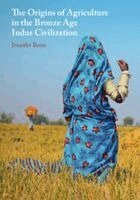
    The Origins of Agriculture in the Bronze Age Indus Civilization

    AvJennifer Bates

    Häftad, Engelska, 2026

    576 kr

    Kommande

    Fler format och utgåvor

    Inbunden

    1 458 kr

    Beskrivning

    The Indus civilization in South Asia (c. 320 - 1500BC) was one of the most important Old World Bronze Age cultures. Located at the cross-roads of Asia, in modern Pakistan and India, it encompassed ca. one million square kilometers, making it one the largest  and most ecologically, culturally, socially, and economically complex among contemporary civilisations.  In this study, Jennifer Bates offers new insights into the Indus civilisation through an archaeobotanical reconstruction of its environment. Exploring the relationship between people and plants, agricultural systems, and the foods that people consumed, she demonstrates how the choices made by the ancient inhabitants were intertwined with several aspects of society, as were their responses to social and climate changes. Bates' book synthesizes the available data on genetics, archaeobotany, and archaeology. It shows how the ancient Indus serves as a case study of a civilization navigating sustainability, resilience and collapse in the face of changing circumstances by adapting its agricultural practices.

    Produktinformation

    • Utgivningsdatum:2026-11-26
    • Format:Häftad
    • Språk:Engelska
    • Antal sidor:369
    • Förlag:Cambridge University Press
    • ISBN:9781009424462

    Utforska kategorier

    • Antropologi inom Samhälle och politik
    • Forntidens historia inom Historia och arkeologi
    • Arkeologiska platser inom Historia och arkeologi

    Mer om författaren

    Jennifer Bates is Assistant Professor of Archaeological Science at Seoul National University. She is a co-author of The Archaeobotany of Asvan and Principal Investigator of the Indica Project.

    Innehållsförteckning

    • 1. Introduction; 2. The Paleoenvironmental context; 3. Laying the groundwork; 4. Southwest Asian crops and their significance; 5. Big millets; 6. Small Millets; 7. Rice; 8. Tropical pulses and the identification of local domestication processes; 9. Microfossils and the multi-proxy approach; 10. Beyond 'staples'; 11. Crop processing and social organization; 12. Cropping strategies and seasonality; 13. Irrigation and intensification; 14. Indus indentities and food; 15. The 'Late Harappan Revolution'; 16. The burnt remains.