• Fri frakt över 249 kr
  • •
  • Snabba leveranser
  • •
  • Billiga böcker
Kundservice

Du är på sajten för privatpersoner.

Företag, bibliotek eller offentlig verksamhet?

Du handlar på classic.bokus.com, där alla dina funktioner finns intakta.
Till classic.bokus.com
Bokus logotyp. Gå till startsidan.
  • Erbjudanden
  • Nyheter
  • Student
  • Topplistor
  • Barn & ungdom
  • Bokus Play
  • E-böcker
  • Pocketböcker
  • Spel & pussel

Må bättre, för mindre! Upp till 50% rabatt på hälsoböcker

Sidfot

Mina sidor

    Hjälp

    • Kundservice
    • Vanliga frågor och svar
    • Frakt och leverans
    • Retur vid ångerrätt
    • Reklamera vara
    • Betalning
    • Köpvillkor
    • Allmänna villkor
    • Information om webbplatsens tillgänglighet

    Om Bokus

    • Om oss
    • Pressrum
    • För studenter
    • För företag
    • För bibliotek och offentlig verksamhet
    • För leverantörer
    • Hållbarhet

    Populärt

    • Aktuella erbjudanden
    • Presentkort
    • Studentlitteratur
    • Nya böcker
    • Topplistor
    • Signerade böcker
    • Engelska böcker

    Inspiration

    • Boktips
    • BookTok
    • Populära bokserier
    • Barnbokskaraktärer
    • Populära författare
    Logotyp för Bokus
    Följ oss på Facebook (extern länk)Följ oss på Instagram (extern länk)Följ oss på YouTube (extern länk)Följ oss på TikTok (extern länk)
    bokus @ CookiesAnpassa cookiesIntegritetspolicyKöpvillkor
    Till Citymail hemsida (extern länk)Till Budbee hemsida (extern länk)Till Postnord hemsida (extern länk)Till Schenker hemsida (extern länk)Till Early Bird hemsida (extern länk)Till Walleys hemsida (extern länk)
    1. Medicin
    2. Medicin: allmänt
    3. Den medicinska professionen

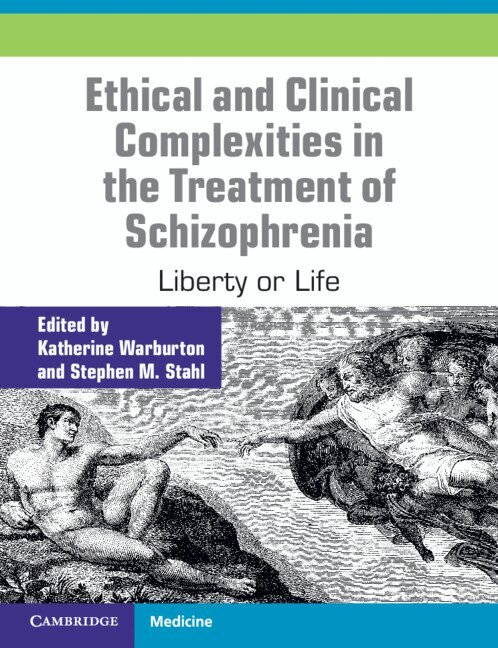
    Ethical and Clinical Complexities in the Treatment of Schizophrenia

    Liberty or Life

    AvKatherine Warburton,Stephen M. Stahl

    Häftad, Engelska, 2026

    733 kr

    Beställningsvara. Skickas inom 10-15 vardagar. Fri frakt över 249 kr.

    Beskrivning

    This unique book offers a methodical exploration of biological, social, and ethical topics on the treatment (or lack thereof) of psychotic brain disease. Part I provides an empirical engagement with neuroscience and covers the neurobiology and pharmacology of schizophrenia, providing the reader with a current understanding of the disease. Topic areas include anosognosia, community treatments, and early intervention. Part II looks at international policy approaches to schizophrenia featuring topics such as the policy, funding, and historical elements contributing to frequently misguided approaches to severe brain disease, and it explains why some societies won't/can't support human beings with psychotic disease. Part III focuses on neuroethics and asks: 'What is right?' through chapters discussing the concepts of consciousness and free will, as well as the principles of nonmaleficence, beneficence, autonomy, and justice. Collectively the comprehensive approach of this book allows the reader to gain a full understanding of the ethical and clinical complexities in treating schizophrenia.

    Produktinformation

    • Utgivningsdatum:2026-05-07
    • Mått:241 x 15 x 183 mm
    • Vikt:690 g
    • Format:Häftad
    • Språk:Engelska
    • Antal sidor:298
    • Förlag:Cambridge University Press
    • ISBN:9781009587754

    Utforska kategorier

    • Den medicinska professionen inom Medicin
    • Medicinsk etik och läkaretik inom Medicin
    • Psykiska sjukdomar inom Medicin

    Mer om författaren

    Katherine Warburton is Associate Clinical Professor at the University of California, Davis, and Statewide Medical Director and Deputy Director of Clinical Operations at the California Department of State Hospitals. Stephen M. Stahl is Distinguished Clinical Professor of Psychiatry and Neuroscience at the University of California Riverside, Adjunct Professor of Psychiatry at the University of California, San Diego, and an Honorary Fellow in Psychiatry at the University of Cambridge. He also serves as Senior Academic Advisor and Director of Psychopharmacology for the California Department of State Hospitals.

    Innehållsförteckning

    • Part I. Neuroscience: 1. The story of schizophrenia: liberty over life; 2. What is the neurobiology of schizophrenia?; 3. What is schizophrenia – symptomatology; 4. Assessment and treatment of anosognosia in schizophrenia; 5. Anosognosia in schizophrenia; 6. 'How antipsychotics work in schizophrenia: a primer on mechanisms'; 7. Do antipsychotics work in people with schizophrenia? A review of outcomes and effect sizes; 8. Do antipsychotic medications work: an exploration using competency to stand trial as the functional outcome; 9. When do psychiatric interventions work? An argument for using functional outcomes when evaluating the effectiveness of treating schizophrenia; 10. Medications for psychosis in people with Schizophrenia: what happens if you take them and what happens if you don't?; 11. Assisted outpatient treatment: are court ordered antipsychotic medications effective?; 12. Forensic assertive community treatment: an emerging best practice; 13. Does compulsory community treatment for discharged forensic hospital patients work? The recent evidence base; 14. Early intervention for schizophrenia: a pathway to improved clinical outcomes; 15. 'Cardiometabolic disorders in persons living with schizophrenia: the right to equality'; Part II. International Policy Perspectives: 16. Failure to treat: an American policy perspective; 17. The Italian general psychiatry and forensic psychiatry treatment model: a unique story; 18. Liberty or life: mental health care in Australia; 19. Liberty or life: the Aotearoa New Zealand perspective; 20. Autonomy and compulsory care in the Netherlands; 21. Canadian mental health laws: a review of involuntary admission and treatment pending appeal; 22. The current situation of treatment for patients suffering from schizophrenia in the Austrian forensic system; 23. Interventions for the unhoused individual with schizophrenia: a civilized plan; 24. What role did serious mental illness play in Jackson Pollock's drip paintings? Abstract expressionism and possible links to serious mental illness and to encrypted images (Polloglyphs); 25. The behavioral healthcare continuum in the United States: what should it look like and how we can pay for it; Part III. Neuroethics: 26. A unified understanding of the human mind-a neuroethical perspective: tracing the evolution in western thought and the integration with neuroscience, psychology, psychiatry, and relational dimensions; 27. A neuroethical approach to human life, identity, and liberty of schizophrenic patients; 28. Neuroethics and treatment without consent; 29. Advance directives in patients with schizophrenia; 30. Dignity restored: the power of treatment first; 31. Four principles of bioethics in cases of anosognosia; 32. Complexities of competency and informed consent as applied to individuals with symptoms of Anosognosia; 33. Evidence-based treatment for schizophrenia: a personal perspective; 34. Inmate mental health assistants: an emerging best practice for carceral settings; 35. Remarks of father Alberto Carrara to the American Psychiatry Association – May 2025 Father.