• Fri frakt över 249 kr
  • •
  • Snabba leveranser
  • •
  • Billiga böcker
Kundservice

Du är på sajten för privatpersoner.

Företag, bibliotek eller offentlig verksamhet?

Du handlar på classic.bokus.com, där alla dina funktioner finns intakta.
Till classic.bokus.com
Bokus logotyp. Gå till startsidan.
  • Erbjudanden
  • Nyheter
  • Student
  • Topplistor
  • Barn & ungdom
  • Bokus Play
  • E-böcker
  • Pocketböcker
  • Spel & pussel

10% studentrabatt med kod TERM26

Sidfot

Mina sidor

    Hjälp

    • Kundservice
    • Vanliga frågor och svar
    • Frakt och leverans
    • Retur vid ångerrätt
    • Reklamera vara
    • Betalning
    • Köpvillkor
    • Allmänna villkor
    • Information om webbplatsens tillgänglighet

    Om Bokus

    • Om oss
    • Pressrum
    • För studenter
    • För företag
    • För bibliotek och offentlig verksamhet
    • För leverantörer
    • Hållbarhet

    Populärt

    • Aktuella erbjudanden
    • Presentkort
    • Studentlitteratur
    • Nya böcker
    • Topplistor
    • Signerade böcker
    • Engelska böcker

    Inspiration

    • Boktips
    • BookTok
    • Populära bokserier
    • Barnbokskaraktärer
    • Populära författare
    Logotyp för Bokus
    Följ oss på Facebook (extern länk)Följ oss på Instagram (extern länk)Följ oss på YouTube (extern länk)Följ oss på TikTok (extern länk)
    bokus @ CookiesAnpassa cookiesIntegritetspolicyKöpvillkor
    Till Citymail hemsida (extern länk)Till Budbee hemsida (extern länk)Till Postnord hemsida (extern länk)Till Schenker hemsida (extern länk)Till Early Bird hemsida (extern länk)Till Walleys hemsida (extern länk)
    1. Språk och ordböcker
    2. Språkvetenskap och lingvistik

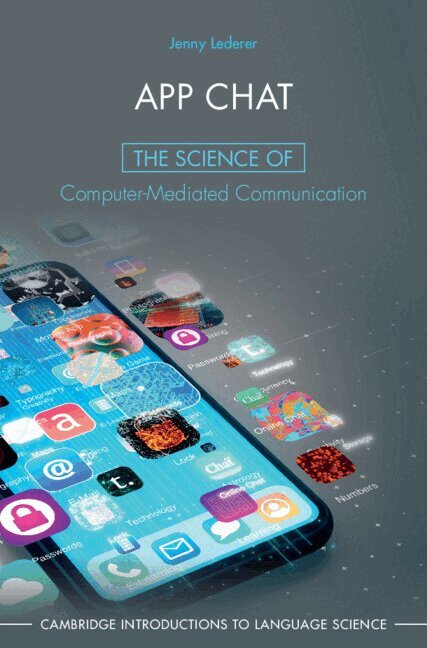
    App Chat

    The Science of Computer-Mediated Communication

    AvJenny Lederer

    Häftad, Engelska, 2026

    Del i serien Cambridge Introductions to Language Science

    289 kr

    Kommande

    Fler format och utgåvor

    Inbunden

    Kommande

    Beskrivning

    Why do we add a laughing emoji when nothing's funny? Why does texting 'k' feel colder than texting 'ok'? And what does all the jargon mean in social gaming? Jenny Lederer explores how our everyday digital conversations -texts, tweets, emojis, vlogs, and dating apps-are reshaping language and social life. Far from being trivial, online talk offers a living laboratory for understanding how humans create meaning, negotiate identity, and build relationships in a connected world. Blending traditional, cognitive, and digital linguistic theory with real-world examples, App Chat invites readers to see their own digital communication in a new light. Every LOL, emoji, and ghosted text reveals something deeper about how communication works, both online and off. Playful yet rigorous, this book is perfect for students curious about language, linguistic theory, culture, and technology, as well as anyone who's ever wondered: how does the medium of communication shape the message communicated?

    Produktinformation

    • Utgivningsdatum:2026-12-31
    • Format:Häftad
    • Språk:Engelska
    • Serie:Cambridge Introductions to Language Science
    • Antal sidor:220
    • Förlag:Cambridge University Press
    • ISBN:9781009688253

    Utforska kategorier

    • Språkvetenskap och lingvistik inom Språk och ordböcker
    • Referensverk och tvärvetenskap inom Samhälle och politik
    • Medievetenskap inom Samhälle och politik

    Mer om författaren

    Jenny Lederer is a Professor of Linguistics at San Francisco State University, specializing in cognitive linguistics. Her research, which draws on theories within conceptual metaphor, conceptual integration, gesture studies, corpus linguistics, and semantics, is featured in journals including Cognitive Linguistics, Metaphor and Symbol, the International Journal of Corpus Linguistics, and the Journal of Pragmatics.

    Innehållsförteckning

    • 1. The medium shapes the message; 2. Creative spelling practices: hidden grammatical knowledge revealed; 3. New symbols at our fingertips: the functional characteristics of emojis; 4. Gossip through the screen: conversational structure in new media; 5. Online romance: the language of nerves, flirtation, and self-presentation; 6. Video sharing: the collective structure of online discourse; 7. Social gaming: how group identity informs language practice; 8. Rapidly changing media: the research possibilities are endless.