• Fri frakt över 249 kr
  • •
  • Snabba leveranser
  • •
  • Billiga böcker
Kundservice

Du är på sajten för privatpersoner.

Företag, bibliotek eller offentlig verksamhet?

Du handlar på classic.bokus.com, där alla dina funktioner finns intakta.
Till classic.bokus.com
Bokus logotyp. Gå till startsidan.
  • Erbjudanden
  • Student
  • Topplistor
  • Barn & ungdom
  • Bokus Play
  • E-böcker
  • Ljudböcker
  • Pocketböcker
  • Spel och pussel

Pocketfynda! Hundratals böcker för 49 kr/st →

Sidfot

Mina sidor

    Hjälp

    • Kundservice
    • Vanliga frågor och svar
    • Frakt och leverans
    • Retur vid ångerrätt
    • Reklamera vara
    • Betalning
    • Köpvillkor
    • Allmänna villkor
    • Information om webbplatsens tillgänglighet

    Om Bokus

    • Om oss
    • Pressrum
    • För studenter
    • För företag
    • För bibliotek och offentlig verksamhet
    • För leverantörer
    • Hållbarhet

    Populärt

    • Aktuella erbjudanden
    • Presentkort
    • Studentlitteratur
    • Nya böcker
    • Topplistor
    • Signerade böcker
    • Engelska böcker

    Inspiration

    • Boktips
    • BookTok
    • Barnbokskaraktärer
    • Populära författare
    Logotyp för Bokus
    Följ oss på Facebook (extern länk)Följ oss på Instagram (extern länk)Följ oss på YouTube (extern länk)Följ oss på TikTok (extern länk)
    bokus @ CookiesAnpassa cookiesIntegritetspolicyKöpvillkor
    Till Citymail hemsida (extern länk)Till Budbee hemsida (extern länk)Till Postnord hemsida (extern länk)Till Schenker hemsida (extern länk)Till Early Bird hemsida (extern länk)Till Walleys hemsida (extern länk)
    1. Samhälle och politik
    2. Samhälle och kultur
    3. Kultur och medier
    4. Referensverk och tvärvetenskap

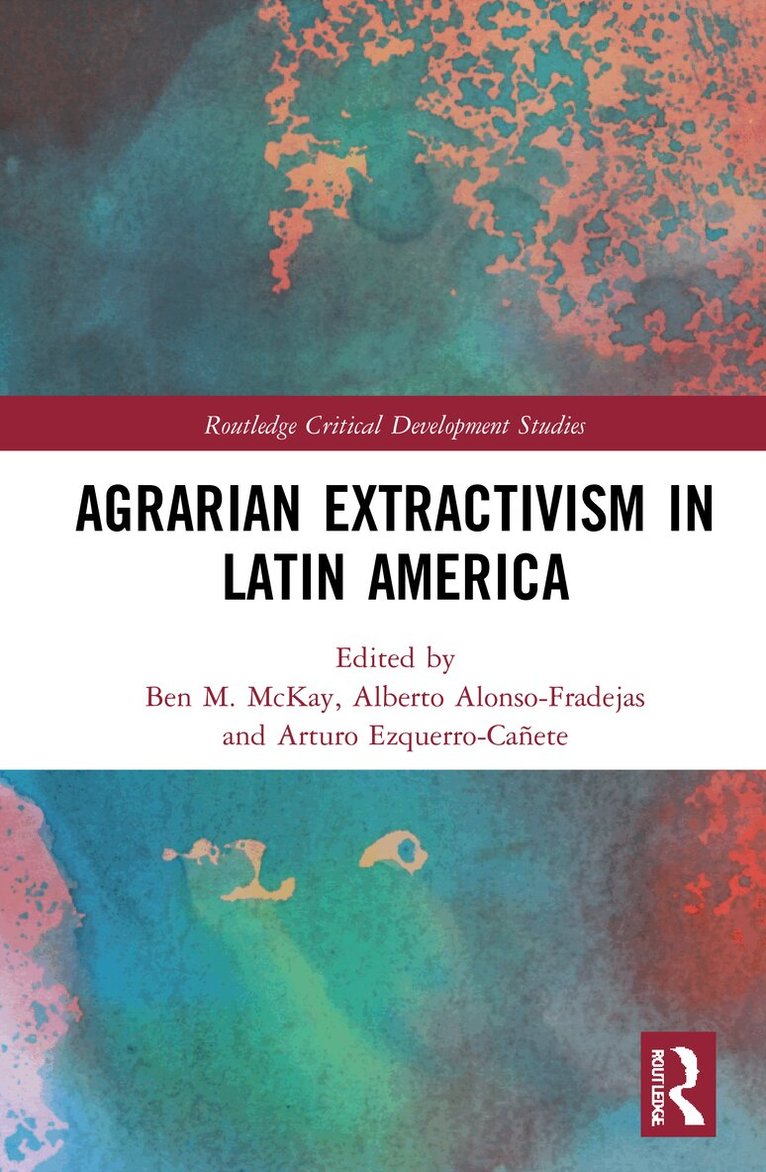
    Agrarian Extractivism in Latin America

    AvBen M. McKay,Alberto Alonso-Fradejas

    Häftad, Engelska, 2021

    Del i serien Routledge Critical Development Studies

    594 kr

    Beställningsvara. Skickas inom 10-15 vardagar. Fri frakt över 249 kr.

    Beskrivning

    Amid the growing calls for a turn towards sustainable agriculture, this book puts forth and discusses the concept of agrarian extractivism to help us identify and expose the predatory extractivist features of dominant agricultural development models.The concept goes beyond the more apparent features of monocultures and raw material exports to examine the inherent logic and underlying workings of a model based on the appropriation of an ever-growing range of commodified and non-commodified human and non-human nature in an extractivist fashion. Such a process erodes the autonomy of resourcedependent working people, dispossesses the rural poor, exhausts and expropriates nature, and concentrates value in a few hands as a result of the unquenchable drive for profit by big business. In many instances, such extractivist dynamics are subsidized and/or directly supported by the state, while also dependent on the unpaid, productive, and reproductive labour of women, children, and elders, exacerbating unequal class, gender, and generational relations. Rather than a one-size-fits-all definition of agrarian extractivism, this collection points to the diversity of extractivist features of corporate-led, external-input-dependent plantation agriculture across distinct socio-ecological formations in Latin America.This timely challenge to the destructive dominant models of agricultural development will interest scholars, activists, researchers, and students from across the fields of critical development studies, rural studies, environmental and sustainability studies, and Latin American studies, among others.

    Produktinformation

    • Utgivningsdatum:2021-05-31
    • Mått:156 x 234 x 19 mm
    • Vikt:360 g
    • Format:Häftad
    • Språk:Engelska
    • Serie:Routledge Critical Development Studies
    • Antal sidor:214
    • Förlag:Taylor & Francis Ltd
    • ISBN:9781032006079

    Utforska kategorier

    • Referensverk och tvärvetenskap inom Samhälle och politik
    • Etnicitet inom Samhälle och politik
    • Miljöteknik inom Naturvetenskap och teknik

    Mer om författaren

    Ben M. McKay is Assistant Professor of Development and Sustainability in the Department of Anthropology and Archaeology at the University of Calgary in Canada. His research focuses on the political economy and ecology of agrarian change in Latin America, agrarian extractivism, and food sovereignty alternatives. He is the author of The Political Economy of Agrarian Extractivism: Lessons from Bolivia (2020) and co-editor of The Edward Elgar Handbook of Critical Agrarian Studies (2021) and Rural Transformations and Agro-Food Systems (2018).Alberto Alonso-Fradejas is Postdoctoral Researcher at the Human Geography and Planning Department, Faculty of Geosciences, Utrecht University. Alberto is also an Associate Researcher at the Transnational Institute (TNI) in Amsterdam, a Fellow of the Guatemalan Institute of Agrarian and Rural Studies (IDEAR), and Reviews Section Co-Editor for the Journal of Peasant Studies (JPS).Arturo Ezquerro-Cañete holds a double PhD in International Development Studies from Saint Mary’s University and the Autonomous University of Zacatecas. His research focuses on the dynamics of agrarian transformations and new peasant movements in Paraguay. His work has been published in scholarly journals such as Journal of Agrarian Change, Latin American Perspectives, and Estudios Críticos del Desarrollo.

    Recensioner i media

    "This is a brilliant, ground-breaking book on extractivism, one of the world’s most important development issues today. It is a must read for everyone who aspires for social justice and sustainable development." - Saturnino M. Borras Jr., professor of Agrarian Studies, International Institute of Social Studies, editor-in-chief of the Journal of Peasant Studies and co-author of The Politics of Transnational Agrarian Movements."This is an urgent and necessary book that exposes the way contemporary agriculture is organized by examining the central pillars that define the logic of capital accumulation in the production of agro-food commodities, on both the material and ideological-political levels. It offers theoretical depth and historical specificity to the concept ‘extractivism’ – a concept whose power is also played out in the struggles that peasant movements and socio-environmental organizations are leading throughout the world." - Carla Gras, Senior Researcher at the National Scientific and Technical Research Council (CONICET) in Argentina and coordinator of the Rural Studies and Globalization program at the Institute of Higher Social Studies, National University of San Martín (IDEAS-UNSAM)."Agrarian extractivism in Latin America thoroughly explores how green paradises, sustainable fields, or productive crops can lead to extractive processes when they are linked to edible monocultures (soy, pineapple, sugarcane, oil palms), global extraction chains (green fuels), expert and technical knowledge that increases production (transgenic seeds), and unequal notions of sustainable development (symmetric forests). Agrarian extractivism leads to daily dispossessions and socio-environmental and intersectional inequalities, by erasing local people's realities, and creating toxic landscapes and unlivable futures. The book encourages us to rethink the agrarian contexts in Latin America. It opens possibilities to discover local political actions around food sovereignty that can transform the current social and environmental crises into a plural and diverse perspectives centered on the autonomy of producing food interconnected with territories, nonhumans, humans and life itself." - Astrid Ulloa, Professor, Universidad Nacional de Colombia.

    Innehållsförteckning

    • Introduction; 1 The Biotechnological Agrarian Model in Argentina: fighting against capital within science; 2 Extractive dynamics of agrarian change in Bolivia; 3 Agrarian extractivism in the Brazilian Cerrado; 4 Social reproduction, dispossession, and the gendered workings of agrarian extractivism in Colombia; 5 Agrarian extractivism and sustainable development: the politics of pineapple expansion in Costa Rica; 6 Gender inclusion in the sugarcane production of agrofuels in coastal Ecuador: illusionary promises of rural development within a new agrarian extractivism; 7 Life purging agrarian extractivism in Guatemala: towards a renewable but unlivable future?; 8 Extractive agave and tequila production in Jalisco, Mexico; 9 Forestry extractivism in Uruguay