• Fri frakt över 249 kr
  • •
  • Snabba leveranser
  • •
  • Billiga böcker
Kundservice

Du är på sajten för privatpersoner.

Företag, bibliotek eller offentlig verksamhet?

Du handlar på classic.bokus.com, där alla dina funktioner finns intakta.
Till classic.bokus.com
Bokus logotyp. Gå till startsidan.
  • Erbjudanden
  • Nyheter
  • Student
  • Topplistor
  • Barn & ungdom
  • Bokus Play
  • E-böcker
  • Pocketböcker
  • Spel & pussel

10% rabatt på allt med kod NYSTART10 →

Sidfot

Mina sidor

    Hjälp

    • Kundservice
    • Vanliga frågor och svar
    • Frakt och leverans
    • Retur vid ångerrätt
    • Reklamera vara
    • Betalning
    • Köpvillkor
    • Allmänna villkor
    • Information om webbplatsens tillgänglighet

    Om Bokus

    • Om oss
    • Pressrum
    • För studenter
    • För företag
    • För bibliotek och offentlig verksamhet
    • För leverantörer
    • Hållbarhet

    Populärt

    • Aktuella erbjudanden
    • Presentkort
    • Studentlitteratur
    • Nya böcker
    • Topplistor
    • Signerade böcker
    • Engelska böcker

    Inspiration

    • Boktips
    • BookTok
    • Populära bokserier
    • Barnbokskaraktärer
    • Populära författare
    Logotyp för Bokus
    Följ oss på Facebook (extern länk)Följ oss på Instagram (extern länk)Följ oss på YouTube (extern länk)Följ oss på TikTok (extern länk)
    bokus @ CookiesAnpassa cookiesIntegritetspolicyKöpvillkor
    Till Citymail hemsida (extern länk)Till Budbee hemsida (extern länk)Till Postnord hemsida (extern länk)Till Schenker hemsida (extern länk)Till Early Bird hemsida (extern länk)Till Walleys hemsida (extern länk)
    1. Filosofi och religion
    2. Filosofi

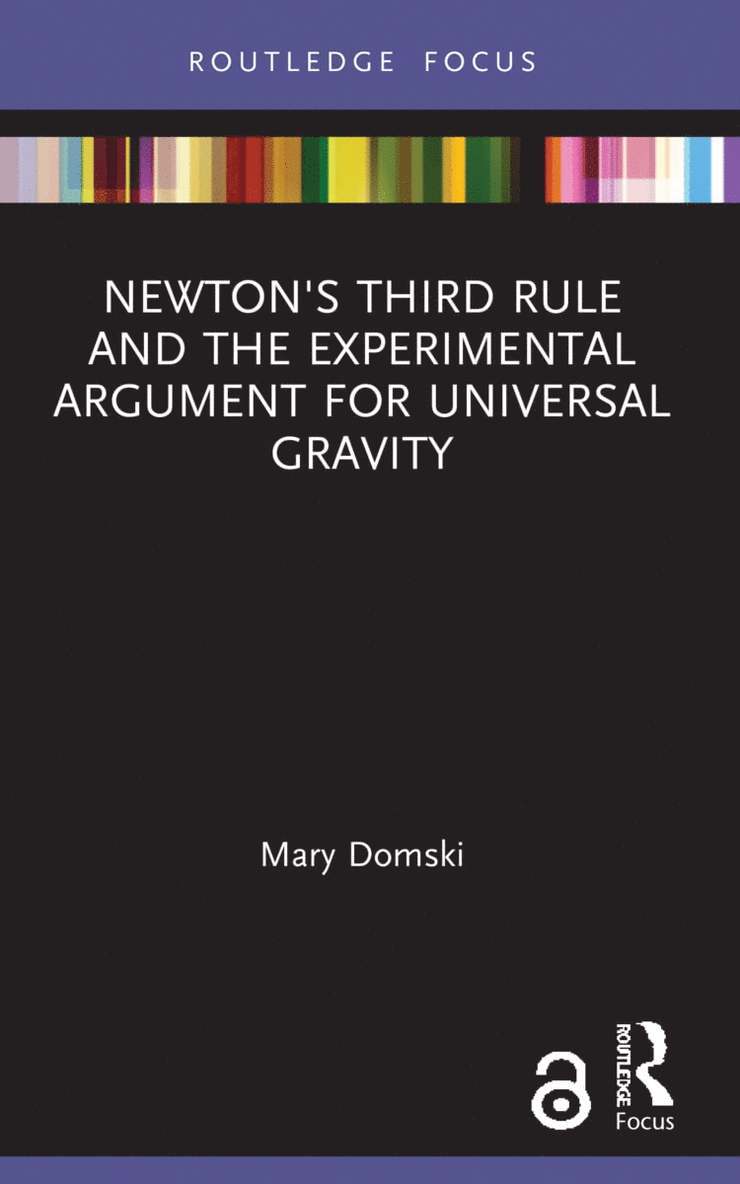
    Newton's Third Rule and the Experimental Argument for Universal Gravity

    AvMary Domski

    Inbunden, Engelska, 2021

    Del i serien Routledge Focus on Philosophy

    962 kr

    Beställningsvara. Skickas inom 10-15 vardagar. Fri frakt över 249 kr.

    Fler format och utgåvor

    Häftad

    316 kr

    Beskrivning

    This book provides a reading of Newton’s argument for universal gravity that is focused on the evidence-based, "experimental" reasoning that Newton associates with his program of experimental philosophy. It highlights the richness and complexity of the Principia and also draws important lessons about how to situate Newton in his natural philosophical context.The book has two primary objectives. First, it defends a novel interpretation of the third of Newton’s four Rules for the Study of Natural Philosophy – what the author terms the Two-Set Reading of Rule 3. Second, it argues that this novel interpretation of Rule 3 sheds additional light on the differences between Newton’s experimental philosophy and Descartes’s "hypothetical philosophy," and that it also illuminates how the practice of experimental philosophy allowed Newton to make a universal force of gravity the centerpiece of his explanation of the system of the world.Newton’s Third Rule and the Experimental Argument for Universal Gravity will be of interest to researchers and advanced students working on Newton’s natural philosophy, early modern philosophy, and the history of science.

    Produktinformation

    • Utgivningsdatum:2021-07-20
    • Mått:138 x 216 x 14 mm
    • Vikt:660 g
    • Format:Inbunden
    • Språk:Engelska
    • Serie:Routledge Focus on Philosophy
    • Antal sidor:104
    • Förlag:Taylor & Francis Ltd
    • ISBN:9781032020365

    Utforska kategorier

    • Filosofi inom Filosofi och religion
    • Naturvetenskapens filosofi inom Naturvetenskap och teknik
    • Naturvetenskapens historia inom Naturvetenskap och teknik

    Mer om författaren

    Mary Domski is Professor of Philosophy at the University of New Mexico. Her research focuses on the philosophy, mathematics, and science of the early modern period. She has authored numerous papers on Newton and Descartes and edited the special issue "Newton and Newtonianism" for The Southern Journal of Philosophy (2012).

    Innehållsförteckning

    • Chapter 1: IntroductionChapter 2: The Rules in the Argument for Universal GravityChapter 3: The Two-Set Reading of Rule 3 Chapter 4: Universal Qualities and Explaining the Phenomena