• Fri frakt över 249 kr
  • •
  • Snabba leveranser
  • •
  • Billiga böcker
Kundservice

Du är på sajten för privatpersoner.

Företag, bibliotek eller offentlig verksamhet?

Du handlar på classic.bokus.com, där alla dina funktioner finns intakta.
Till classic.bokus.com
Bokus logotyp. Gå till startsidan.
  • Erbjudanden
  • Nyheter
  • Student
  • Topplistor
  • Barn & ungdom
  • Bokus Play
  • E-böcker
  • Pocketböcker
  • Spel & pussel

10% rabatt på allt med kod: NYSTART10 →

Sidfot

Mina sidor

    Hjälp

    • Kundservice
    • Vanliga frågor och svar
    • Frakt och leverans
    • Retur vid ångerrätt
    • Reklamera vara
    • Betalning
    • Köpvillkor
    • Allmänna villkor
    • Information om webbplatsens tillgänglighet

    Om Bokus

    • Om oss
    • Pressrum
    • För studenter
    • För företag
    • För bibliotek och offentlig verksamhet
    • För leverantörer
    • Hållbarhet

    Populärt

    • Aktuella erbjudanden
    • Presentkort
    • Studentlitteratur
    • Nya böcker
    • Topplistor
    • Signerade böcker
    • Engelska böcker

    Inspiration

    • Boktips
    • BookTok
    • Populära bokserier
    • Barnbokskaraktärer
    • Populära författare
    Logotyp för Bokus
    Följ oss på Facebook (extern länk)Följ oss på Instagram (extern länk)Följ oss på YouTube (extern länk)Följ oss på TikTok (extern länk)
    bokus @ CookiesAnpassa cookiesIntegritetspolicyKöpvillkor
    Till Citymail hemsida (extern länk)Till Budbee hemsida (extern länk)Till Postnord hemsida (extern länk)Till Schenker hemsida (extern länk)Till Early Bird hemsida (extern länk)Till Walleys hemsida (extern länk)
    1. Samhälle och politik
    2. Samhälle och kultur
    3. Sociala och etiska frågor

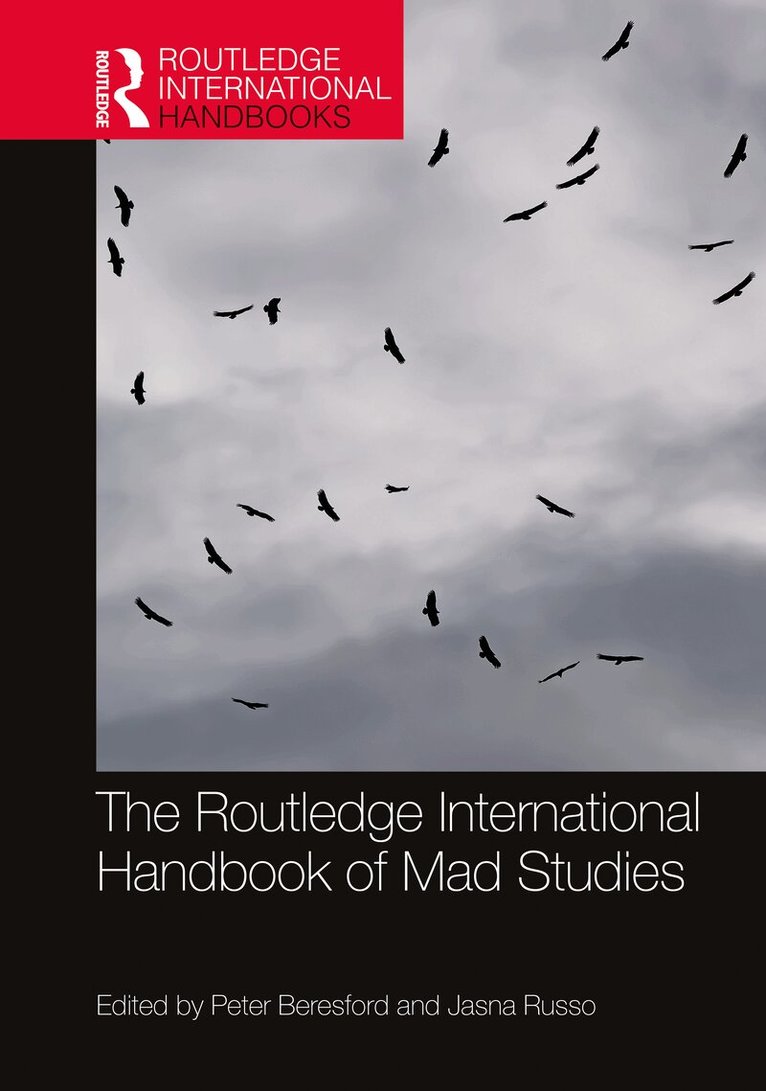
    Routledge International Handbook of Mad Studies

    AvPeter Beresford,Jasna Russo

    Häftad, Engelska, 2023

    Del i serien Routledge International Handbooks

    695 kr

    Beställningsvara. Skickas inom 10-15 vardagar. Fri frakt över 249 kr.

    Beskrivning

    By drawing broadly on international thinking and experience, this book offers a critical exploration of Mad Studies and advances its theory and practice.Comprised of 34 chapters written by international leading experts, activists and academics, this handbook introduces and advances Mad Studies, as well as exploring resistance and criticism, and clarifying its history, ideas, what it is, and what it can offer. It presents examples of mad studies in action, covering initiatives that have been taken, their achievements and what can be learned from them. In addition to sharing research findings and evidence, the book offers examples and insights for advancing understandings of experiences of madness and distress from the perspectives of those who have (had) those experiences, and also explores ways of supporting people oppressed by conventional understandings and systems.This book will be of interest to all scholars and students of Mad Studies, disability studies, sociology, socio- legal studies, mental health and medicine more generally.

    Produktinformation

    • Utgivningsdatum:2023-05-31
    • Mått:174 x 246 x 33 mm
    • Vikt:820 g
    • Format:Häftad
    • Språk:Engelska
    • Serie:Routledge International Handbooks
    • Antal sidor:392
    • Förlag:Taylor & Francis Ltd
    • ISBN:9781032024226

    Utforska kategorier

    • Sociala och etiska frågor inom Samhälle och politik
    • Sociologi inom Samhälle och politik
    • Socialt arbete och välfärd inom Samhälle och politik

    Mer om författaren

    Peter Beresford OBE is Visiting Professor at the University of East Anglia, UK and Co-Chair of Shaping Our Lives, the national disabled people’s and service users’ organization and network.Jasna Russo is a long-term activist in the international psychiatric survivor movement. She is Visiting Professor at Alice Salomon University of Applied Sciences in Berlin, Germany where she lectures in Research Methods as well as in Critical Diversity and Community Studies. Together with Angela Sweeney, Jasna Russo is a co-editor of Searching for a Rose Garden. Challenging Psychiatry, Fostering Mad Studies (2016).

    Innehållsförteckning

    • IntroductionPart 1: Mad Studies and political organising of people with psychiatric experience1. The international foundations of Mad Studies: Knowledge generated in collective action2. Reflections on power, knowledge and change3. Shifting identities as reflective personal responses to political changes4. A crazy, warrior and "respondona" Peruvian: All personal transformation is social and political5. Reflections on survivor knowledge and Mad Studies6. Speaking for ourselves: An early UK survivor activist’s account7. Fostering community responsibility: Perspectives from the Pan African Network of people with psychosocial disabilities8. Using survivor knowledge to influence public policy in the United States9. The social movement of people with psychosocial disabilities in Japan: Strategies for taking the struggle to academia10. Re-writing the master narrative: A prerequisite for mad liberationPart 2: Situating Mad Studies11. A genealogy of the concept of "Mad Studies"12. How is Mad Studies different from anti-psychiatry and critical psychiatry? 13. Mad Studies and disability studies14. Weaponizing absent knowledges: Countering the violence of mental health lawPart 3: Mad Studies and knowledge equality15. The subjects of oblivion: Subalterity, sanism, and racial erasure16. Institutional ceremonies? The (im)possibilities of transformative co-production in mental health17. "Are you experienced?" The use of experiential knowledge in mental health and its contribution to Mad Studies18. De-pathologising motherhood19. The professional regulation of madness in nursing and social work20. The (global) rise of anti-stigma campaignsPart 4: Doing Mad Studies21. Why we must talk about de-medicalization22. Imagining non-carceral futures with(in) Mad Studies23. Madness in the time of war: Post-war reflections on practice and research beyond the borders of psychiatry and development24. The architecture of my madness25. Re-conceptualising suicidality: Towards collective intersubjective responses26. De-coupling and re-coupling violence and madness27. Upcycling recovery: Potential alliances of recovery, inequality and Mad Studies28. Bodies, boundaries, b/orders: A recent critical history of differentialism and structural adjustment29. Spirituality, psychiatry, and Mad Studies. Part 5: Inquiring into the future for Mad Studies30. Taking Mad Studies back out into the community31. Interrogating Mad Studies in the academy: Bridging the community/academy divide32. Madness, decolonisation and mental health activism in Africa33. Navigating voices, politics, positions amidst peers: Resonances and dissonances in India34. ‘Madness’ as a term of division, or rejection35. Afterword: The ethics of making knowledge together36. Postscript: Mad Studies in a maddening world