• Fri frakt över 249 kr
  • •
  • Snabba leveranser
  • •
  • Billiga böcker
Kundservice

Du är på sajten för privatpersoner.

Företag, bibliotek eller offentlig verksamhet?

Du handlar på classic.bokus.com, där alla dina funktioner finns intakta.
Till classic.bokus.com
Bokus logotyp. Gå till startsidan.
  • Erbjudanden
  • Nyheter
  • Student
  • Topplistor
  • Barn & ungdom
  • Bokus Play
  • E-böcker
  • Pocketböcker
  • Spel & pussel

10% rabatt på allt med kod: NYSTART10 →

Sidfot

Mina sidor

    Hjälp

    • Kundservice
    • Vanliga frågor och svar
    • Frakt och leverans
    • Retur vid ångerrätt
    • Reklamera vara
    • Betalning
    • Köpvillkor
    • Allmänna villkor
    • Information om webbplatsens tillgänglighet

    Om Bokus

    • Om oss
    • Pressrum
    • För studenter
    • För företag
    • För bibliotek och offentlig verksamhet
    • För leverantörer
    • Hållbarhet

    Populärt

    • Aktuella erbjudanden
    • Presentkort
    • Studentlitteratur
    • Nya böcker
    • Topplistor
    • Signerade böcker
    • Engelska böcker

    Inspiration

    • Boktips
    • BookTok
    • Populära bokserier
    • Barnbokskaraktärer
    • Populära författare
    Logotyp för Bokus
    Följ oss på Facebook (extern länk)Följ oss på Instagram (extern länk)Följ oss på YouTube (extern länk)Följ oss på TikTok (extern länk)
    bokus @ CookiesAnpassa cookiesIntegritetspolicyKöpvillkor
    Till Citymail hemsida (extern länk)Till Budbee hemsida (extern länk)Till Postnord hemsida (extern länk)Till Schenker hemsida (extern länk)Till Early Bird hemsida (extern länk)Till Walleys hemsida (extern länk)
    1. Samhälle och politik
    2. Samhälle och kultur
    3. Kultur och medier
    4. Kulturvetenskap

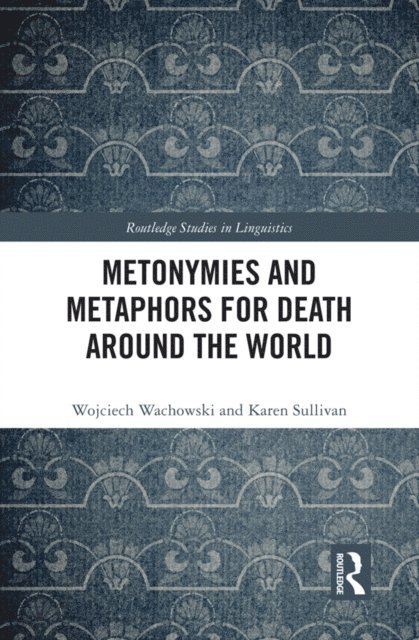
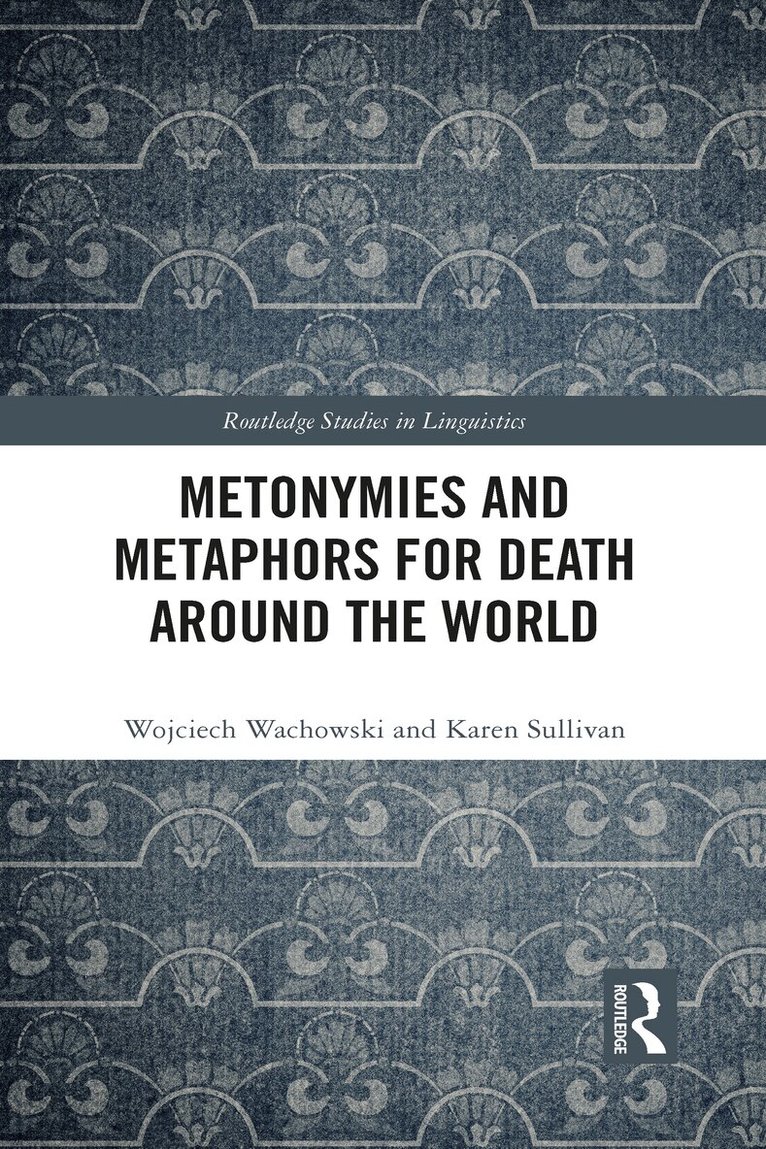
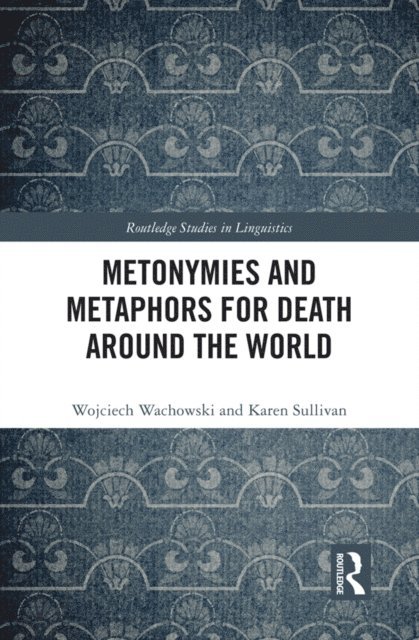
    Metonymies and Metaphors for Death Around the World

    AvWojciech Wachowski,Karen Sullivan

    Häftad, Engelska, 2023

    Del i serien Routledge Studies in Linguistics

    624 kr

    Beställningsvara. Skickas inom 10-15 vardagar. Fri frakt över 249 kr.

    Fler format och utgåvor

    Inbunden

    2 421 kr

    Beskrivning

    This book reflects on the ways in which metonymy and metaphor are used conceptually and linguistically to mitigate the more difficult dimensions of death and dying, setting out a unique line of research within Conceptual Metaphor Theory. The volume argues that metonymic and metaphoric descriptions of death and dying reflect taboos, concealment, and other considerations not found in figurative descriptions of life, producing distinct forms of euphemism, frames, and mental spaces particular to conceptualizations of death.The first part takes a closer look at metonymy to illuminate the ways in which it allows a person to zoom in on death’s more inoffensive dimensions or zoom out from its more troubling aspects. The second part focuses on the more palatable concepts which metaphorically structure and help to better understand death.A wide range of classical and modern examples from European, Asian, Australian, and African languages and cultures showcase points of overlap and divergence. Opening up new lines of inquiry into research on death and dying and offering a linguistically focused complement to anthropological and religious studies on the topic, this book will be of interest to scholars in cognitive linguistics, sociolinguistics, cross-cultural communication, and cultural studies.

    Produktinformation

    • Utgivningsdatum:2023-09-25
    • Mått:152 x 229 x 14 mm
    • Vikt:300 g
    • Format:Häftad
    • Språk:Engelska
    • Serie:Routledge Studies in Linguistics
    • Antal sidor:171
    • Förlag:Taylor & Francis Ltd
    • ISBN:9781032025315

    Utforska kategorier

    • Kulturvetenskap inom Samhälle och politik
    • Språkvetenskap och lingvistik inom Språk och ordböcker

    Mer om författaren

    Wojciech Wachowski is Assistant Professor in the Institute of Modern Languages and Applied Linguistics at Kazimierz Wielki University in Bydgoszcz, Poland. Karen Sullivan is a Senior Lecturer in Linguistics at the University of Queensland, Australia.

    Recensioner i media

    "The title of this book should not deceive anyone. The book is much more, and much more important, than just an annotated collection of interesting metaphors and metonymies that deal with death in a large number of languages. It presents the reader with a coherent explanation of why the metaphors and metonymies, and the thought patterns that go with them, are both convergent and divergent around the world’s cultures. In reading the book, we learn about how we think about death, how our fears affect the way we think, and how we try to make this inevitable end-stage of human life acceptable to ourselves." - Zoltán Kövecses, Eötvös Loránd University"As scholars of rhetoric situated in cognitive linguistic studies, we believe that this book is invaluable to humanities and social science scholars invested in cognitive linguistics, sociolinguistics, intercultural communication, and cultural studies, encouraging scholars to explore metaphorical and metonymical mechanisms in discourses across other cultures and to generate more insightful triumphs." - Shukang Li & Hailiang Yin (2023): Metonymies and metaphors for deatharound the world, Studia Neophilologica"Overall, this book provides a substantial insight into how most euphemisms and metaphors can take on a more subtle form and not only serve to replace a taboo, but can also be used by politicians to address specific issues in broader innocuous terms or in less threatening ways for the public."- Fang Zhu, Guangdong University of Foreign Studies,China

    Innehållsförteckning

    • Table of ContentsChapter 1. Introduction1.1 Why not be direct about death?1.2 Taboo, euphemism and dysphemism1.3 Highlighting and hiding1.4 Do metonymy and metaphor let us achieve a long-lasting backgrounding effect?1.5 The structure of the book1.6 Sources and methodsPART I METONYMYChapter 2. Why have metonymies for death?2.1 Types of metonymic relation2.2 Why are part for whole and whole for part metonymies so important?2.3 Why are part for whole and whole for part used to talk about death?2.4 How do we select the source?2.5 ConclusionChapter 3. How is the part for whole used to talk about death?3.1 The initial stage3.2 The central and post-central stage3.3 The final stage3.4 The post-final stage – the effect of death3.5 Multiple part for whole metonymies3.6 Part for whole in metaphor and blending3.7 Form metonymy3.8 ConclusionChapter 4. How is the whole for part used to talk about death?4.1 Whole for part – euphemising death and dying4.2 Whole for part and deliberately caused death4.3 Whole for part and suicide4.4 Whole for part in militarese and other specialised discourse genres4.5 Whole for part – multiple levels of euphemism4.6 Whole for part euphemisms for death-related concepts4.3 ConclusionPART II METAPHORChapter 5. Why Use Metaphors for Death?Chapter 6. The Death of Sleep6.1 The experiential basis of death is sleep6.2 The state of the ‘soul’ during death and sleep6.3 Funerary customs that extend the correspondences between death and sleep6.4 Dreams and the afterlife6.5 Awakening and resurrection6.6 The manifestations of the death is sleep metaphor6.7 Examples of blending6.8 ConclusionChapter 7. Darkness, night and winter7.1 A lifetime is a fire7.2 A lifetime is a year and a lifetime is a day7.3 Blending7.4 ConclusionChapter 8. The End of a Journey8.1 The deceased are 'gone', but where did they 'go'?8.2 The Source of the voyage in death is departure8.3 'Going' to Heaven, eternity, or another Goal8.4 How do we 'get there'? The Path in death is departure8.5 When the body is a container 8.6 'Going to one’s grave' as a conceptual blend8.7 Conclusion: To what extent are we all going together?Chapter 9. Game Over9.1 Death as a game/entertainment9.2 Cultural frames in death is the end of a game/entertainment9.3 Death as a player: A conceptual blend9.4 The deceased as a player – a conceptual blend9.5 ConclusionChapter 10. The Unseemly Sights and Sounds of Death10.1 Position of the body10.2 The sounds of life and death10.3 Burial of the body10.4 Funerary rites and artefacts10.5 Manner of death10.6 Processes of decay10.7 Blending10.8 ConclusionChapter 11. Conclusion11.1 The hiding power of death metonymies11.2 Near-universals in the human experience of deathReferencesAttributions