• Fri frakt över 249 kr
  • •
  • Snabba leveranser
  • •
  • Billiga böcker
Kundservice

Du är på sajten för privatpersoner.

Företag, bibliotek eller offentlig verksamhet?

Du handlar på classic.bokus.com, där alla dina funktioner finns intakta.
Till classic.bokus.com
Bokus logotyp. Gå till startsidan.
  • Erbjudanden
  • Nyheter
  • Student
  • Topplistor
  • Barn & ungdom
  • Bokus Play
  • E-böcker
  • Pocketböcker
  • Spel & pussel

10% rabatt på allt med kod: NYSTART10 →

Sidfot

Mina sidor

    Hjälp

    • Kundservice
    • Vanliga frågor och svar
    • Frakt och leverans
    • Retur vid ångerrätt
    • Reklamera vara
    • Betalning
    • Köpvillkor
    • Allmänna villkor
    • Information om webbplatsens tillgänglighet

    Om Bokus

    • Om oss
    • Pressrum
    • För studenter
    • För företag
    • För bibliotek och offentlig verksamhet
    • För leverantörer
    • Hållbarhet

    Populärt

    • Aktuella erbjudanden
    • Presentkort
    • Studentlitteratur
    • Nya böcker
    • Topplistor
    • Signerade böcker
    • Engelska böcker

    Inspiration

    • Boktips
    • BookTok
    • Populära bokserier
    • Barnbokskaraktärer
    • Populära författare
    Logotyp för Bokus
    Följ oss på Facebook (extern länk)Följ oss på Instagram (extern länk)Följ oss på YouTube (extern länk)Följ oss på TikTok (extern länk)
    bokus @ CookiesAnpassa cookiesIntegritetspolicyKöpvillkor
    Till Citymail hemsida (extern länk)Till Budbee hemsida (extern länk)Till Postnord hemsida (extern länk)Till Schenker hemsida (extern länk)Till Early Bird hemsida (extern länk)Till Walleys hemsida (extern länk)
    1. Ekonomi och Ledarskap
    2. Industrier och branscher
    3. Lantbruk, fiske och skogsbruk

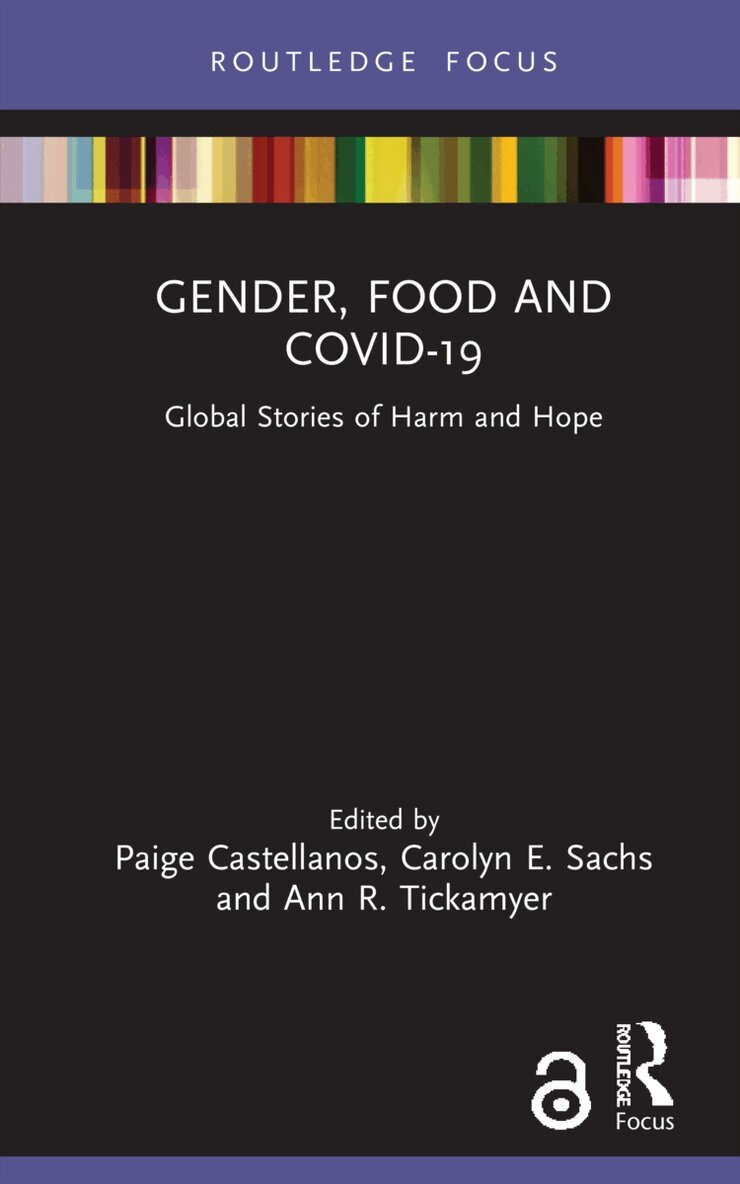
    Gender, Food and COVID-19

    Global Stories of Harm and Hope

    AvPaige Castellanos,Carolyn E. Sachs

    Inbunden, Engelska, 2022

    Del i serien Routledge Focus on Environment and Sustainability

    961 kr

    Beställningsvara. Skickas inom 10-15 vardagar. Fri frakt över 249 kr.

    Beskrivning

    This book documents how COVID-19 impacts gender, agriculture, and food systems across the globe with on-the-ground accounts and personal reflections from scholars, practitioners, and community members.During the coronavirus pandemic with many people under lockdown, continual agricultural production and access to food remain essential. Women provide much of the formal and informal work in agriculture and food production, distribution, and preparation often under precarious conditions. A cadre of scholars and practitioners from across the globe provide their timely observations on these issues as well as more personal reflections on its impact on their lives and work. Four major themes emerge from these accounts and are interwoven throughout: the pervasiveness of food insecurity, the ubiquity of women’s care work, food justice, and policies and research that can that can result in a resilience that reimagines the future for greater gender and intersectional equality. We identify what lessons we can learn from this global pandemic about research and practices related to gender, food, and agricultural systems to strive for more equitable arrangements.This book will be of great interest to students, scholars and practitioners working on gender and food and agriculture during this global pandemic and beyond.The Open Access version of this book, available at www.taylorfrancis.com, has been made available under a Creative Commons Attribution-Non Commercial-No Derivatives 4.0 license.

    Produktinformation

    • Utgivningsdatum:2022-01-14
    • Mått:138 x 216 x 16 mm
    • Vikt:340 g
    • Format:Inbunden
    • Språk:Engelska
    • Serie:Routledge Focus on Environment and Sustainability
    • Antal sidor:180
    • Förlag:Taylor & Francis Ltd
    • ISBN:9781032055985

    Utforska kategorier

    • Lantbruk, fiske och skogsbruk inom Ekonomi och Ledarskap
    • Agronomi inom Naturvetenskap och teknik

    Mer om författaren

    Paige Castellanos is currently an Assistant Research Professor at Pennsylvania State University, US, in Ag Sciences Global and Rural Sociology. She is the co-editor of the Routledge Handbook of Gender and Agriculture (Routledge, 2020). Carolyn E. Sachs is Professor Emerita of Rural Sociology and Women’s, Gender, and Sexuality Studies at Pennsylvania State University, US. She is the co-editor of the Routledge Handbook of Gender and Agriculture (Routledge, 2020) and editor of Gender, Agriculture and Agrarian Transformations (Routledge, 2019). Ann R. Tickamyer is Professor Emerita of Rural Sociology and Demography at Pennsylvania State University, US. She is the author and editor of multiple books, including Rural Poverty in the United States (2017, with Jennifer Sherman and Jennifer Warlick).

    Innehållsförteckning

    • Introduction Part 1. Food insecurity 1. COVID-19, gender, and small-scale farming in Nepal 2. Gender implications of COVID-19 in Cambodia 3. COVID-19, India, small-scale farmers, and indigenous Adivasi communities – the answer to the future lies in going back to basics 4. Social aspects of women’s agribusiness in times of COVID-19 in the Central Highlands of Vietnam Part 2. Care work in families, households, and communities 5. Covid-19, gender, agriculture, and future research 6. Renegotiating care from the local to global Part 3. Intersectional inequalities in the food system 7. Facing COVID-19 in rural Honduras: experiences of an indigenous women’s association 8. Cultivating community resilience: working in solidarity in and beyond crisis 9. COVID-19, migrant workers, and meatpacking in US agriculture: a critical feminist reflection 10. Queerness in the US agrifood system during COVID-19 11. Food corporation allegiance or worker solidarity? Summoning restaurant worker solidarity in the age of COVID-19 Part 4. Beyond COVID: moving forward with policy and research 12. COVID-19 and feminist methods: one year later 13. The importance of sex-disaggregated and gender data to a gender-inclusive COVID-19 response in the aquatic food systems 14. In and out of place 15. Beyond COVID-19: building the resilience of vulnerable communities in African food systems Conclusion