• Fri frakt över 249 kr
  • •
  • Snabba leveranser
  • •
  • Billiga böcker
Kundservice

Du är på sajten för privatpersoner.

Företag, bibliotek eller offentlig verksamhet?

Du handlar på classic.bokus.com, där alla dina funktioner finns intakta.
Till classic.bokus.com
Bokus logotyp. Gå till startsidan.
  • Erbjudanden
  • Nyheter
  • Student
  • Topplistor
  • Barn & ungdom
  • Bokus Play
  • E-böcker
  • Pocketböcker
  • Spel & pussel

Må bättre, för mindre! Upp till 50% rabatt på hälsoböcker

Sidfot

Mina sidor

    Hjälp

    • Kundservice
    • Vanliga frågor och svar
    • Frakt och leverans
    • Retur vid ångerrätt
    • Reklamera vara
    • Betalning
    • Köpvillkor
    • Allmänna villkor
    • Information om webbplatsens tillgänglighet

    Om Bokus

    • Om oss
    • Pressrum
    • För studenter
    • För företag
    • För bibliotek och offentlig verksamhet
    • För leverantörer
    • Hållbarhet

    Populärt

    • Aktuella erbjudanden
    • Presentkort
    • Studentlitteratur
    • Nya böcker
    • Topplistor
    • Signerade böcker
    • Engelska böcker

    Inspiration

    • Boktips
    • BookTok
    • Populära bokserier
    • Barnbokskaraktärer
    • Populära författare
    Logotyp för Bokus
    Följ oss på Facebook (extern länk)Följ oss på Instagram (extern länk)Följ oss på YouTube (extern länk)Följ oss på TikTok (extern länk)
    bokus @ CookiesAnpassa cookiesIntegritetspolicyKöpvillkor
    Till Citymail hemsida (extern länk)Till Budbee hemsida (extern länk)Till Postnord hemsida (extern länk)Till Schenker hemsida (extern länk)Till Early Bird hemsida (extern länk)Till Walleys hemsida (extern länk)
    1. Juridik
    2. Särskilda rättsområden
    3. Straffrätt: process och brott

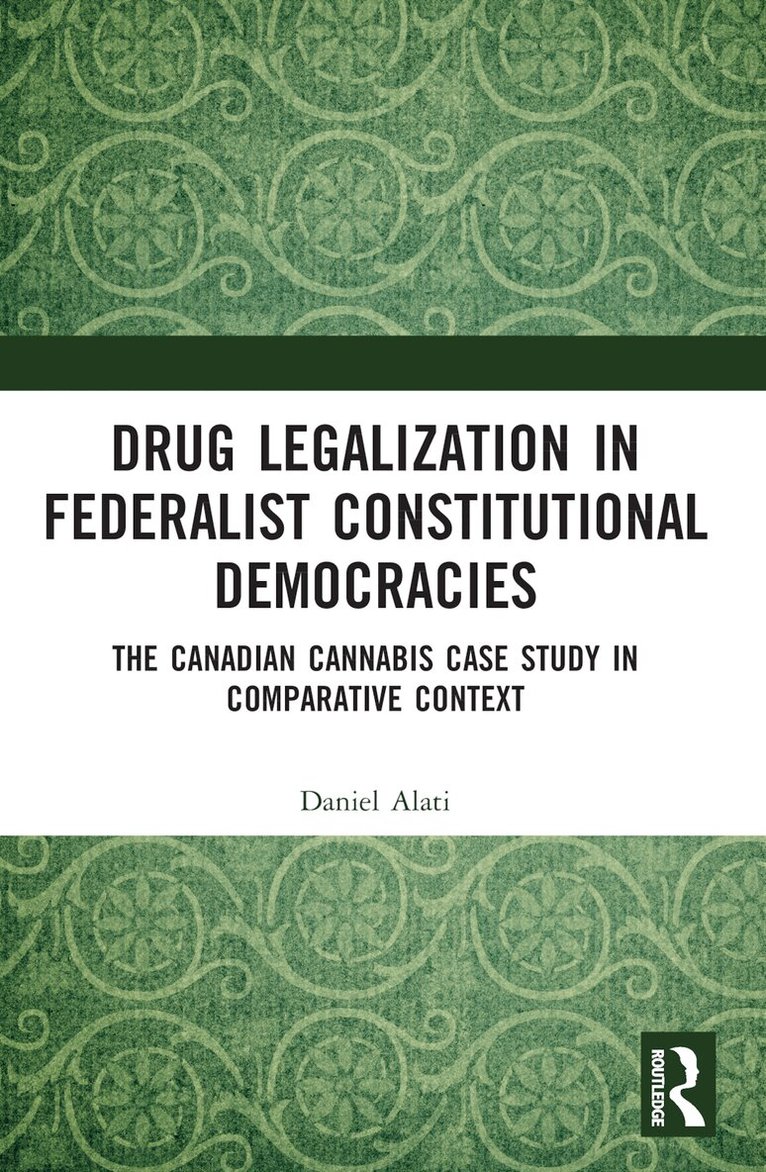
    Drug Legalization in Federalist Constitutional Democracies

    The Canadian Cannabis Case Study in Comparative Context

    AvDaniel Alati

    Häftad, Engelska, 2024

    574 kr

    Beställningsvara. Skickas inom 10-15 vardagar. Fri frakt över 249 kr.

    Fler format och utgåvor

    E-bok

    679 kr

    E-bok

    679 kr

    Inbunden

    2 227 kr

    Beskrivning

    This book uses the Canadian cannabis legalization experiment, analyzed in the historical context of wider drug criminalization in Canada and placed in an international perspective, to examine important lessons about the differential implementation of federal law in jurisdictions within federalist constitutional democracies. Utilizing a socio-legal, interdisciplinary methodology, the work provides a comprehensive history of Canada’s federal drug policy and engages in a critical appraisal of its provincial implementation. It also presents a significant international and comparative component, bringing in analyses of the status of drug legalization in other federalist constitutional democracies. Readers of the book will thus gain a comprehensive knowledge of drug legalization in federalist constitutional democracies. They will also better understand the political and cultural factors that impact upon differential implementation of federal law in individual jurisdictions, including, but not limited to, legacies of racism and stigmatization of drug use. Using the experience of Canada and other countries, future challenges and lessons to be learned for states considering federal drug legalization are analyzed and explained. The book will be a valuable resource for students, academics and policy-makers in the areas of Criminal Law, Constitutional Law, Criminology, Socio-Legal Studies, Indigenous Studies, and Drug and Health Policy Studies.

    Produktinformation

    • Utgivningsdatum:2024-05-27
    • Mått:156 x 234 x 12 mm
    • Vikt:390 g
    • Format:Häftad
    • Språk:Engelska
    • Antal sidor:200
    • Förlag:Taylor & Francis Ltd
    • ISBN:9781032061122

    Utforska kategorier

    • Straffrätt: process och brott inom Juridik
    • Offentlig förvaltning inom Juridik
    • Grundlagar, konstitution inom Juridik

    Mer om författaren

    Daniel Alati is a professor in the Sociology Department, MacEwan University, Canada. His research falls into the categories of comparative criminal justice, comparative national security and anti-terrorism law, and criminal law and procedure.

    Innehållsförteckning

    • 1 Introduction 1.1 Aims and Objectives 1.2 Methodology 1.3 Chapter Summaries 2 Historical Evolution of Canada’s Federal Drug Policy 2.1 The Passage of the Opium Act and the Beginning of Prohibition 2.2 The LeDain Commission Inquiry and Subsequent Political Indifference 2.3 “The War on Drugs” and the Passage of the Controlled Drugs and Substances Act 2.4 The Turn of the Century: A Return to Drug Policy Reform Inertia 2.5 The Turn of the Century: Legal Challenges Prompt Changes to Medical Cannabis Regulation 2.6 The Passage of the 2018 Cannabis Act: A Missed Opportunity 2.7 Voices From the Front Lines: Indigenous Community and Cannabis Industry Leaders Echo Academic Concerns 2.8 Conclusion 3 Provincial Implementation of Cannabis Legalization 3.1 Federalism Issues: Cooperation or Unilateralism? 3.2 Federalism Issues: Further Exclusion of Indigenous Participation 3.3 Broad Trends and Issues Associated with Provincial Implementation 3.4 Provincial Implementation of Cannabis Legalization in Ontario 3.5 Provincial Implementation of Cannabis Legalization in Alberta 3.6 Provincial Implementation of Cannabis Legalization in Quebec 3.7 Provincial Implementation of Cannabis Legalization in British Columbia 3.8 Provincial Implementation of Cannabis Legalization in Saskatchewan 3.9 Provincial Implementation of Cannabis Legalization in Manitoba 3.10 Provincial Implementation of Cannabis Legalization in Canada’s Eastern Provinces 3.11 Conclusion: Is a Course Correction Necessary? 4 Status of Drug Legalization in Other Federalist Constitutional Democracies 4.1 Commonwealth Jurisdictions 4.1.1 Australia 4.1.2 Jamaica 4.1.3 New Zealand 4.1.4 South Africa 4.1.5 United Kingdom 4.2 European Countries 4.2.1 Czech Republic 4.2.2 Germany 4.2.3 Italy 4.2.4 Malta 4.2.5 Netherlands 4.2.6 Portugal 4.2.7 Spain 4.2.8 Switzerland 4.3 Latin America 4.3.1 Argentina 4.3.2 Brazil 4.3.3 Chile 4.3.4 Columbia 4.3.5 Costa Rica 4.3.6 Mexico 4.3.7 Paraguay 4.3.8 Peru 4.3.9 Uruguay4.4 United States4.4.1 Alaska4.4.2 Arizona 4.4.3 California 4.4.4 Colorado4.4.5 Connecticut 4.4.6 Illinois 4.4.7 Maine 4.4.8 Massachusetts 4.4.9 Michigan 4.4.10 Montana 4.4.11 Nevada4.4.12 New Jersey 4.4.13 New Mexico 4.4.14 New York 4.4.15 Oregon 4.4.16 Vermont 4.4.17 Virginia 4.4.18 Washington State4.5 Conclusion 5 Lessons Learned and Future Challenges 5.1 Lessons Learned: Indigenous Exclusion Must Be Addressed 5.2 Lessons Learned: Time to Write a New Chapter in Canada’s Racist Drug History 5.3 Lessons Learned from Abroad: Other Jurisdictions Have Done More to Promote Social Equity, Broader Drug Policy Liberalization, and Harm Reduction Approaches 5.4 Future Challenges: The Government Should Listen to the “Voices” of its Industry 5.4.1 Future Challenges: Changes to the Excise Tax and Related Issues 5.4.2 Future Challenges: The Inadequacy of Health Canada Must Be Addressed 5.4.3 Future Challenges: Marketing and Advertising Restrictions Need to Be Relaxed 5.4.4 Future Challenges: The Issue of Market Concentration 5.4.5 Future Challenges: The Regulation of Consumption Lounges 5.4.6 Future Challenges: The Need for More Transparent Data 5.5 Conclusion: Where to Begin? 6 Conclusion 6.1 Recommendations for Future Change to Cannabis (and Wider Drug) Policy in Canada 6.2 Looking Towards the Future: Directions for Future Research