• Fri frakt över 249 kr
  • •
  • Snabba leveranser
  • •
  • Billiga böcker
Kundservice

Du är på sajten för privatpersoner.

Företag, bibliotek eller offentlig verksamhet?

Du handlar på classic.bokus.com, där alla dina funktioner finns intakta.
Till classic.bokus.com
Bokus logotyp. Gå till startsidan.
  • Erbjudanden
  • Nyheter
  • Student
  • Topplistor
  • Barn & ungdom
  • Bokus Play
  • E-böcker
  • Pocketböcker
  • Spel & pussel

10% rabatt på allt med kod: NYSTART10 →

Sidfot

Mina sidor

    Hjälp

    • Kundservice
    • Vanliga frågor och svar
    • Frakt och leverans
    • Retur vid ångerrätt
    • Reklamera vara
    • Betalning
    • Köpvillkor
    • Allmänna villkor
    • Information om webbplatsens tillgänglighet

    Om Bokus

    • Om oss
    • Pressrum
    • För studenter
    • För företag
    • För bibliotek och offentlig verksamhet
    • För leverantörer
    • Hållbarhet

    Populärt

    • Aktuella erbjudanden
    • Presentkort
    • Studentlitteratur
    • Nya böcker
    • Topplistor
    • Signerade böcker
    • Engelska böcker

    Inspiration

    • Boktips
    • BookTok
    • Populära bokserier
    • Barnbokskaraktärer
    • Populära författare
    Logotyp för Bokus
    Följ oss på Facebook (extern länk)Följ oss på Instagram (extern länk)Följ oss på YouTube (extern länk)Följ oss på TikTok (extern länk)
    bokus @ CookiesAnpassa cookiesIntegritetspolicyKöpvillkor
    Till Citymail hemsida (extern länk)Till Budbee hemsida (extern länk)Till Postnord hemsida (extern länk)Till Schenker hemsida (extern länk)Till Early Bird hemsida (extern länk)Till Walleys hemsida (extern länk)
    1. Språk och ordböcker
    2. Språkvetenskap och lingvistik

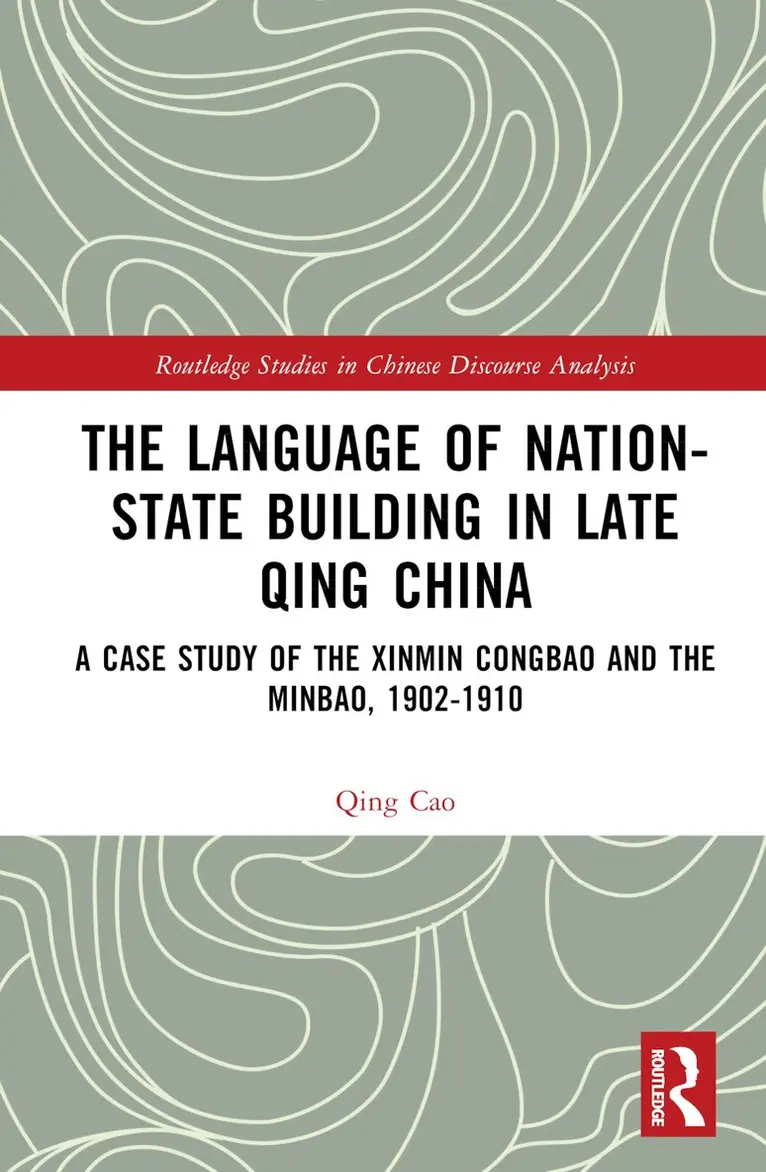
    Language of Nation-State Building in Late Qing China

    A Case Study of the Xinmin Congbao and the Minbao, 1902-1910

    AvQing Cao

    Inbunden, Engelska, 2023

    Del i serien Routledge Studies in Chinese Discourse Analysis

    2 117 kr

    Beställningsvara. Skickas inom 10-15 vardagar. Fri frakt över 249 kr.

    Fler format och utgåvor

    E-bok

    760 kr

    E-bok

    760 kr

    Häftad

    624 kr

    Beskrivning

    The Language of Nation-State Building in Late Qing China investigates the linguistic and intellectual roots of China’s modern transformation by presenting a systematic study of the interplay between language innovation and socio-political upheavals in the final decade of the Qing Dynasty.This book examines the formations, internal tensions, and promotion of such macroconcepts as ‘nation people’ (guomin 国民), nation (minzu 民族), society (qun 群), state (guojia 国家) and revolution (gemin 革命) as novel ideas borrowed from Europe but mediated through Meiji Japan. Using corpus-based discourse analysis of the full-text corpus (4.2 million words) of the two most influential periodicals, Xinmin Congbao (新民丛报) and Minbao (民报), this book scrutinises the multi-faceted formulations of these concepts and their impact. It underscores the adaptation and appropriation of European post-enlightenment values to the socio-political conditions of late Qing society.The analysis centres on the epic debate (1905-7) between these two periodicals that offered two distinctive visions of future China. Comparable to the great eighteenth-century debate between Edmund Burke and Thomas Paine on the French Revolution, the Chinese debate has hitherto attracted little scholarly attention outside China. Yet it not only turned the tidal wave of public opinion against the Manchu monarchy and contributed to its downfall in 1911; it has also given rise to a radical undercurrent of intellectual thinking whose ramifications have been keenly felt throughout twentieth-century China. This book represents the first study in English on this press debate that contributes significantly to the intellectual foundation of modern China.This book will be useful and relevant to academics, postgraduate students and final year undergraduate students in the field of Chinese studies, and anyone interested in the role of language in shaping modern intellectual history.

    Produktinformation

    • Utgivningsdatum:2023-01-31
    • Mått:156 x 234 x 16 mm
    • Vikt:440 g
    • Format:Inbunden
    • Språk:Engelska
    • Serie:Routledge Studies in Chinese Discourse Analysis
    • Antal sidor:134
    • Förlag:Taylor & Francis Ltd
    • ISBN:9781032074214

    Utforska kategorier

    • Språkvetenskap och lingvistik inom Språk och ordböcker
    • Asiens historia inom Historia och arkeologi

    Mer om författaren

    Qing Cao is Associate Professor in Chinese Studies at the School of Modern Languages and Cultures, Durham University.

    Recensioner i media

    ‘The press was a powerful vector for creating the nation in modern China. Qing Cao uses original sources and rigorous analysis to show that a key newspaper contributed to this process. Fascinating reading for all scholars of modern nationalism.'Rana Mitter, Professor of the History and Politics of Modern China, University of Oxford‘New concepts, new words for them, new actions from them! How powerful the wordsmiths were, in laying the fires for China’s century of alternating regeneration and destruction, is laid bare in Qing Cao’s study, a remarkable illustration of the role of language in shaping history.’Hugo de Burgh, Walt Disney Professor of Media & Communications, Schwarzman College, Tsinghua University‘What was a nation, a state, a nation state? A citizen? Even a society of citizens? Let alone a republic. With democracy. With rights. There were no words for these things in late Qing China and, thus, in the everyday population, no concepts which made sense of what foreign-trained intellectuals were slowly beginning to discuss – hesitantly, for they too had no Chinese words to encompass world-wide movements and conditions of modernity. The debate had first to take place, with words and concepts clarified by the literate and educated. Qing Cao has traced these debates in the most influential periodicals of their day. It is an intellectual history that is also a linguistic history. The foundational concepts came from Europe, from the French Revolution. To even articulate ways of going forward that would match the organisational prowess of the imperial nations that came to China required not only a reinvention of the Chinese sense of self, but the creation of a vocabulary that could express that new self. The marvel of his book is how well Qing Cao renders this. No revolution has ever been so transformative: not just a world reborn, but all selves in the world reborn. The Chinese could only stand up when they first learned to think forwards and speak in a new conceptual language. The fruits of that era remain with us today.’Stephen Chan OBE, Professor of World Politics, School of Oriental & African Studies, University of London

    Innehållsförteckning

    • Preface AcknowledgementsAbbreviations Introduction Intellectual and Linguistic Genesis of the Chinese NationChapter One The Lure of Utopia: Liang Qichao and Xinmin CongbaoChapter Two The Discourse of Xinmin: Mindset Remodelling Chapter Three The Press Debate between Xinmin Congbao and Minbao, 1905-1907Chapter Four The Discourse of Guomin: Rule of the People vs. Rule of the StateChapter Five Translating ‘Nation’: The Remaking of the Chinese SocietyChapter Six Rupture in Modernity and the Struggle for National Identities Appendix 1 List of key articles in the late Qing press debate corpusAppendix 2 Top 20 concept nouns in the late Qing press debateAppendix 3 Top 50 concept nouns in the full-text of Xinmin Congbao and MinbaoAppendix 4 Occurrence frequency of the term ‘state 国家’, 1830-1930Appendix 5 Occurrence frequency of the term ‘nation 民族’, 1830-1930Appendix 6 Occurrence frequency of the term ‘revolution 革命’, 1830-1930Appendix 7 Occurrence frequency of the term ‘democracy 民主’, 1830-1930Appendix 8 Occurrence frequency of the term ‘people’s rights 民权’, 1830-1930Appendix 9 The top 30 collocation word chains for guomin in the debate corpusIndex