• Fri frakt över 249 kr
  • •
  • Snabba leveranser
  • •
  • Billiga böcker
Kundservice

Du är på sajten för privatpersoner.

Företag, bibliotek eller offentlig verksamhet?

Du handlar på classic.bokus.com, där alla dina funktioner finns intakta.
Till classic.bokus.com
Bokus logotyp. Gå till startsidan.
  • Erbjudanden
  • Nyheter
  • Student
  • Topplistor
  • Barn & ungdom
  • Bokus Play
  • E-böcker
  • Pocketböcker
  • Spel & pussel

10% studentrabatt med kod TERM26

Sidfot

Mina sidor

    Hjälp

    • Kundservice
    • Vanliga frågor och svar
    • Frakt och leverans
    • Retur vid ångerrätt
    • Reklamera vara
    • Betalning
    • Köpvillkor
    • Allmänna villkor
    • Information om webbplatsens tillgänglighet

    Om Bokus

    • Om oss
    • Pressrum
    • För studenter
    • För företag
    • För bibliotek och offentlig verksamhet
    • För leverantörer
    • Hållbarhet

    Populärt

    • Aktuella erbjudanden
    • Presentkort
    • Studentlitteratur
    • Nya böcker
    • Topplistor
    • Signerade böcker
    • Engelska böcker

    Inspiration

    • Boktips
    • BookTok
    • Populära bokserier
    • Barnbokskaraktärer
    • Populära författare
    Logotyp för Bokus
    Följ oss på Facebook (extern länk)Följ oss på Instagram (extern länk)Följ oss på YouTube (extern länk)Följ oss på TikTok (extern länk)
    bokus @ CookiesAnpassa cookiesIntegritetspolicyKöpvillkor
    Till Citymail hemsida (extern länk)Till Budbee hemsida (extern länk)Till Postnord hemsida (extern länk)Till Schenker hemsida (extern länk)Till Early Bird hemsida (extern länk)Till Walleys hemsida (extern länk)
    1. Juridik
    2. Särskilda rättsområden
    3. Författningsrätt och förvaltningsrätt
    4. Mänskliga och medborgerliga rättigheter

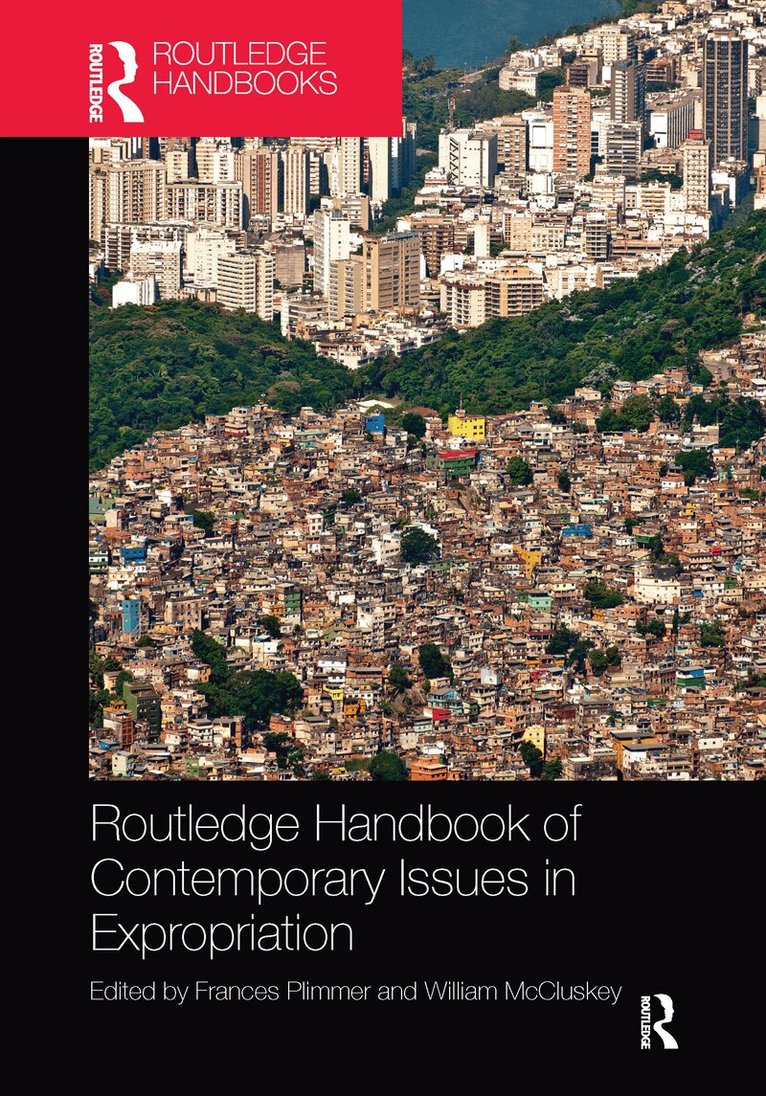
    Routledge Handbook of Contemporary Issues in Expropriation

    AvFrances Plimmer,William McCluskey

    Häftad, Engelska, 2021

    707 kr

    Beställningsvara. Skickas inom 10-15 vardagar. Fri frakt över 249 kr.

    Beskrivning

    The Routledge Handbook of Contemporary Issues in Expropriation reviews the contemporary major issues involving expropriation (eminent domain/compulsory purchase) in an international context.Expropriation is a right reserved to all governments, and, thus, it has an impact on all societies. This book, the first of its kind, considers the essential issues from the point of view of both developing and developed countries, and their needs for major infrastructure projects. The content covers major issues, principles and policies and includes the experiences of and examples from different countries and regions, including Australia, Asia, China, Europe, India and the USA. Rather than providing an in-depth examination of individual countries’ legal systems, the book focuses on international issues, and also provides a reflection on how national experiences can be related to global needs.Key themes include: Nature and quantum of compensation • Land rights and the acquisition of traditional land rights • Issues surrounding ‘public interest’ •Alternatives to expropriation •The future: “good practice”, debate and reform. This handbook is an essential resource for students and researchers in the areas of land policy, land law, property law and rights, and international development.

    Produktinformation

    • Utgivningsdatum:2021-06-30
    • Mått:174 x 246 x 27 mm
    • Vikt:950 g
    • Format:Häftad
    • Språk:Engelska
    • Antal sidor:512
    • Förlag:Taylor & Francis Ltd
    • ISBN:9781032094687

    Utforska kategorier

    • Mänskliga och medborgerliga rättigheter inom Juridik
    • Fastighets- och egendomsrätt inom Juridik

    Mer om författaren

    Frances Plimmer is a Chartered Valuation Surveyor who has spent most of her career in academia, acquiring the degrees of Master of Philosophy in 1991 and a PhD in 1999 from the University of Glamorgan, UK. She was Reader at the University of Glamorgan and Research Professor at Kingston University, UK. She also held an appointment in the Research Department at the College of Estate Management, UK. She was the editor of Property Management (1994-2010) and is on the editorial boards of several international research journals, including the Journal of Property Tax Assessment & Administration and International Journal of Housing Markets and Analysis. Formerly the UK delegate to the International Federation of Geometers’ (FIG - Commission 2: Professional Education), she was the UK delegate to and Chair of FIG’s Commission 9 (Valuation and Real Estate Management: 2010-2014). She has an international research reputation on the subjects of expropriation, compensation and property taxation, and has most recently been involved in research into the valuation of unregistered land.William McCluskey is Professor at the African Tax Institute, University of Pretoria, South Africa. He obtained his PhD from the University of Ulster, Northern Ireland, UK. He has held several visiting professorships, including at the University of Lodz, Poland, and University of Technology, Malaysia. He was also Professor of Property Studies at Lincoln University, New Zealand. His main professional and academic interests are in the fields of real estate valuation and property tax administration. He has an extensive publication record within international research journals and presented widely at conferences. He is a technical adviser with the International Monetary Fund, World Bank, European Union and Food and Agriculture Organisation-United Nations. He has been involved in a number of missions advising on real estate matters in several countries, including Albania, Botswana, China, Georgia, Jamaica, Kazakhstan, Kenya, Kosovo, Lesotho, the Philippines, Slovenia, South Africa, Tanzania and Uganda. He is a Fellow of the Royal Institution of Chartered Surveyors and board member of the International Property Tax Institute.

    Innehållsförteckning

    • IntroductionPart I Compensation Part II Alternatives to expropriationPart III Large Scale Land AcquisitionsPart IV Issues affecting developing countries Part V Acquisition of traditional land rightsPart VI Betterment and BlightPart VII Conclusion