• Fri frakt över 249 kr
  • •
  • Snabba leveranser
  • •
  • Billiga böcker
Kundservice

Du är på sajten för privatpersoner.

Företag, bibliotek eller offentlig verksamhet?

Du handlar på classic.bokus.com, där alla dina funktioner finns intakta.
Till classic.bokus.com
Bokus logotyp. Gå till startsidan.
  • Erbjudanden
  • Nyheter
  • Student
  • Topplistor
  • Barn & ungdom
  • Bokus Play
  • E-böcker
  • Pocketböcker
  • Spel & pussel

10% rabatt på allt med kod: NYSTART10 →

Sidfot

Mina sidor

    Hjälp

    • Kundservice
    • Vanliga frågor och svar
    • Frakt och leverans
    • Retur vid ångerrätt
    • Reklamera vara
    • Betalning
    • Köpvillkor
    • Allmänna villkor
    • Information om webbplatsens tillgänglighet

    Om Bokus

    • Om oss
    • Pressrum
    • För studenter
    • För företag
    • För bibliotek och offentlig verksamhet
    • För leverantörer
    • Hållbarhet

    Populärt

    • Aktuella erbjudanden
    • Presentkort
    • Studentlitteratur
    • Nya böcker
    • Topplistor
    • Signerade böcker
    • Engelska böcker

    Inspiration

    • Boktips
    • BookTok
    • Populära bokserier
    • Barnbokskaraktärer
    • Populära författare
    Logotyp för Bokus
    Följ oss på Facebook (extern länk)Följ oss på Instagram (extern länk)Följ oss på YouTube (extern länk)Följ oss på TikTok (extern länk)
    bokus @ CookiesAnpassa cookiesIntegritetspolicyKöpvillkor
    Till Citymail hemsida (extern länk)Till Budbee hemsida (extern länk)Till Postnord hemsida (extern länk)Till Schenker hemsida (extern länk)Till Early Bird hemsida (extern länk)Till Walleys hemsida (extern länk)
    1. Ekonomi och Ledarskap
    2. Nationalekonomi

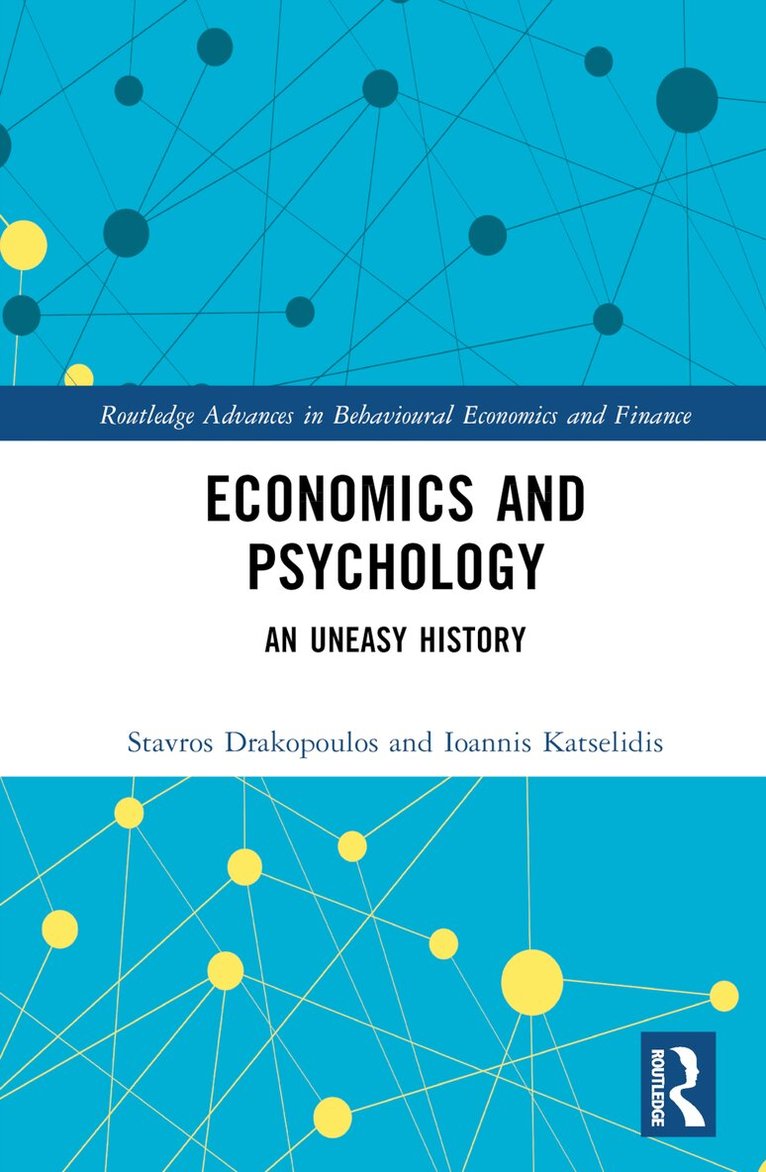
    Economics and Psychology

    An Uneasy History

    AvStavros Drakopoulos,Ioannis Katselidis

    Inbunden, Engelska, 2023

    Del i serien Routledge Advances in Behavioural Economics and Finance

    2 352 kr

    Beställningsvara. Skickas inom 10-15 vardagar. Fri frakt över 249 kr.

    Fler format och utgåvor

    Häftad

    661 kr

    Beskrivning

    With the rise of modern behavioural economics and increasing interest in subjective well-being research, the question of the relationship between economics and psychology has again been brought to the fore. Drawing on the history of economic thought, this book explores the historical relationship between the two disciplines. The book opens with a description of the primary philosophical foundations for early arguments supporting the interplay between economics and psychology. Both classical economists and other prominent pre-marginalists writers are examined in this context. The ensuing discussion explores the marginalist revolution and how well-known economists like Jevons and Edgeworth, influenced by pre-marginalist writers, incorporated ideas and findings from psychology. The book then describes how, following the so-called “Paretian turn”, early neoclassical economists attempted to expel psychological concepts from economic analysis. Combined with the increasing formalization, the influence of the classical physics scientific ideal, and the impact of positivism, this methodological stance became dominant in modern mainstream economics. In contrast, non-mainstream traditions continued to acknowledge the significance of psychology in their economic analysis. This tradition includes inter alia the so-called old behavioural economics, mainly of Herbert Simon and George Katona. The revival of psychology in economics came mainly with the emergence and development of new behavioural economics as a distinct branch during the last few decades. The trend was further assisted by the emergence of the economics of subjective well-being. Finally, the book briefly explores the state of the current debate concerning the relationship between economics and psychology. This book will be invaluable reading to anyone interested in the history of the study of economics and psychology, as well as of great interest to students and scholars of history of economic thought, psychological economics, behavioural economics and the history and philosophy of social sciences.

    Produktinformation

    • Utgivningsdatum:2023-12-01
    • Mått:156 x 234 x 16 mm
    • Vikt:453 g
    • Format:Inbunden
    • Språk:Engelska
    • Serie:Routledge Advances in Behavioural Economics and Finance
    • Antal sidor:124
    • Förlag:Taylor & Francis Ltd
    • ISBN:9781032132013

    Utforska kategorier

    • Nationalekonomi inom Ekonomi och Ledarskap
    • Psykologiska teorier och skolor inom Psykologi och pedagogik
    • Referensverk och tvärvetenskap inom Samhälle och politik

    Mer om författaren

    Stavros Drakopoulos obtained a BA in economics from the Athens University of Economics and Business, and an MSc and a PhD in economics from the University of Stirling, UK. Having served academic appointments at the Universities of Glasgow and Aberdeen, he is currently Professor of Economics in the Department of Philosophy and History of Science of the National and Kapodistrian University of Athens, Greece. His research interests include Economic Methodology and History of Economic Thought, Labour Economics, Health Economics and the Economics of Subjective Well-Being. He has 54 publications in refereed journals, 6 books, and 16 chapters in edited books.Ioannis Katselidis obtained a BA from the University of Piraeus, an MSc from the University of Birmingham, and an MSc and a PhD from the Athens University of Economics and Business. He has been an Adjunct Lecturer at the Athens University of Economics and Business, the National and Kapodistrian University of Athens and the Hellenic Naval Academy, among others. He was also a Research Fellow at the Center of Planning and Economic Research (KEPE). In addition, he has published scientific papers in various refereed journals, and he has also participated in many Greek and international academic conferences. His research interests include History and Philosophy of Economic Analysis and Labour Economics and Policy.

    Innehållsförteckning

    • 1. Introduction 2. The Philosophical and Psychological Background: British Empiricism and Psychological Hedonism 3. Classical Economists: Psychological Assumptions and Economic Motives 4. The Precursors of Marginalists: Utility and the Subjective/Psychological Theory of Value 5. Economics and Psychology during and after the Marginal Revolution 6. The Role of Psychology in the Non-Mainstream Tradition: Old Institutionalists, Herbert Simon, and Other Dissenters 7. Economics and Psychology: Current Trends 8. Conclusions