• Fri frakt över 249 kr
  • •
  • Snabba leveranser
  • •
  • Billiga böcker
Kundservice

Du är på sajten för privatpersoner.

Företag, bibliotek eller offentlig verksamhet?

Du handlar på classic.bokus.com, där alla dina funktioner finns intakta.
Till classic.bokus.com
Bokus logotyp. Gå till startsidan.
  • Erbjudanden
  • Nyheter
  • Student
  • Topplistor
  • Barn & ungdom
  • Bokus Play
  • E-böcker
  • Pocketböcker
  • Spel & pussel

10% rabatt på allt med kod NYSTART10 →

Sidfot

Mina sidor

    Hjälp

    • Kundservice
    • Vanliga frågor och svar
    • Frakt och leverans
    • Retur vid ångerrätt
    • Reklamera vara
    • Betalning
    • Köpvillkor
    • Allmänna villkor
    • Information om webbplatsens tillgänglighet

    Om Bokus

    • Om oss
    • Pressrum
    • För studenter
    • För företag
    • För bibliotek och offentlig verksamhet
    • För leverantörer
    • Hållbarhet

    Populärt

    • Aktuella erbjudanden
    • Presentkort
    • Studentlitteratur
    • Nya böcker
    • Topplistor
    • Signerade böcker
    • Engelska böcker

    Inspiration

    • Boktips
    • BookTok
    • Populära bokserier
    • Barnbokskaraktärer
    • Populära författare
    Logotyp för Bokus
    Följ oss på Facebook (extern länk)Följ oss på Instagram (extern länk)Följ oss på YouTube (extern länk)Följ oss på TikTok (extern länk)
    bokus @ CookiesAnpassa cookiesIntegritetspolicyKöpvillkor
    Till Citymail hemsida (extern länk)Till Budbee hemsida (extern länk)Till Postnord hemsida (extern länk)Till Schenker hemsida (extern länk)Till Early Bird hemsida (extern länk)Till Walleys hemsida (extern länk)
    1. Kultur
    2. Arkitektur

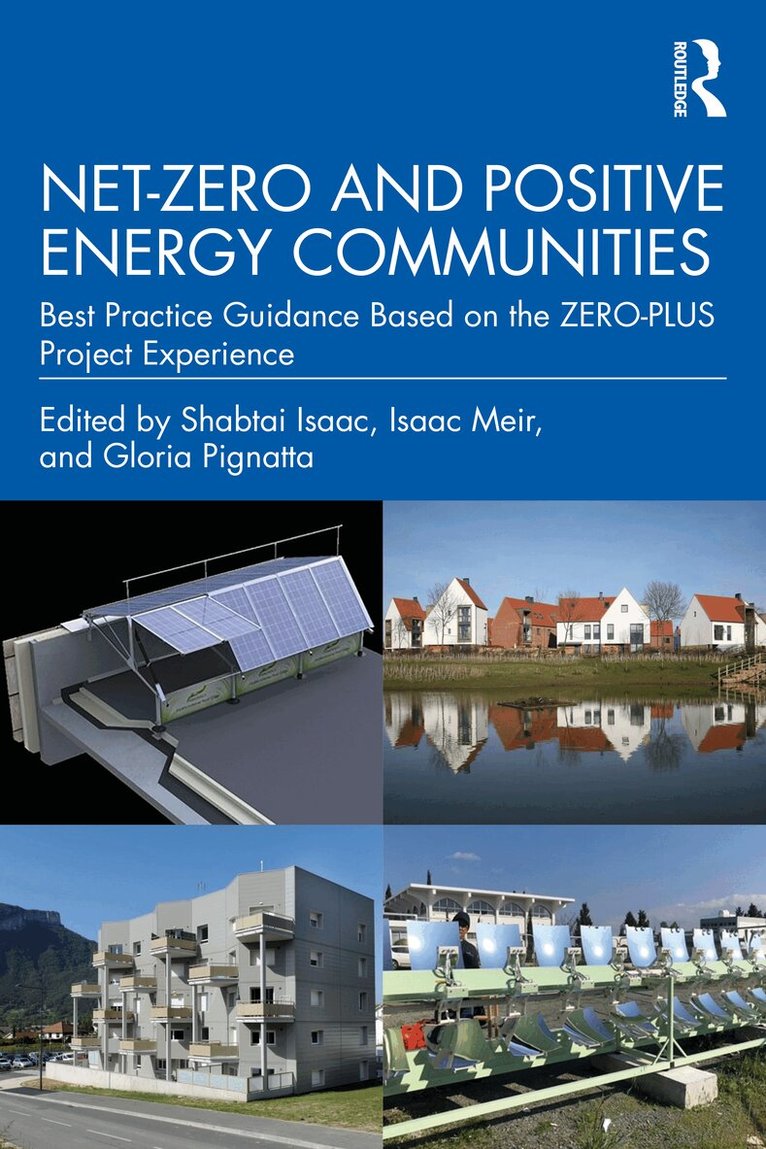
    Net-Zero and Positive Energy Communities

    Best Practice Guidance Based on the ZERO-PLUS Project Experience

    AvShabtai Isaac,Isaac Meir

    Häftad, Engelska, 2023

    890 kr

    Beställningsvara. Skickas inom 10-15 vardagar. Fri frakt över 249 kr.

    Beskrivning

    This book presents a methodology for the design, construction, monitoring, optimization, and post-occupancy evaluation of net-zero and positive-energy communities based on the experiences gained in the EU Horizon 2020 ZERO-PLUS project. It describes the steps, tools, and methods developed during the project, providing practical information for the energy and construction sector that will be of interest to students, engineers, architects, developers, and professionals working around high performance architecture and sustainable communities.Through the ZERO-PLUS project, a consortium of 32 partners from eight countries, including academic institutions, technology providers, architects, and construction companies, designed four communities covering completely different geo-climatic regions, construction practices, and cultural backgrounds in Cyprus, Italy, France, and the UK. The communities were designed, optimized, constructed, monitored, handed over to tenants, post-occupancy evaluated, and troubleshooted through a system of continuous collaboration and data acquisition. This book presents these case studies and shows how the project targets of reducing electricity consumption below 20 kWh/m2/y, increasing electricity production from Renewable Energy Systems to over 50 kWh/m2/y, and at cheaper costs when compared to current zero-energy buildings were reached and surpassed. These cases demonstrate that a holistic and interactive approach to design and construction can bring communities a high standard of sustainability.The key features of the book include:Practical guidance drawn from the interdisciplinary, international, and remote cooperation between experts from academia and industry across the construction sectorA survey of the state-of-the-art on net-zero and positive-energy communities, including the experience and the lessons learned from previous projects and from the ZERO-PLUS projectDescriptions of novel emerging renewable energy technologies, integrated into real case study communities to achieve the energy generation target of the communitiesA comprehensive set of approaches, tools, guidelines, best practices, challenges, and lessons learned from the five-year ZERO-PLUS project and the completion of four residential case studies to inform the reader of how to achieve affordable net-zero energy communitiesFour typologies of residential communities located in different climatic conditions are presented, touching on the critical aspects of the design, construction, monitoring, and occupancy phaseA discussion of future trends for developing communities that are more liveable, accessible, and sustainable and which can comply with new energy policies in a way that is affordable for the owners and residents.

    Produktinformation

    • Utgivningsdatum:2023-12-12
    • Mått:156 x 234 x 17 mm
    • Vikt:340 g
    • Format:Häftad
    • Språk:Engelska
    • Antal sidor:214
    • Förlag:Taylor & Francis Ltd
    • ISBN:9781032208466

    Utforska kategorier

    • Arkitektur inom Kultur
    • Energiteknik inom Naturvetenskap och teknik
    • Regional planering inom Naturvetenskap och teknik

    Mer om författaren

    Shabtai Isaac is a Senior Lecturer in Project Management at Ben Gurion University of the Negev, Israel. Isaac Meir is Architect, Town Planner, Archaeologist, and Professor at Ben Gurion University of the Negev, Israel. Gloria Pignatta is Scientia Lecturer and City Futures Research Centre (CFRC) Fellow (2021–2024) in the School of Built Environment (BE), Faculty of Arts, Design, and Architecture (ADA), at University of New South Wales, Australia.

    Innehållsförteckning

    • Foreword, 1. Introduction to net-zero and positive-energy communities, 2. Background: the current energy community implementation state in the EU, 3. Methodology: the ZERO-PLUS approach, 4. Part 1: UK case study, Part 2: Energy modeling of positive-energy dwellings, 5. Part 1: Italian case study, Part 2: Community-level strategies for microclimate mitigation and energy efficiency improvement, 6. Part 1: Cypriot case study, Part 2: Production and installation planning, 7. Part 1: French case study, Part 2: Project and design management – best practices and tools, 8. Part 1: Concentrating solar energy – the FAE system, Part 2: Bot-based building design, Part 3: Solar air-conditioning – the Freescoo system, 9. Monitoring and evaluation of the performance of positive-energy communities, 10. Post-occupancy evaluation: the missing link, Conclusions, or a more critical rethinking of the project, Index