• Fri frakt över 249 kr
  • •
  • Snabba leveranser
  • •
  • Billiga böcker
Kundservice

Du är på sajten för privatpersoner.

Företag, bibliotek eller offentlig verksamhet?

Du handlar på classic.bokus.com, där alla dina funktioner finns intakta.
Till classic.bokus.com
Bokus logotyp. Gå till startsidan.
  • Erbjudanden
  • Nyheter
  • Student
  • Topplistor
  • Barn & ungdom
  • Bokus Play
  • E-böcker
  • Pocketböcker
  • Spel & pussel

10% rabatt på allt med kod: NYSTART10 →

Sidfot

Mina sidor

    Hjälp

    • Kundservice
    • Vanliga frågor och svar
    • Frakt och leverans
    • Retur vid ångerrätt
    • Reklamera vara
    • Betalning
    • Köpvillkor
    • Allmänna villkor
    • Information om webbplatsens tillgänglighet

    Om Bokus

    • Om oss
    • Pressrum
    • För studenter
    • För företag
    • För bibliotek och offentlig verksamhet
    • För leverantörer
    • Hållbarhet

    Populärt

    • Aktuella erbjudanden
    • Presentkort
    • Studentlitteratur
    • Nya böcker
    • Topplistor
    • Signerade böcker
    • Engelska böcker

    Inspiration

    • Boktips
    • BookTok
    • Populära bokserier
    • Barnbokskaraktärer
    • Populära författare
    Logotyp för Bokus
    Följ oss på Facebook (extern länk)Följ oss på Instagram (extern länk)Följ oss på YouTube (extern länk)Följ oss på TikTok (extern länk)
    bokus @ CookiesAnpassa cookiesIntegritetspolicyKöpvillkor
    Till Citymail hemsida (extern länk)Till Budbee hemsida (extern länk)Till Postnord hemsida (extern länk)Till Schenker hemsida (extern länk)Till Early Bird hemsida (extern länk)Till Walleys hemsida (extern länk)
    1. Historia och arkeologi
    2. Historia
    3. Historia: särskilda händelser och ämnen
    4. Kalla krig och ombudskrig

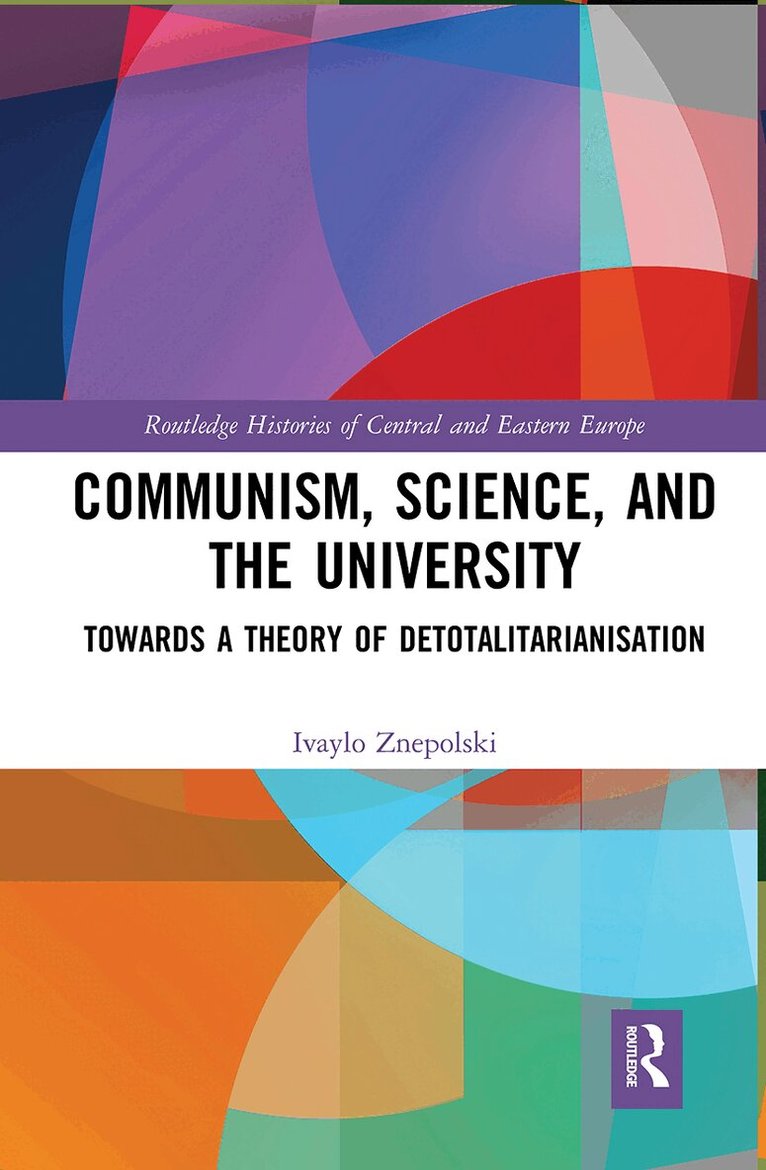
    Communism, Science and the University

    Towards a Theory of Detotalitarianisation

    AvIvaylo Znepolski

    Häftad, Engelska, 2021

    Del i serien Routledge Histories of Central and Eastern Europe

    701 kr

    Beställningsvara. Skickas inom 10-15 vardagar. Fri frakt över 249 kr.

    Fler format och utgåvor

    Inbunden

    2 421 kr

    E-bok

    829 kr

    E-bok

    829 kr

    Beskrivning

    The book explores the intellectual history of Bulgaria between the 1960s and the 1980s at the intersections of the country's social and political history. Based on case studies, the research delves into three areas: the control and pressure mechanisms used on science and the university; the clash of ideas while performing the formal and hidden functions of academia in a communist regime setting; the processes whereby research and academia acquire a relative autonomy and alternative academic communities are being formed amidst the eroding ideological legitimacy of the regime. Centred on the concept of the "incident", this setup allowed us to eschew the narratives around the role of the dissidents or "freedom as a gift" and interpret society's transformation as the outcome of intersecting and overlaying sectoral events, which gathered strength down the years and lay the ground for the eruption labelled here as the "Big Event of 1989".

    Produktinformation

    • Utgivningsdatum:2021-12-13
    • Mått:156 x 234 x 18 mm
    • Vikt:485 g
    • Format:Häftad
    • Språk:Engelska
    • Serie:Routledge Histories of Central and Eastern Europe
    • Antal sidor:342
    • Förlag:Taylor & Francis Ltd
    • ISBN:9781032237152

    Utforska kategorier

    • Kalla krig och ombudskrig inom Historia och arkeologi
    • Europas historia inom Historia och arkeologi

    Mer om författaren

    Ivaylo Znepolski is the Director of the Institute for the Study of the Recent Past in Sofia, Professor at Sofia University, Bulgaria, Visiting Professor at the École des Hautes Études en Sciences Sociales in Paris (1994–2002), former culture minister (1993–1995), and an author of numerous books and edited volumes on the recent communist past of Bulgarian and Eastern Europe.

    Innehållsförteckning

    • Introduction: On this Book's Nature and Objectives1. Siezing power and Institutionalization of “The New Socialist Science”Purging the universityDe-Stalinisation and swift re-Stalinisation in the university2. The Zhelyu Zhelev case: Sinning Against Faith and the Party ThemisClaiming subjectivity through individual Action: eventual subjectivityHow to use the topsy-turvy political speakTypes of party discourses – Of the prosecution, of the defence and of the defendantRadical honesty or venal pragmatism?Structure and event in a post-Stalinist societyTheoretical Outcomes (1): A Sense of Community Awakens – Small Goups of Civic Engagement3. The Ivan Slavov Case: Between the Threat of Social Exclusion and the Moral Sanction of the GroupA pamphletist versus communist logomorphiaPrivate life as pretext for political blackmail“The betrayal” as a private drama and test for the group’s integrityThe excommunication from the group as a loss of identityTheoretical Outcomes (2): On Actions Committed under Duress and amidst Severe Freedom Shortage4. The Nikolay Genchev case: Against Historiography as the Chambermaid of Politics or Life in Two Parallel WorldsBroadening the solidarity fieldThe early Nikolay Genchev and the history of the Algerian RevolutionFor a national – rather than class – history: A critique of official historiographyA personal story morphing into social history: Tearing apart and sewing together of the physical author and his ideasNew challenges: Initiating the debate on Bulgaria’s political system between the two World WarsChanges in the intentional background of action. Nikolay Genchev: the "double contingency" principleThe dual use of the primary party organisation. Nikolay Genchev, an expert in the guerrilla warfare in the jungle of the party's chain of command5. The Zhelyu Zhelev Case (continued): Between Truth and Authority – Creation of “The Revisionists”Attempts at a philosophical position in the context of modern timesThe artfulness of a small man in the battle for survivalZhelyu Zhelev, the Postgraduate Student and Todor Pavlov, the AcademicianSamizdat within the bounds of legality. The scandal – a publicity strategy in a closed systemThe contrivance of scientific facts through text-substituting “translations”The informal public sphere – how it functions?A purging trend at the Philosophy FacultyFrom criticising leading to wrenching Lenin out of the dogmatic stranglehold: The generational discourse as political speak in disguiseTheoretical Outcomes (3): “Letters to the Chief” as a Genre – Social Communication in a Closed, Overcentralised Society6. The Assen Ignatov Case: Beyond the Limits of the Officially Regulated Knowledge – Philosophy as a Way to Deliberate on the Human ConditionA diagnosis of dogmatic thinkingThe witch-hunt season is openA basic programme for the development of social science. Alienation under socialism.The party tribunal against Assen Ignatov: Timid solidarity and loose ties within "the group"Biographies falling apart: Living in the lie and through the lieSketching out a reformist agendaIntelligentsia and the Party bureaucracyA surprising deliverance: the deus ex machina and the ambivalence of the "pardoning from above""Philosophy in action": a critique of the "asymmetrical relations" in the education modelThe end of a long administrative assassination"Disarmament" and "self-criticism": key concepts in the discourse of powerA Bulgarian reception of Heidegger and ways of utilising the philosopher Heidegger's deconstruction as a way to experience one's own existential situation: Designing a "project" for oneselfA play between the truth of historical facts and the "logic of history"Baiting the other side: State Security and the philosopher Redemption and its priceTheoretical Outcomes (4): The Correlation between Coercion and Free Action in a Totalitarian State7. The Isak Passy Case: The Separation of Political and Intellectual Power – Theory and Information BreakthroughOn the tragedy of a crushed idealFacts against the dogmatist's theoretical superstitionThe philosophers’ enlightenment surge: A quest for the educational and moral fundamentals of young peopleAltering the whole intellectual context: “destruction through creation”Theoretical Outcomes (5): Academic Paradigm and Community amid the One-party Dictatorship8. From Zhelyu Zhelev Case to the Case of 'Fascism' Anatomy of a Chain of IncidentsFascism: A dissection of the totalitarian phenomenon and the semantic challenges of a book with a keyFrom a manuscript titled, The Totalitarian State, to Fascism: on the collective authorship of an incident"Constitutional fiction" and its useThe arraignment of the "ideological prosecution": formalism and lack of zealFissures in Censorship: Penalties for "blunted vigilance" and "political myopia"A split between the party commanding heights and the grassroots: The primary party organisation – one possible pocket of resistance9. The Dobrin Spassov Case: A Clash between the Rejection of Totalitarian Practices and the Commitment to Social UtopiaAlien among his own or the testing of loyaltyHamstrung innovationDobrin Spassov stepping into Todor Pavlov's boots: Efforts to overcome the "intense backwardness" of Bulgarian philosophy The debate on totalitarianism and the changes in the structure of the scientific (philosophical) fieldThe emergence of an alternative assessment centre of academic relevance and civil conductThe contradiction between the regime's nature and the principles of civil conduct10. The Ilcho Dimitrov Case: In Search of a Win-Win Game within the System – The Public Communications CraftsmanQuestioning the simplistic propaganda version of Bulgarian history between the two World WarsIlcho Dimitrov and Todor Pavlov: historical facts against class-and-party fitness for purposeThe intellectuals' quest to positions of power: The relationship between the power of force and the power of knowledgeThe in-out existence in two different social environments: The inexorable logic of symbolic capital exchangeThe inner workings of big power: How can academic and political attitudes part ways"Paris is worth a mass": Clashes between the state administration and the party apparatusThe horizon of reformist thinking and actionTheoretical Outcomes (6): Specifics of Social Criticism in Totalitarian Society – Social Criticism and Social ChangeConclusion: From the Big Event to the Incidents: A Reconstruction of the Event(ual) Identity of Historical ChangeAbbreviationsLiterature and archival sources