• Fri frakt över 249 kr
  • •
  • Snabba leveranser
  • •
  • Billiga böcker
Kundservice

Du är på sajten för privatpersoner.

Företag, bibliotek eller offentlig verksamhet?

Du handlar på classic.bokus.com, där alla dina funktioner finns intakta.
Till classic.bokus.com
Bokus logotyp. Gå till startsidan.
  • Erbjudanden
  • Nyheter
  • Student
  • Topplistor
  • Barn & ungdom
  • Bokus Play
  • E-böcker
  • Pocketböcker
  • Spel & pussel

10% rabatt på allt med kod: NYSTART10 →

Sidfot

Mina sidor

    Hjälp

    • Kundservice
    • Vanliga frågor och svar
    • Frakt och leverans
    • Retur vid ångerrätt
    • Reklamera vara
    • Betalning
    • Köpvillkor
    • Allmänna villkor
    • Information om webbplatsens tillgänglighet

    Om Bokus

    • Om oss
    • Pressrum
    • För studenter
    • För företag
    • För bibliotek och offentlig verksamhet
    • För leverantörer
    • Hållbarhet

    Populärt

    • Aktuella erbjudanden
    • Presentkort
    • Studentlitteratur
    • Nya böcker
    • Topplistor
    • Signerade böcker
    • Engelska böcker

    Inspiration

    • Boktips
    • BookTok
    • Populära bokserier
    • Barnbokskaraktärer
    • Populära författare
    Logotyp för Bokus
    Följ oss på Facebook (extern länk)Följ oss på Instagram (extern länk)Följ oss på YouTube (extern länk)Följ oss på TikTok (extern länk)
    bokus @ CookiesAnpassa cookiesIntegritetspolicyKöpvillkor
    Till Citymail hemsida (extern länk)Till Budbee hemsida (extern länk)Till Postnord hemsida (extern länk)Till Schenker hemsida (extern länk)Till Early Bird hemsida (extern länk)Till Walleys hemsida (extern länk)
    1. Psykologi och pedagogik
    2. Pedagogik
    3. Pedagogisk metodik

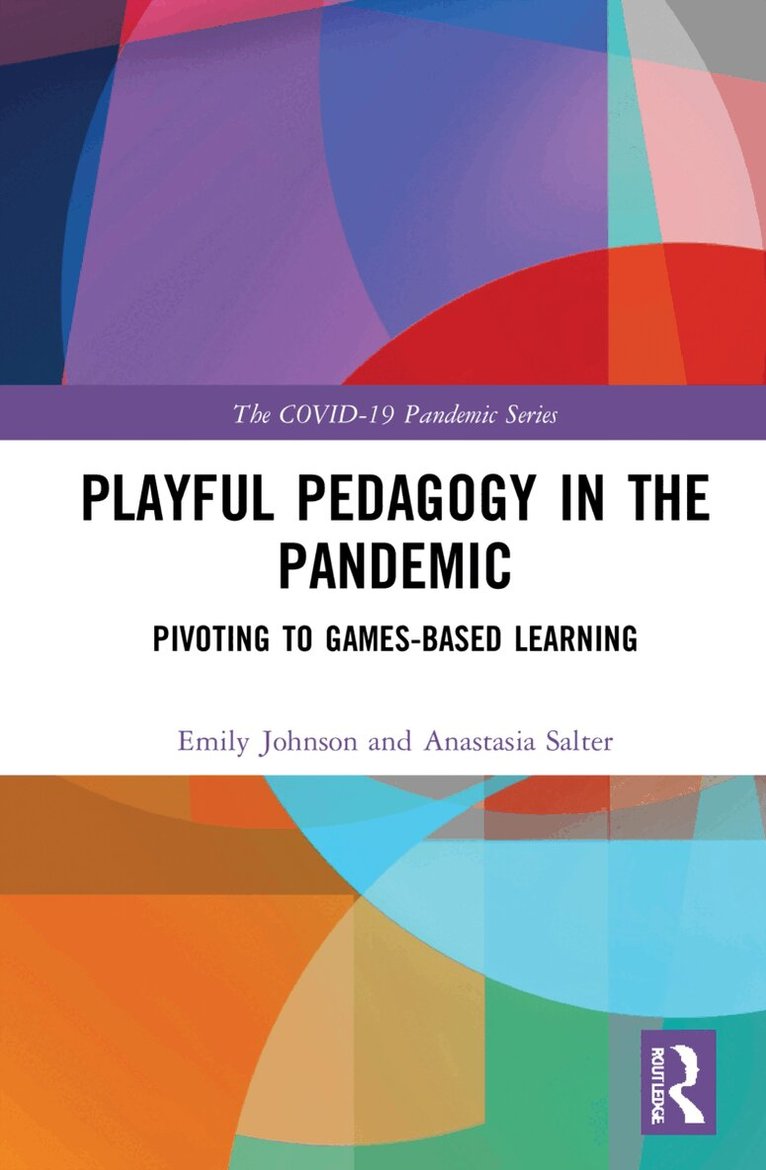
    Playful Pedagogy in the Pandemic

    Pivoting to Game-Based Learning

    AvEmily K. Johnson,Anastasia Salter

    Inbunden, Engelska, 2022

    Del i serien COVID-19 Pandemic Series

    2 352 kr

    Beställningsvara. Skickas inom 10-15 vardagar. Fri frakt över 249 kr.

    Fler format och utgåvor

    Häftad

    607 kr

    Beskrivning

    Educational technology adoption is more widespread than ever in the wake of COVID-19, as corporations have commodified student engagement in makeshift packages marketed as gamification. This book seeks to create a space for playful learning in higher education, asserting the need for a pedagogy of care and engagement as well as collaboration with students to help us reimagine education outside of prescriptive educational technology. Virtual learning has turned the course management system into the classroom, and business platforms for streaming video have become awkward substitutions for lecture and discussion. Gaming, once heralded as a potential tool for rethinking our relationship with educational technology, is now inextricably linked in our collective understanding to challenges of misogyny, white supremacy, and the circulation of misinformation. The initial promise of games-based learning seems to linger only as gamification, a form of structuring that creates mechanisms and incentives but limits opportunity for play. As higher education teeters on the brink of unprecedented crisis, this book proclaims the urgent need to find a space for playful learning and to find new inspiration in the platforms and interventions of personal gaming, and in turn restructure the corporatized, surveilling classroom of a gamified world.Through an in-depth analysis of the challenges and opportunities presented by pandemic pedagogy, this book reveals the conditions that led to the widespread failure of adoption of games-based learning and offers a model of hope for a future driven by new tools and platforms for personal, experimental game-making as intellectual inquiry.

    Produktinformation

    • Utgivningsdatum:2022-08-26
    • Mått:156 x 234 x 14 mm
    • Vikt:440 g
    • Format:Inbunden
    • Språk:Engelska
    • Serie:COVID-19 Pandemic Series
    • Antal sidor:150
    • Förlag:Taylor & Francis Ltd
    • ISBN:9781032251264

    Utforska kategorier

    • Pedagogisk metodik inom Psykologi och pedagogik

    Mer om författaren

    Emily K. Johnson is an Assistant Professor of English at the University of Central Florida, USA. She conducts research focusing on user experience (UX), user-centered design, educational technology, learning games, playful/gameful learning, simulations and learning, self-regulated learning, learner motivation, and self-efficacy. She designs and researches educational games in virtual reality, augmented reality, mobile, PC/Mac, and non-traditional platforms. A former middle school teacher, Johnson has published work on games-based learning in journals including Computers & Education; Journal of Universal Computer Science; and Journal of Science Education and Technology.Anastasia Salter is an Associate Professor of English and Director of Graduate Programs at the University of Central Florida, USA, where they also coordinate the innovative interdisciplinary Texts and Technology doctoral program. Their research draws upon humanities methods alongside computational discourse and subjects. They have authored several books, including Twining: Critical and Creative Approaches to Hypertext Narratives (with Stuart Moulthrop, Amherst College Press, 2021), Portrait of the Auteur as Fanboy (with Mel Stanfill, University of Mississippi Press, 2020), and Adventure Games: Playing the Outsider (with Aaron Reed and John Murray, Bloomsbury, 2020). Salter previously wrote for ProfHacker, a blog on technology and pedagogy formerly hosted by the Chronicle of Higher Education and has taught workshops around the world on approaches to experimental, personal games in the classroom.

    Recensioner i media

    The pandemic sent many of us into depths of depression and isolation we had not previously suffered. Playful Pedagogy in the Pandemic offers a thoughtful reflection on the many curious and creative outlets using play, whether in virtual classrooms or out in the wild, to process the stress of these uncertain times. No doubt, these same play practices will serve us post-pandemic as well. Mark C. Marino, Professor of Writing and Director of the Humanities and Critical Code Studies Lab, University of Southern California, USAPlayful Pedagogy in the Pandemic is a sharp and savvy examination of the promises and pitfalls of games-based learning in a world transformed by COVID-19. Past blunders and current perils are laid bare in this thoughtful chronicling of educational technologies in transition, but at its core is a hopeful vision for future learning that puts play and co-creation at the forefront.Robb Lindgren, Associate Professor of Curriculum and Instruction and Director of Technology Innovations in Educational Research and Design, University of Illinois at Urbana-Champaign, USAAs a part of J. Michael Ryan’s edited series on the COVID-19 pandemic, Emily K. Johnson and Anastasia Salter’s Playful Pedagogy in the Pandemic: Pivoting to Game-Based Learning (2022) comes at a critical time as many students and educators continue to survey the teaching and learning landscape of the digital postsecondary classroom. Johnson and Salter’s work serves as a critical extension of certain arguments posited by James Paul Gee in his foundational book, What Video Games Have to Teach Us About Learning and Literacy (2003). But while Gee’s text largely focuses on the educational and pedagogical potential of commercial video games, Johnson and Salter seek to simultaneously critique the legacy of corporate gamification while reimagining game-based learning in a gesture that questions the new pedagogical realities of the post-pandemic. In this manner, Playful Pedagogy specifically serves as an examination of the intensely corporatized, highly behaviourist gamification models of the many virtual learning platforms that proliferated during the pandemic and as an attempt to envision postsecondary classrooms in the context of playful learning.Johnson and Salter’s work successfully calls attention to the many flaws and failings surrounding the pandemic-driven attempts to gamify virtual learning environments and provides an opening for both students and teachers to reimagine game-based learning in a way that rejects the behaviourist, commodified structures of gamification encouraged by most commercial enterprises. That being said, Playful Pedagogy is much more effective as a methodological lens through which one may consider the development of pedagogy and curriculum rather than an archive of pedagogically useful games and activities. Regardless, in the wake of the catastrophic impact of the COVID-19 pandemic, it would be remiss not to reassess the function and value of play in education, especially given the push towards the increasing digitization of our everyday lives. But as the authors proclaim, "teachers are not content providers [and] students are not receptacles for said content" (p.138), and so, playful pedagogy must be understood as a pedagogy of empathy. In this manner, the authors successfully advocate for a future in which students are given creative outlets for their emotions and are encouraged to experiment and explore. The act of designing, creating, and playing pedagogy is thus a method to collectively imagine our futures together and to willingly engage in problem solving in a way that acknowledges the grief that we endured over the pandemic whilst striving towards more compassionate solutions.Alexander Hurezeanu, Professor of Media & Culture, Toronto Metropolitan University, Canada in Press Start (Vol. 9 No. 1, 2023), pp. 87-91.

    Innehållsförteckning

    • Preface: Positioning Our Play Introduction: Play for Serious Times 1. The Problem of Gamification 2. These Aren’t the Games You’re Looking For 3. Searching for Meaningful Pandemic Play 4. Confronting the Perils of Play 5. Designing Playfully for a Distant Future Conclusion: The Fatigue is Real