• Fri frakt över 249 kr
  • •
  • Snabba leveranser
  • •
  • Billiga böcker
Kundservice

Du är på sajten för privatpersoner.

Företag, bibliotek eller offentlig verksamhet?

Du handlar på classic.bokus.com, där alla dina funktioner finns intakta.
Till classic.bokus.com
Bokus logotyp. Gå till startsidan.
  • Erbjudanden
  • Nyheter
  • Student
  • Topplistor
  • Barn & ungdom
  • Bokus Play
  • E-böcker
  • Pocketböcker
  • Spel & pussel

10% rabatt på allt med kod: NYSTART10 →

Sidfot

Mina sidor

    Hjälp

    • Kundservice
    • Vanliga frågor och svar
    • Frakt och leverans
    • Retur vid ångerrätt
    • Reklamera vara
    • Betalning
    • Köpvillkor
    • Allmänna villkor
    • Information om webbplatsens tillgänglighet

    Om Bokus

    • Om oss
    • Pressrum
    • För studenter
    • För företag
    • För bibliotek och offentlig verksamhet
    • För leverantörer
    • Hållbarhet

    Populärt

    • Aktuella erbjudanden
    • Presentkort
    • Studentlitteratur
    • Nya böcker
    • Topplistor
    • Signerade böcker
    • Engelska böcker

    Inspiration

    • Boktips
    • BookTok
    • Populära bokserier
    • Barnbokskaraktärer
    • Populära författare
    Logotyp för Bokus
    Följ oss på Facebook (extern länk)Följ oss på Instagram (extern länk)Följ oss på YouTube (extern länk)Följ oss på TikTok (extern länk)
    bokus @ CookiesAnpassa cookiesIntegritetspolicyKöpvillkor
    Till Citymail hemsida (extern länk)Till Budbee hemsida (extern länk)Till Postnord hemsida (extern länk)Till Schenker hemsida (extern länk)Till Early Bird hemsida (extern länk)Till Walleys hemsida (extern länk)
    1. Samhälle och politik
    2. Samhälle och kultur
    3. Sociala och etiska frågor
    4. Migration

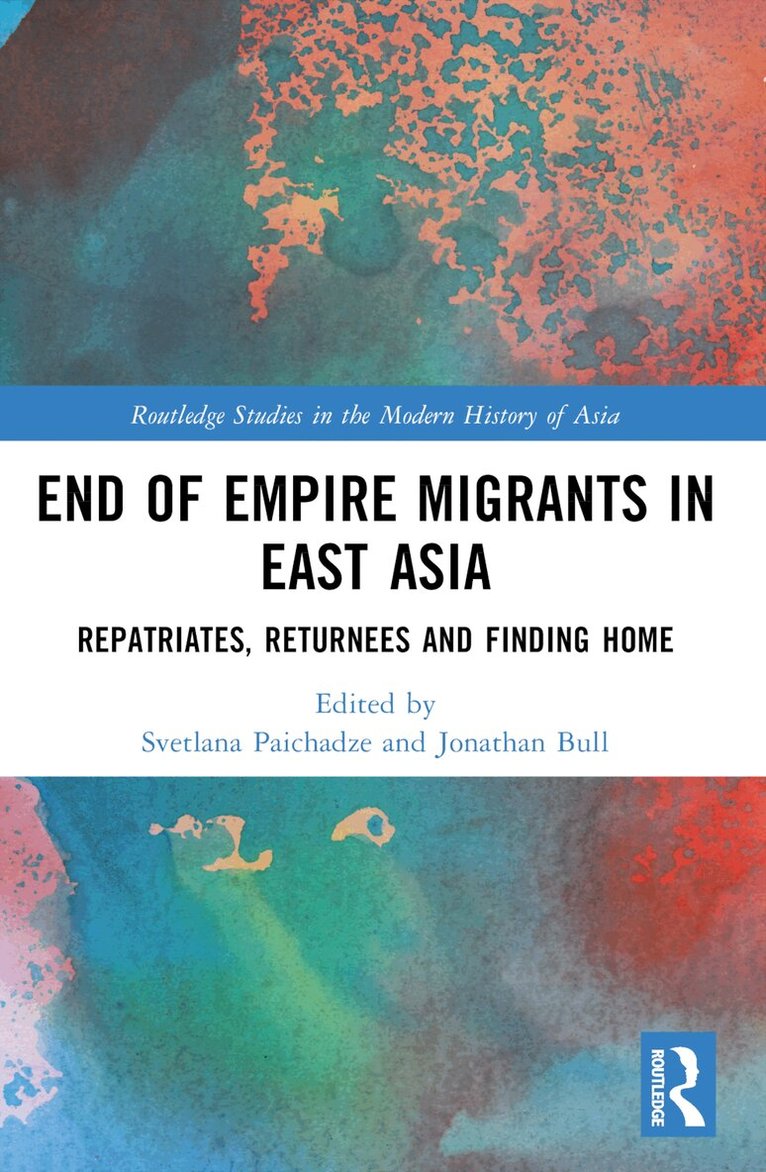
    End of Empire Migrants in East Asia

    Repatriates, Returnees and Finding Home

    AvSvetlana Paichadze,Jonathan Bull

    Inbunden, Engelska, 2023

    Del i serien Routledge Studies in the Modern History of Asia

    2 056 kr

    Beställningsvara. Skickas inom 10-15 vardagar. Fri frakt över 249 kr.

    Beskrivning

    This book provides an interdisciplinary study about the migration of approximately 9 million people who became end of empire migrants in East Asia following the collapse of the Japanese Empire in 1945.Through the collection of first-hand testimonies and examination of four key themes, the book uncovers how the Japanese government’s repatriation policy intersected with people’s experiences of end of empire migration in East Asia. The first theme, repatriation as historiography and discourse, examines how repatriation has been studied, debated and represented in Japan since the end of the Second World War. The second theme, finding home in the former empire, reveals the diversity of experiences of the peoples of former colonies as the borders ‘shifted under their feet’ through first-hand testimony. The third theme, government policy, explores the changing Japanese government policy from the 1950s to the 1970s. The fourth theme, integration after repatriation, reveals how Japanese former colonial residents integrated into Japanese society following repatriation.Presenting the collective research of 14 international authors, this book will be of interest for researchers of East Asian history, modern Japanese history, migration studies, postcolonial studies, Japanese studies, Korean studies, post-war international relations and Cold War history.

    Produktinformation

    • Utgivningsdatum:2023-04-28
    • Mått:156 x 234 x 21 mm
    • Vikt:690 g
    • Format:Inbunden
    • Språk:Engelska
    • Serie:Routledge Studies in the Modern History of Asia
    • Antal sidor:272
    • Förlag:Taylor & Francis Ltd
    • ISBN:9781032284972

    Utforska kategorier

    • Migration inom Samhälle och politik
    • Geografi inom Naturvetenskap och teknik

    Mer om författaren

    Svetlana Paichadze is an Associate Professor at the Research Faculty of Media and Communication, Hokkaido University, Japan. Her main research themes are the education, identity and language issues of Russian-speaking diaspora and her publications include Identity, Language and Education of Sakhalin Japanese and Koreans: Continual Diaspora (2022), Voices from the Shifting Russo-Japanese border: Karafuto/Sakhalin (co-edited, 2015) and Saharin zanryū: nikkanro hyakunen ni wataru kazoku no monogatari [Left-behind on Sakhalin: A Centenary History of Families Living Between Japan, Korea, and Russia] (co-authored, 2016).Jonathan Bull is a Lecturer at the Research Faculty of Media and Communication, Hokkaido University, Japan. His research focuses on the social and cultural history of Japanese end of empire migration and has been published in the Journal of Contemporary History, Journal of Migration History and Cultural and Social History.

    Innehållsförteckning

    • Introduction Part 1: Repatriation in historiography, political discourse and the history of Indigenous Peoples 1. Japanese-language historiography about end of empire migration: revising the extruded history of repatriation and hikiagesha 2. Hikiagesha and other terms for returnees in the minutes of the National Diet of Japan 3. Travel, forced movement, ‘repatriation’: multiple mobilities in the history of the Indigenous Peoples of Sakhalin and the Kuril Islands Part 2: Finding ‘home’ in the former Japanese Empire 4. The ‘repatriation’ of Japanese wives from Manchuria to Taiwan: a presence hidden by multiple factors 5. The social movement for Sakhalin Korean repatriation after the Second World War: the establishment of the Korean Communist party 6. The ‘Remembered’ Sakhalin Koreans in the South Korean Press, 1946-1980 7. Between loving the country and loving the land: the case of waishengren and hwagyo Part 3: Repatriation policy and returning home in the 1950s-1960s 8. The boundary formation between ‘hikiage’ and ‘kikoku’: the case of the ‘honkoku kikansha’ from China 9. Individual multiethnic repatriation from the Soviet Union 10. The ‘delayed "repatriation"’ of Japanese women in Korea: the beginning of the return policy in postwar Japan Part 4: Repatriation and integration: life after hikiage 11. Industry-induced movements of people and connections among repatriates from the Karafuto coal industry 12. The socioeconomic reintegration of repatriates: evidence from Gifu prefecture 13. An anthropology of nostalgia: wansei’s postwar life and their Taiwan recognition 14. Border, Indigenous Peoples, self-identification: contested memory as seen in the social activities of Ainu, Uilta and Nivkh