• Fri frakt över 249 kr
  • •
  • Snabba leveranser
  • •
  • Billiga böcker
Kundservice

Du är på sajten för privatpersoner.

Företag, bibliotek eller offentlig verksamhet?

Du handlar på classic.bokus.com, där alla dina funktioner finns intakta.
Till classic.bokus.com
Bokus logotyp. Gå till startsidan.
  • Erbjudanden
  • Nyheter
  • Student
  • Topplistor
  • Barn & ungdom
  • Bokus Play
  • E-böcker
  • Pocketböcker
  • Spel & pussel

10% rabatt på allt med kod: NYSTART10 →

Sidfot

Mina sidor

    Hjälp

    • Kundservice
    • Vanliga frågor och svar
    • Frakt och leverans
    • Retur vid ångerrätt
    • Reklamera vara
    • Betalning
    • Köpvillkor
    • Allmänna villkor
    • Information om webbplatsens tillgänglighet

    Om Bokus

    • Om oss
    • Pressrum
    • För studenter
    • För företag
    • För bibliotek och offentlig verksamhet
    • För leverantörer
    • Hållbarhet

    Populärt

    • Aktuella erbjudanden
    • Presentkort
    • Studentlitteratur
    • Nya böcker
    • Topplistor
    • Signerade böcker
    • Engelska böcker

    Inspiration

    • Boktips
    • BookTok
    • Populära bokserier
    • Barnbokskaraktärer
    • Populära författare
    Logotyp för Bokus
    Följ oss på Facebook (extern länk)Följ oss på Instagram (extern länk)Följ oss på YouTube (extern länk)Följ oss på TikTok (extern länk)
    bokus @ CookiesAnpassa cookiesIntegritetspolicyKöpvillkor
    Till Citymail hemsida (extern länk)Till Budbee hemsida (extern länk)Till Postnord hemsida (extern länk)Till Schenker hemsida (extern länk)Till Early Bird hemsida (extern länk)Till Walleys hemsida (extern länk)
    1. Samhälle och politik
    2. Samhälle och kultur
    3. Kultur och medier
    4. Referensverk och tvärvetenskap

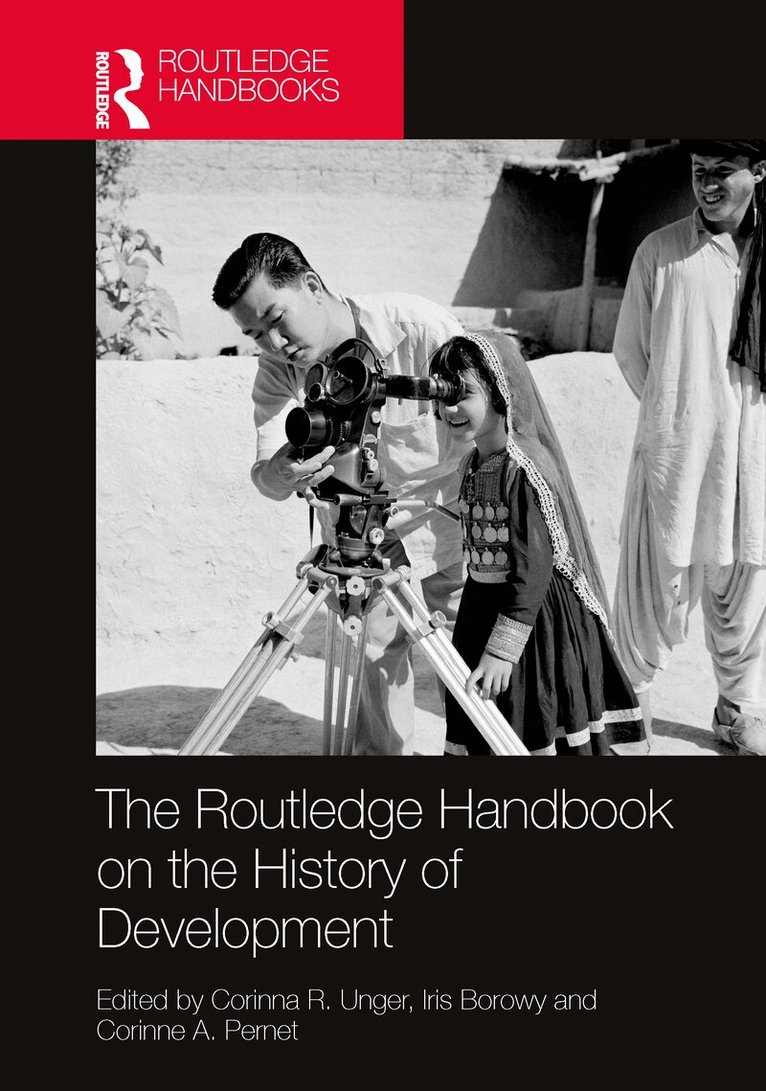
    Routledge Handbook on the History of Development

    AvCorinna R. Unger,Iris Borowy

    Häftad, Engelska, 2024

    715 kr

    Beställningsvara. Skickas inom 10-15 vardagar. Fri frakt över 249 kr.

    Beskrivning

    This bold and ambitious handbook is the first systematic overview of the history of development ideas, themes, and actors in the twentieth century. Taking stock of the field, the book reflects on blind spots, points out avenues for future research, and brings together a greater plurality of regions, actors, and approaches than other publications on the subject. The book offers a critical reassessment of how historical experiences have shaped contemporary understandings of development, demonstrating that the seemingly self-evident concept of development has been contingent on a combination of material conditions, power structures, and policy choices at different times and in different places. Using a world history approach, the handbook highlights similarities in development challenges across time and space, and it pays attention to the meanings of ideological, cultural, and economic divides in shaping different understandings and practices of development. Taking a thematic approach, the book shows how different actors – governments, non-governmental organizations, individuals, corporations, and international organizations – have responded to concerns regarding the conditions in their own or other societies, such as the provision of education, health, or food; approaches to infrastructure development and industrialization; the adjustment of social conditions; population policies and migration; and the maintenance of stability and security. Bringing together a range of voices from across the globe, this book will be perfect for advanced students and researchers of international development history.

    Produktinformation

    • Utgivningsdatum:2024-05-27
    • Mått:174 x 246 x 21 mm
    • Vikt:710 g
    • Format:Häftad
    • Språk:Engelska
    • Antal sidor:376
    • Förlag:Taylor & Francis Ltd
    • ISBN:9781032286907

    Utforska kategorier

    • Referensverk och tvärvetenskap inom Samhälle och politik
    • Internationell ekonomi inom Ekonomi och Ledarskap
    • Allmän historia och världshistoria inom Historia och arkeologi

    Mer om författaren

    Corinna R. Unger is Professor of Global and Colonial History (nineteenth and twentieth centuries), European University Institute, Florence, Italy.Iris Borowy is Distinguished Professor, Shanghai University, College of Liberal Arts, China.Corinne A. Pernet is Director of the Department of International Educational Development at Zurich University of Teacher Education, Switzerland.

    Innehållsförteckning

    • Part 1: Introduction 1. Corinna R. Unger, Iris Borowy, and Corinne A. Pernet: The history of development: A critical overview Part 2: Concepts and Ideas of Development 2. Daniel Speich and Verena Halsmayer: Economic growth and the object of development 3. Alessandro Iandolo: Socialist approaches to development 4. Eija Ranta: Alternative Development Approaches: Utopias, Co-options, Transitions Part 3: Themes Part 3a: Developing People 5. Iris Borowy: Unravelling the Health-Development Nexus 6. Damiano Matasci: Education, Development and North-South Relations in the 20th Century Part 3b: Developing Societies 7. Michele Alacevich: Inequality 8. Gareth Austin: Industrialization 9. Teresa Huhle: Demographic Concerns and Interventions: The Changing Population – Development -Nexus in the 20th Century 10. Nicholas Micinski and Elaine McGregor: Multiple Faces of Migration and Development: Nation Building, Neoliberalism, and Multilateralism 11. Vincent Lagendijk: Infrastructure Part 3c: Developing the Material World 12. Nancy Kwak: Urban development 13. Harro Maat: Agriculture and food production 14. Roger Merino: Resource governance Part 4: Actors of Development 15. Liu Yi: Religious organizations 16. Kevin O’Sullivan: NGOs and Development: Small is Beautiful? 17. Verena Kröss, Corinne Pernet, Corinna Unger: International Organizations 18. Atul Kohli: State Intervention for Development: A Historical Perspective 19. Alex Gertschen and Olisa Moujama: Corporations Part 5:. Transversal Perspectives 20. Karen Garner: Gender and Development 21. Corinna R. Unger: Development Knowledge: A Twentieth-Century Perspective 22. Sara Lorenzini: Development and the Security Paradox. How development was born to grant security but failed to do so. 23. Matthew Clarke: History of Development Assistance