Iris Borowy – författare
Visar alla böcker från författaren Iris Borowy. Handla med fri frakt och snabb leverans.
13 produkter
13 produkter
Inbunden, Engelska, 2022
3 284 kr
Skickas inom 10-15 vardagar
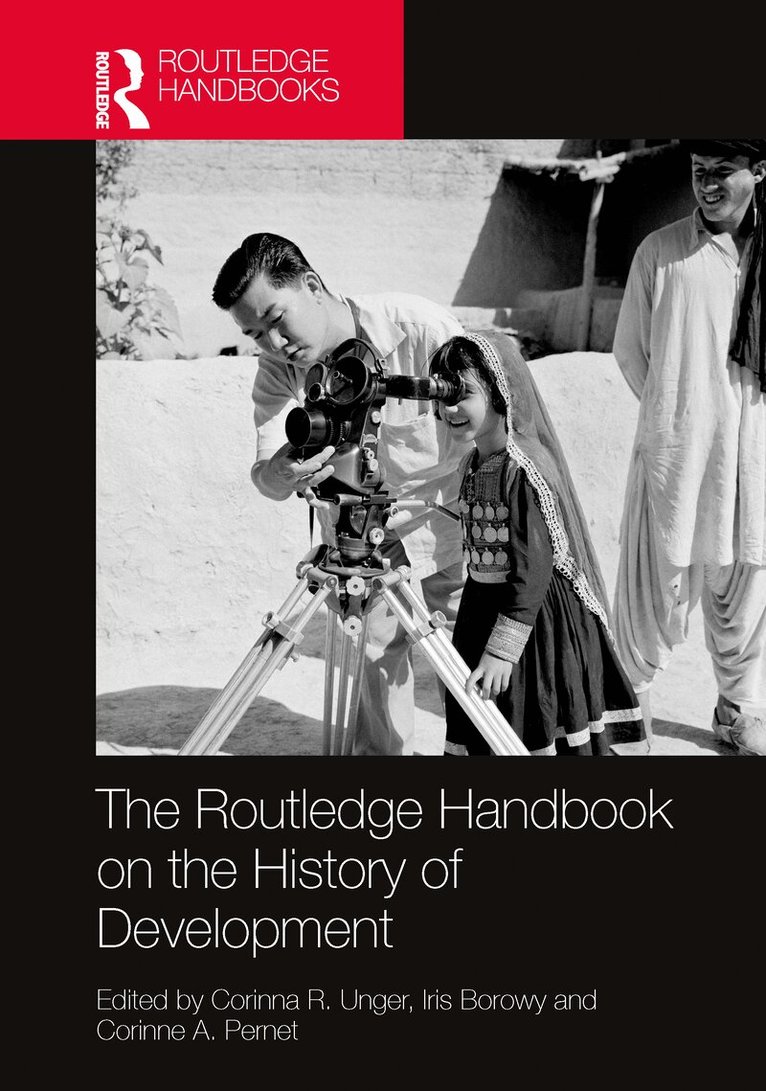
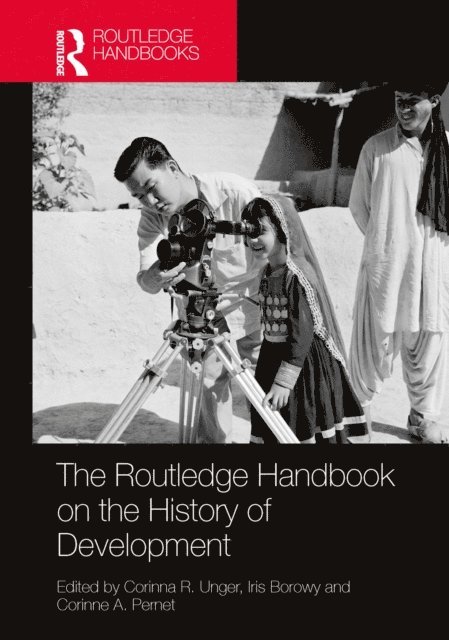
This bold and ambitious handbook is the first systematic overview of the history of development ideas, themes, and actors in the twentieth century. Taking stock of the field, the book reflects on blind spots, points out avenues for future research, and brings together a greater plurality of regions, actors, and approaches than other publications on the subject. The book offers a critical reassessment of how historical experiences have shaped contemporary understandings of development, demonstrating that the seemingly self-evident concept of development has been contingent on a combination of material conditions, power structures, and policy choices at different times and in different places. Using a world history approach, the handbook highlights similarities in development challenges across time and space, and it pays attention to the meanings of ideological, cultural, and economic divides in shaping different understandings and practices of development. Taking a thematic approach, the book shows how different actors – governments, non-governmental organizations, individuals, corporations, and international organizations – have responded to concerns regarding the conditions in their own or other societies, such as the provision of education, health, or food; approaches to infrastructure development and industrialization; the adjustment of social conditions; population policies and migration; and the maintenance of stability and security. Bringing together a range of voices from across the globe, this book will be perfect for advanced students and researchers of international development history.
Inbunden, Engelska, 2013
2 220 kr
Skickas inom 10-15 vardagar
The UN World Commission on Environment and Development, chaired by former Norwegian Prime Minister Gro Harlem Brundtland, alerted the world to the urgency of making progress toward economic development that could be sustained without depleting natural resources or harming the environment. Written by an international group of politicians, civil servants and experts on the environment and development, the Brundtland Report changed sustainable development from a physical notion to one based on social, economic and environmental issues. This book positions the Brundtland Commission as a key event within a longer series of international reactions to pressing problems of global poverty and environmental degradation. It shows that its report, "Our Common Future", published in 1987, covered much more than its definition of sustainable development as "development that meets the needs of the present without compromising the ability of future generations to meet their own needs" for which it became best known. It also addressed a long list of issues which remain unresolved today. The book explores how the work of the Commission juggled contradictory expectations and world views, which existed within the Commission and beyond, and drew on the concept of sustainable development as a way to reconcile profound differences. The result was both an immense success and disappointment. Coining an irresistibly simple definition enabled the Brundtland Commission to place sustainability firmly on the international agenda. This definition gained acceptability for a potentially divisive concept, but it also diverted attention from underlying demands for fundamental political and social changes. Meanwhile, the central message of the Commission – the need to make inconvenient sustainability considerations a part of global politics as much as of everyday life – has been side-lined. The book thus assesses to what extent the Brundtland Commission represented an immense step forward or a missed opportunity.
Häftad, Engelska, 2015
685 kr
Skickas inom 10-15 vardagar
The UN World Commission on Environment and Development, chaired by former Norwegian Prime Minister Gro Harlem Brundtland, alerted the world to the urgency of making progress toward economic development that could be sustained without depleting natural resources or harming the environment. Written by an international group of politicians, civil servants and experts on the environment and development, the Brundtland Report changed sustainable development from a physical notion to one based on social, economic and environmental issues.This book positions the Brundtland Commission as a key event within a longer series of international reactions to pressing problems of global poverty and environmental degradation. It shows that its report, "Our Common Future", published in 1987, covered much more than its definition of sustainable development as "development that meets the needs of the present without compromising the ability of future generations to meet their own needs" for which it became best known. It also addressed a long list of issues which remain unresolved today. The book explores how the work of the Commission juggled contradictory expectations and world views, which existed within the Commission and beyond, and drew on the concept of sustainable development as a way to reconcile profound differences. The result was both an immense success and disappointment. Coining an irresistibly simple definition enabled the Brundtland Commission to place sustainability firmly on the international agenda. This definition gained acceptability for a potentially divisive concept, but it also diverted attention from underlying demands for fundamental political and social changes.Meanwhile, the central message of the Commission – the need to make inconvenient sustainability considerations a part of global politics as much as of everyday life – has been side-lined. The book thus assesses to what extent the Brundtland Commission represented an immense step forward or a missed opportunity.
Häftad, Engelska, 2024
677 kr
Skickas inom 10-15 vardagar
This bold and ambitious handbook is the first systematic overview of the history of development ideas, themes, and actors in the twentieth century. Taking stock of the field, the book reflects on blind spots, points out avenues for future research, and brings together a greater plurality of regions, actors, and approaches than other publications on the subject. The book offers a critical reassessment of how historical experiences have shaped contemporary understandings of development, demonstrating that the seemingly self-evident concept of development has been contingent on a combination of material conditions, power structures, and policy choices at different times and in different places. Using a world history approach, the handbook highlights similarities in development challenges across time and space, and it pays attention to the meanings of ideological, cultural, and economic divides in shaping different understandings and practices of development. Taking a thematic approach, the book shows how different actors – governments, non-governmental organizations, individuals, corporations, and international organizations – have responded to concerns regarding the conditions in their own or other societies, such as the provision of education, health, or food; approaches to infrastructure development and industrialization; the adjustment of social conditions; population policies and migration; and the maintenance of stability and security. Bringing together a range of voices from across the globe, this book will be perfect for advanced students and researchers of international development history.
Inbunden, Engelska, 2023
2 059 kr
Skickas inom 10-15 vardagar
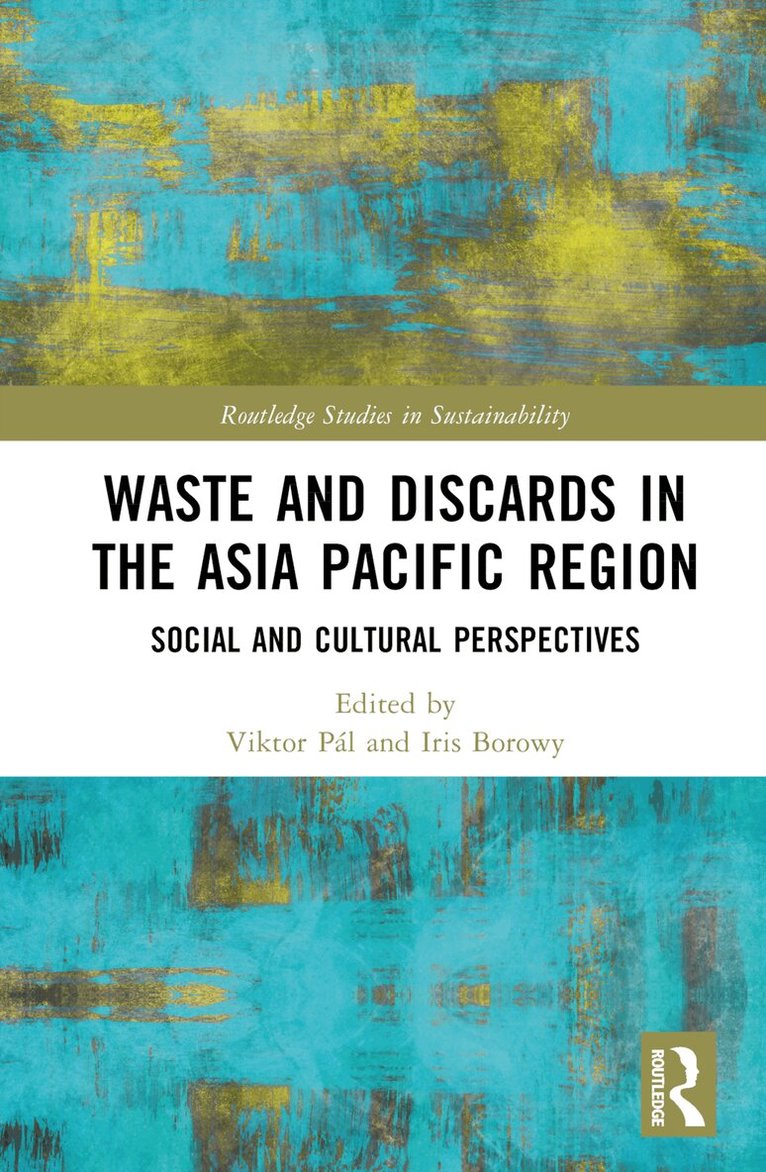
This book uncovers, explores and analyses the cultural and social factors and values that lie behind waste making, recycling and disposal in the Asia Pacific region, where impressive economic growth has led to significant increases in production, consumption and concomitant waste production.This volume demonstrates the immense scope of waste as a multi-sectoral phenomenon, covering discussions on food, menstrual products, sewage, electronics, scrap, nuclear waste, plastics and even entire villages as they are submerged underwater by dam building, considered expendable in favour of economic growth. It discusses the wide range of approaches and contexts through which people interact with waste, including socio-economic analysis, participatory observation, laboratory science, art, video, installations, literature and photography. Case studies focusing on India, China and Japan, in addition to other regional examples, demonstrate the ubiquity of waste, materially and geographically. They reveal the multiple, sometimes contradictory, dimensions of waste: managing it can foster community building but can also exclude marginalized groups; waste can trigger innovative economic concepts and practices, but it can also pollute the oceans in large garbage gyres and it can wondrously change its nature from trash to useful components to new production, before being discarded once again.This timely and wide-ranging collection of essays will be an important read for scholars, researchers and students in sustainability, development studies, discard studies, and social and cultural history, particularly focusing on countries in the Asia Pacific.
Häftad, Engelska, 2024
588 kr
Skickas inom 10-15 vardagar
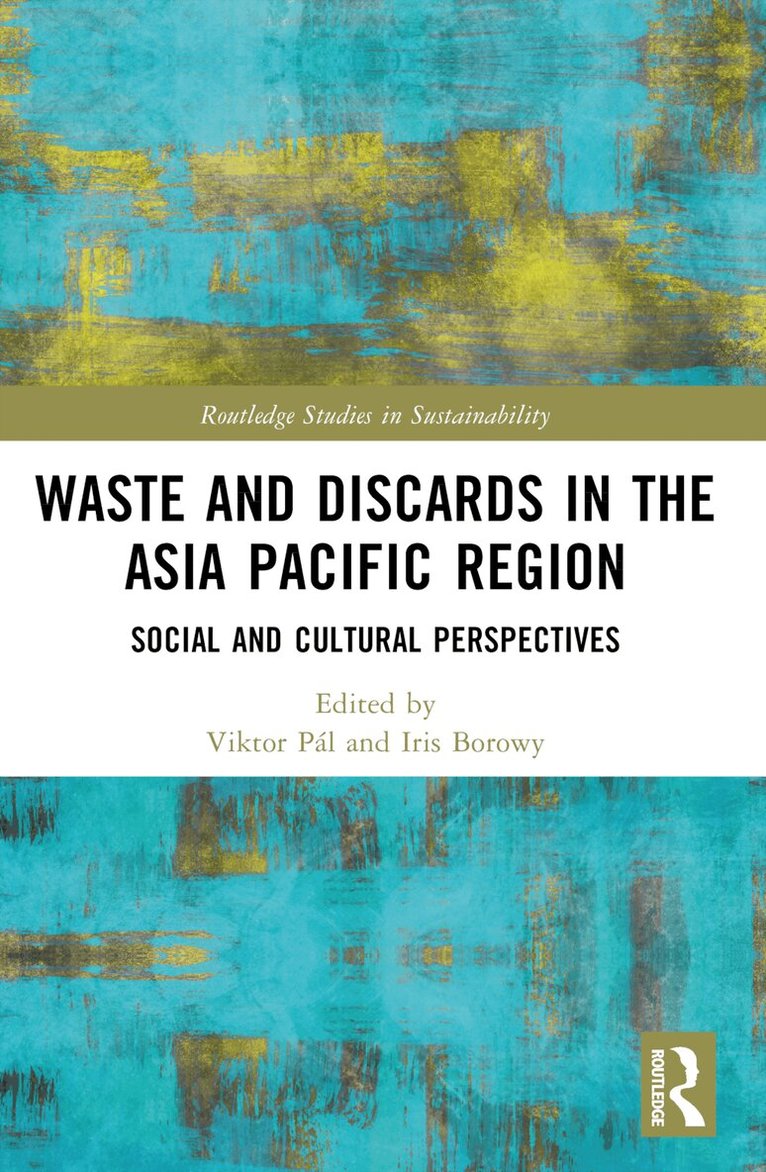
This book uncovers, explores and analyses the cultural and social factors and values that lie behind waste making, recycling and disposal in the Asia Pacific region, where impressive economic growth has led to significant increases in production, consumption and concomitant waste production.This volume demonstrates the immense scope of waste as a multi-sectoral phenomenon, covering discussions on food, menstrual products, sewage, electronics, scrap, nuclear waste, plastics and even entire villages as they are submerged underwater by dam building, considered expendable in favour of economic growth. It discusses the wide range of approaches and contexts through which people interact with waste, including socio-economic analysis, participatory observation, laboratory science, art, video, installations, literature and photography. Case studies focusing on India, China and Japan, in addition to other regional examples, demonstrate the ubiquity of waste, materially and geographically. They reveal the multiple, sometimes contradictory, dimensions of waste: managing it can foster community building but can also exclude marginalized groups; waste can trigger innovative economic concepts and practices, but it can also pollute the oceans in large garbage gyres and it can wondrously change its nature from trash to useful components to new production, before being discarded once again.This timely and wide-ranging collection of essays will be an important read for scholars, researchers and students in sustainability, development studies, discard studies, and social and cultural history, particularly focusing on countries in the Asia Pacific.
Häftad, Engelska, 2018
762 kr
Skickas inom 10-15 vardagar
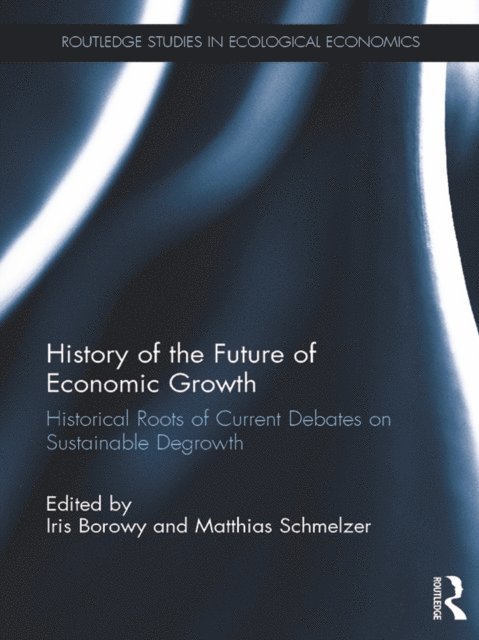
The future of economic growth is one of the decisive questions of the twenty-first century. Alarmed by declining growth rates in industrialized countries, climate change, and rising socio-economic inequalities, among other challenges, more and more people demand to look for alternatives beyond growth. However, so far these current debates about sustainability, post-growth or degrowth lack a thorough historical perspective.This edited volume brings together original contributions on different aspects of the history of economic growth as a central and near-ubiquitous tenet of developmental strategies. The book addresses the origins and evolution of the growth paradigm from the seventeenth century up to the present day and also looks at sustainable development, sustainable growth, and degrowth as examples of alternative developmental models. By focusing on the mixed legacy of growth, both as a major source of expanded life expectancies and increased comfort, and as a destructive force harming personal livelihoods and threatening entire societies in the future, the editors seek to provide historical depth to the ongoing discussion on suitable principles of present and future global development.History of the Future of Economic Growth is aimed at students and academics in environmental, social, economic and international history, political science, environmental studies, and economics, as well as those interested in ongoing discussions about growth, sustainable development, degrowth, and, more generally, the future.
Inbunden, Engelska, 2017
2 413 kr
Skickas inom 10-15 vardagar
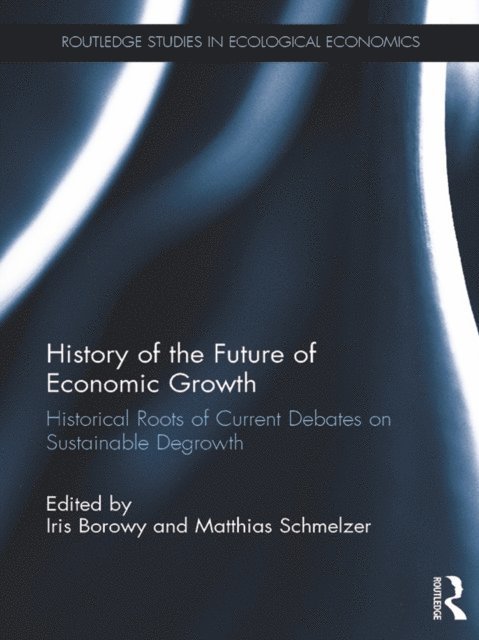
The future of economic growth is one of the decisive questions of the twenty-first century. Alarmed by declining growth rates in industrialized countries, climate change, and rising socio-economic inequalities, among other challenges, more and more people demand to look for alternatives beyond growth. However, so far these current debates about sustainability, post-growth or degrowth lack a thorough historical perspective.This edited volume brings together original contributions on different aspects of the history of economic growth as a central and near-ubiquitous tenet of developmental strategies. The book addresses the origins and evolution of the growth paradigm from the seventeenth century up to the present day and also looks at sustainable development, sustainable growth, and degrowth as examples of alternative developmental models. By focusing on the mixed legacy of growth, both as a major source of expanded life expectancies and increased comfort, and as a destructive force harming personal livelihoods and threatening entire societies in the future, the editors seek to provide historical depth to the ongoing discussion on suitable principles of present and future global development.History of the Future of Economic Growth is aimed at students and academics in environmental, social, economic and international history, political science, environmental studies, and economics, as well as those interested in ongoing discussions about growth, sustainable development, degrowth, and, more generally, the future.
Inbunden, Engelska, 2022
904 kr
Skickas inom 5-8 vardagar
What is development, what has it been in the past, and what can historians learn from studying the history of development? How has the field of the history of development evolved over time, and where should it be going in the future?
Inbunden, Engelska, 2023
864 kr
Skickas inom 5-8 vardagar
Health and development require one another: there can be no development without a critical mass of people who are sufficiently healthy to do whatever it takes for development to occur, and people cannot be healthy without societal developments that enable standards of health to be maintained or improved. However, the ways in which health and development interact are complex and contested. This volume unites eleven case studies from nine countries in three continents and two international organizations since the late-nineteenth century. Collectively, they show how different actors have struggled to reconcile the sometimes contradictory nature of health and development policies, and the subordination of these policies to a range of political objectives.
Del 5 - Yearbook for the History of Global Development
Environment, Technology, and Development
Inbunden, Engelska, 2025
751 kr
Skickas inom 3-6 vardagar
Histories of environment and histories of technology have moved in exciting, interdisciplinary directions in recent years, with increasing recognition that both environments and technologies are made and remade, gaining meaning only in specific historical settings. With historical scholarship weighted towards examples from the North Atlantic world, this volume provides a collection of grounded case studies from across the modern world that interrogate the relationship between environment and technology in developmental practices and discourses. Development projects have often involved assumptions that humans can create and wield technology to harness, improve or protect the non-human environment. This volume will not simply discredit these assumptions by revealing their nefarious effects on our society and planet, but instead historicise them by locating them within specific power structures and epistemologies. The connections and conversations between dispersed cases raised here point us to more nuanced conclusions about the causes and effects, the objects and subjects of history, in this dynamic interaction between environment, technology, and development.
Inbunden, Engelska, 2025
1 021 kr
Skickas inom 5-8 vardagar
Developmental policies frequently have contradictory effects. These typically play out in different sectors of life and are analyzed in different academic disciplines, using different assumptions, methods and bodies of literature. The results translate into conflicting political demands. This volume argues that keeping two separate narratives distorts reality and prevents a full understanding of development and its challenges. Over the last 200 years, life has become better. People around the world have grown taller and lived longer, benefitting from growing wealth, better nutrition, better housing, better clothing, more tax revenues and better healthcare policies. Life has also become worse: two centuries of industrialization have caused pollution, wasteful consumerism and climate change threatening predominantly the livelihoods of those least responsible, exacerbating global inequality. But these narratives describe different but inseparable elements of the same history. 13 papers explore ways to integrate the "good" and "bad" narratives into coherent, intertwined histories, using theoretical analyses and case studies from five continents. It is the first publication to centrally focus on this question and its repercussions.
Häftad, Engelska, 2008
721 kr
Skickas inom 5-8 vardagar
Social medicine was one of the key health paradigms of the early twentieth century. It perceived public health as a function of social conditions and aimed at improving it through comprehensive, horizontal strategies. Yet, it was no homogeneous or static phenomenon. Depending on time, place and circumstances, it took different, sometimes ideologically contradictory forms. This volume portrays leading medical experts from seven European countries. Their juxtaposition reveals a network of international interaction and shows how different people coped with the crises of the time in different ways, sometimes as part of the scientific mainstream, sometimes as opposition under attack, sometimes in exile. Their biographies reflect an ambivalent interplay of biomedicine, politics and social theory.