• Fri frakt över 249 kr
  • •
  • Snabba leveranser
  • •
  • Billiga böcker
Kundservice

Du är på sajten för privatpersoner.

Företag, bibliotek eller offentlig verksamhet?

Du handlar på classic.bokus.com, där alla dina funktioner finns intakta.
Till classic.bokus.com
Bokus logotyp. Gå till startsidan.
  • Erbjudanden
  • Nyheter
  • Student
  • Topplistor
  • Barn & ungdom
  • Bokus Play
  • E-böcker
  • Pocketböcker
  • Spel & pussel

10% rabatt på allt med kod: NYSTART10 →

Sidfot

Mina sidor

    Hjälp

    • Kundservice
    • Vanliga frågor och svar
    • Frakt och leverans
    • Retur vid ångerrätt
    • Reklamera vara
    • Betalning
    • Köpvillkor
    • Allmänna villkor
    • Information om webbplatsens tillgänglighet

    Om Bokus

    • Om oss
    • Pressrum
    • För studenter
    • För företag
    • För bibliotek och offentlig verksamhet
    • För leverantörer
    • Hållbarhet

    Populärt

    • Aktuella erbjudanden
    • Presentkort
    • Studentlitteratur
    • Nya böcker
    • Topplistor
    • Signerade böcker
    • Engelska böcker

    Inspiration

    • Boktips
    • BookTok
    • Populära bokserier
    • Barnbokskaraktärer
    • Populära författare
    Logotyp för Bokus
    Följ oss på Facebook (extern länk)Följ oss på Instagram (extern länk)Följ oss på YouTube (extern länk)Följ oss på TikTok (extern länk)
    bokus @ CookiesAnpassa cookiesIntegritetspolicyKöpvillkor
    Till Citymail hemsida (extern länk)Till Budbee hemsida (extern länk)Till Postnord hemsida (extern länk)Till Schenker hemsida (extern länk)Till Early Bird hemsida (extern länk)Till Walleys hemsida (extern länk)
    1. Ekonomi och Ledarskap
    2. Nationalekonomi
    3. Mikroekonomi

    Routledge International Handbook of Deindustrialization Studies

    AvTim Strangleman,Sherry Lee Linkon

    Inbunden, Engelska, 2025

    Del i serien Routledge International Handbooks

    3 656 kr

    Beställningsvara. Skickas inom 10-15 vardagar. Fri frakt över 249 kr.

    Beskrivning

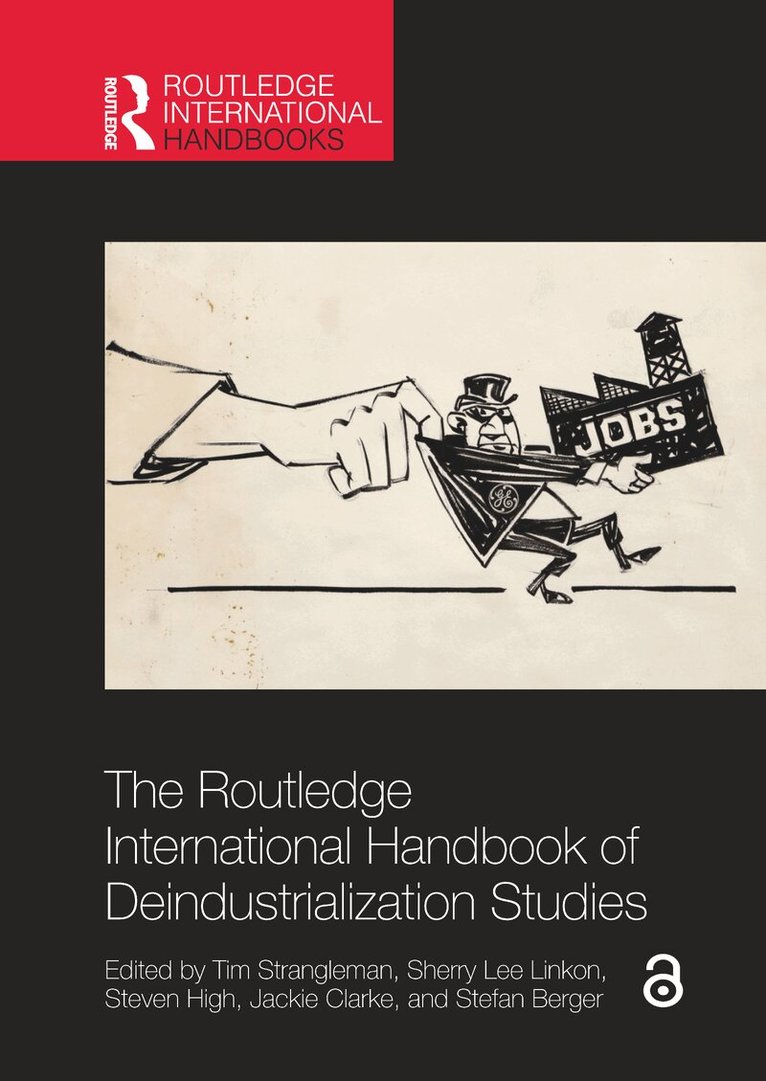
    The Routledge International Handbook of Deindustrialization Studies is a timely volume that provides an overview of this interdisciplinary field that emerged in response to the widespread decline of manufacturing and heavy industry from the 1980s onward. Edited by prominent figures in the field, the volume brings together many of the leading scholars from a range of countries across the globe to offer a multifaceted overview of deindustrialization and its impact. Deindustrialization has been cited as one of the factors behind the rise of the far right, and to a lesser extent the far left, across Europe, the rise and success of Trumpism in the US, and the Brexit vote as well as the more recent and sudden erosion of UK Labour’s ‘Red Wall’ of the North of England. This collection brings together scholars of deindustrialization around the globe and from a wide variety of academic disciplines including history, sociology, politics, geography, economics, anthropology, literature, arts practice, photography, heritage, and cultural studies. In doing so, the volume explores the roots of deindustrialization across the world, highlights the key themes and issues in the field, illustrates the intersectional and interdisciplinary character of the field, and shows how deindustrialization lies at the heart of many of the key political, cultural, social, and economic issues of our time.Written in a clear and accessible style, the Handbook is a comprehensive interdisciplinary volume for this young but maturing field. The volume is a valuable resource for students, teachers, and researchers interested in industrial decline, closure, and the multifaceted impacts they cause. It speaks to readers across the arts, humanities, and social and political sciences concerned with deindustrialization broadly defined.Chapter 27 of this book is freely available as a downloadable Open Access PDF at http://www.taylorfrancis.com under a Creative Commons [Attribution-Non Commercial-No Derivatives (CC-BY-NC-ND)] 4.0 International license.

    Produktinformation

    • Utgivningsdatum:2025-04-23
    • Mått:174 x 246 x 33 mm
    • Vikt:1 120 g
    • Format:Inbunden
    • Språk:Engelska
    • Serie:Routledge International Handbooks
    • Antal sidor:506
    • Förlag:Taylor & Francis Ltd
    • ISBN:9781032311524

    Utforska kategorier

    • Mikroekonomi inom Ekonomi och Ledarskap
    • Industrier och branscher inom Ekonomi och Ledarskap
    • Sociologi inom Samhälle och politik

    Mer om författaren

    Tim Strangleman is Emeritus Professor of Sociology at the University of Kent, UK, where he is also Director of the Work, Employment and Economic Life research cluster. He has researched and published widely on issues of work, class, community, and deindustrialization. He has carried out work in the coal mining, rail, health, ship building, engineering, papermaking, and brewing industries, drawing on oral history, archives, and visual material. He is the author of Work Identity at the End of the Line? Privatisation and Culture Change in the UK Railway Industry (2004) and Voices of Guinness: An Oral History of the Park Royal Brewery (2019). He is also the co-author of Work and Society: Sociological Approaches, Themes and Methods (2008) and the co-editor of The Routledge Handbook of Working-Class Studies (2021). He is also a co-investigator on the Deindustrialization and the Politics of Our Time (DéPOT) project.Sherry Lee Linkon is a Professor of English and American Studies at Georgetown University, USA, where, with campus and community colleagues, she developed the Steel Valley Voices digital archive of interviews and artifacts reflecting the experiences of 24 racial and ethnic groups in the Youngstown area. Her most recent book, The Half-Life of Deindustrialization (2018), examines early twenty-first century working-class narratives reflecting the continuing effects of economic restructuring in the US. With John Russo, she also co-authored Steeltown USA: Work and Memory in Youngstown (2002) and co-edited New Working Class Studies (2005). Her current research examines literature and photography reflecting Black women's perspectives on the legacies of deindustrialization. She is also a co-investigator on the Deindustrialization and the Politics of Our Time (DéPOT) project.Steven High is Professor of History at Concordia University, Canada and Principal Investigator of the Deindustrialization and the Politics of Our Time (DéPOT) project. He has published extensively on the history and politics of deindustrialization in the US and Canada. His book, Industrial Sunset: The Making of North America’s Rust Belt (2003), won prizes from the American Historical Association and other organizations. He is also the author of Corporate Wasteland: The Landscape and Memory of Deindustrialization (with photographer David Lewis, 2007) and One Job Town: Work, Memory and Betrayal in Northern Ontario (2018), and the co-editor of The Deindustrialized World: Confronting Ruination in Postindustrial Places (2017).Jackie Clarke is Senior Lecturer in French Studies at the University of Glasgow, UK, where she is also a member of the Centre for Gender History. She is also a co-investigator on the Deindustrialization and the Politics of Our Time (DéPOT) project. Her research explores questions about work, consumption, deindustrialization, and gender in contemporary France. She is the co-editor of a special issue on gender and deindustrialization in International Labor and Working Class Studies (2024).Stefan Berger is Professor of Social History and Director of the Institute for Social Movements at Ruhr-Universität Bochum, Germany. He is also Executive Chair of the Foundation History of the Ruhr and an Honorary Professor at Cardiff University, UK. He is the author of History and Identity: How Historical Theory Shapes Historical Practice (2022) and editor of Constructing Industrial Pasts: Heritage, Historical Culture and Identity in Regions Undergoing Structural Economic Transformation (2020). He is a co-investigator on the Deindustrialization and the Politics of Our Time (DéPOT) project, an international partnership project funded by the Canadian Social Sciences and Humanities Research Council (SSHRC).

    Innehållsförteckning

    • IntroductionPart I: Concepts and TheoriesIntroduction: Concepts and Theories1. Theorizing Deindustrialization2. Reflections on the Half-Life3. Deindustrialization as Global History4. Moral Economy and Industrial Culture5. Racializing Deindustrialization StudiesPart II: Political Economy of DeindustrializationIntroduction: Political Economy of Deindustrialization6. Uneven Development, the World System, and Lumpenization: Bringing Marxian Political Economy Back into Deindustrialization Studies7. The Racial Dimensions of (De)industrialization8. The Region as an Analytical Framework for Deindustrialization Studies: Regional Economic Development in Atlantic Canada9. Deindustrialization and Nationhood10. Challenging and Politicizing Deindustrialization?11. Anticipating Just Transitions: Ecological Crisis and Future DeindustrializationPart III: Communities, Identities, AffectsIntroduction: Communities, Identities, Affects12. Community, Affect and Deindustrialization13. Deindustrialization and Racialized Communities: A Historical Perspective14. Class, Gender, and Industrial Structures of Feeling after Socialism: Post-industrial Lives in the Post-Yugoslav Space15. Metallic Vitalities: Smog, Steel and Stigma in a De-industrial Town16. Deindustrialization, Leisure & Feeling Communities17. “Dad, why did you bring me to a gay steel mill?” Notes Towards a Queer Study of DeindustrializationPart IV: The Critical Cultural Work of RepresentationsIntroduction: The Critical Cultural Work of Representations18. Black Spatial Agency and Cultural Justice: Race, Ruins, and Gentrification in Detroit19. Uncovering the Discovery of the Ruhr: Representations of Deindustrialization in Germany’s Former Industrial Heartland20. Making the Human Wreckage Visible: Deindustrialization in Kate Beaton’s Ducks21. The Sound of Deindustrialization22. Garment Workers Through the Lens of Loss: The Long Shadow of Deindustrialization in South Asian FilmsPart V: Memories, Memorialization, and the Heritage of DeindustrializationIntroduction: Memories, Memorialization, and the Heritage of Deindustrialization23. Industrial Memory Landscapes in Urban Planning Processes – Comparative Perspectives from Germany, Luxembourg, and France24. Memorialization of Industrial Pasts in Post-Socialist Countries25. The Memorialization of Class in Industrial Heritage Initiatives26. Uncovering Gender Tracks: Erasure and Railway Industrial Heritage Initiatives Across the World27. Industrial Heritage from the South: Decolonial Approaches to the Social Construction of Heritage and Preservation PracticesConclusion