• Fri frakt över 249 kr
  • •
  • Snabba leveranser
  • •
  • Billiga böcker
Kundservice

Du är på sajten för privatpersoner.

Företag, bibliotek eller offentlig verksamhet?

Du handlar på classic.bokus.com, där alla dina funktioner finns intakta.
Till classic.bokus.com
Bokus logotyp. Gå till startsidan.
  • Erbjudanden
  • Nyheter
  • Student
  • Topplistor
  • Barn & ungdom
  • Bokus Play
  • E-böcker
  • Pocketböcker
  • Spel & pussel

10% rabatt på allt med kod: NYSTART10 →

Sidfot

Mina sidor

    Hjälp

    • Kundservice
    • Vanliga frågor och svar
    • Frakt och leverans
    • Retur vid ångerrätt
    • Reklamera vara
    • Betalning
    • Köpvillkor
    • Allmänna villkor
    • Information om webbplatsens tillgänglighet

    Om Bokus

    • Om oss
    • Pressrum
    • För studenter
    • För företag
    • För bibliotek och offentlig verksamhet
    • För leverantörer
    • Hållbarhet

    Populärt

    • Aktuella erbjudanden
    • Presentkort
    • Studentlitteratur
    • Nya böcker
    • Topplistor
    • Signerade böcker
    • Engelska böcker

    Inspiration

    • Boktips
    • BookTok
    • Populära bokserier
    • Barnbokskaraktärer
    • Populära författare
    Logotyp för Bokus
    Följ oss på Facebook (extern länk)Följ oss på Instagram (extern länk)Följ oss på YouTube (extern länk)Följ oss på TikTok (extern länk)
    bokus @ CookiesAnpassa cookiesIntegritetspolicyKöpvillkor
    Till Citymail hemsida (extern länk)Till Budbee hemsida (extern länk)Till Postnord hemsida (extern länk)Till Schenker hemsida (extern länk)Till Early Bird hemsida (extern länk)Till Walleys hemsida (extern länk)
    1. Ekonomi och Ledarskap
    2. Industrier och branscher
    3. Energiindustri

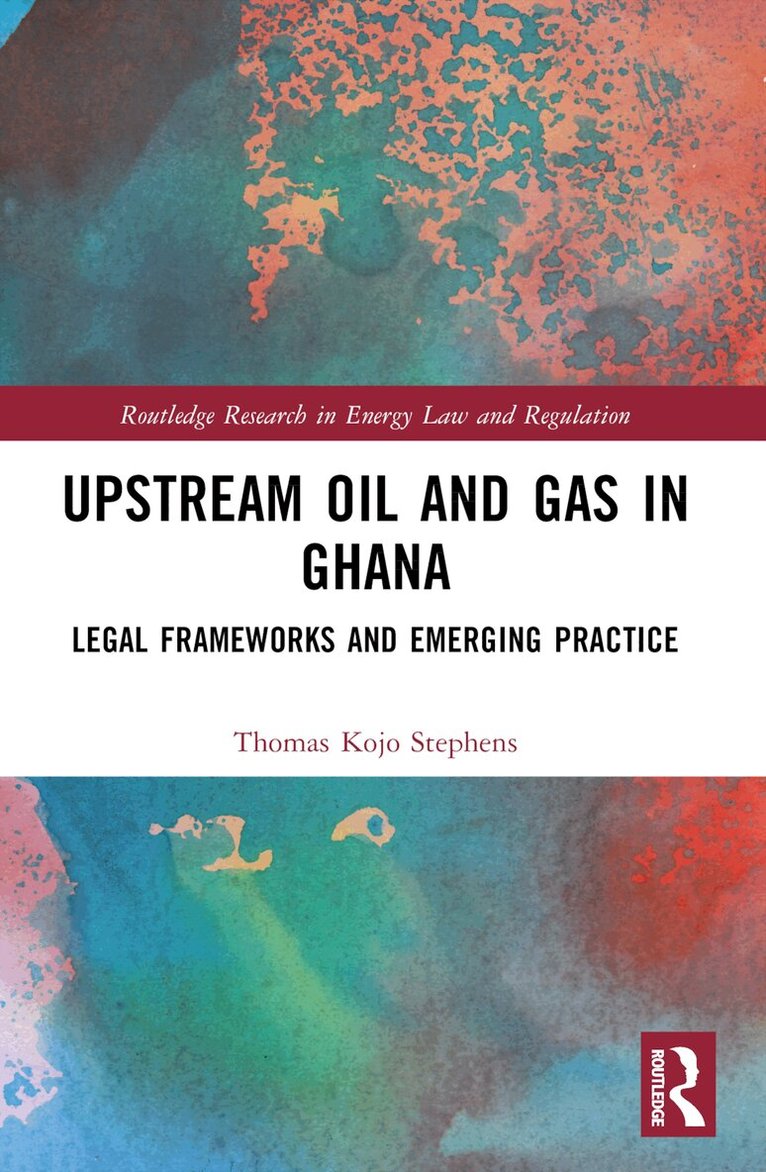
    Upstream Oil and Gas in Ghana

    Legal Frameworks and Emerging Practice

    AvThomas Kojo Stephens

    Häftad, Engelska, 2024

    Del i serien Routledge Research in Energy Law and Regulation

    613 kr

    Beställningsvara. Skickas inom 10-15 vardagar. Fri frakt över 249 kr.

    Fler format och utgåvor

    E-bok

    725 kr

    E-bok

    788 kr

    Inbunden

    2 227 kr

    Beskrivning

    This book explores the myriad issues that play out in the upstream petroleum industry of Ghana from a legal perspective.Focusing on Ghana as an emerging petroleum country, Thomas Kojo Stephens begins by examining whether the existing constitutional framework will be effective in governing the expanding oil and gas sector. Drawing on various approaches proffered by other experts in the field, Stephens looks at possible institutional structures that could be put in place and juxtaposes these ideas with the experience of Ghana to test the efficacy of these proposals. He also explores the types of contractual frameworks currently implemented in Ghana for comparison with other emerging petroleum economies, examining the barriers to effectiveness, novel provisions that must be incorporated, and lessons learned from other regions. Finally, the book highlights how vital it is for the Ghanaian State to monitor the use of petroleum revenue and make ethical investment decisions that prioritize the interests of Ghanaian citizens.Upstream Oil and Gas in Ghana will be of great interest to students and scholars of energy law and policy, oil and gas management, and African Studies more broadly, as well as those working in the upstream petroleum industry.

    Produktinformation

    • Utgivningsdatum:2024-10-08
    • Mått:156 x 234 x 20 mm
    • Vikt:700 g
    • Format:Häftad
    • Språk:Engelska
    • Serie:Routledge Research in Energy Law and Regulation
    • Antal sidor:354
    • Förlag:Taylor & Francis Ltd
    • ISBN:9781032462684

    Utforska kategorier

    • Energiindustri inom Ekonomi och Ledarskap
    • Finansiering inom Ekonomi och Ledarskap
    • Upphandlingsrätt inom Juridik

    Mer om författaren

    Thomas Kojo Stephens is a Senior Lecturer at the University of Ghana School of Law and lectures in both the LLB and LLM Programs, lecturing among others, Conflict of Laws/Private International Law, Research Methodology, Energy Law, and Natural Resources Law, and supervises in the PhD Program.He is a Senior Partner at Stobe Law and the Head of the Transactional, Energy Practice, as well as the Consultancy Group of the firm. He advises numerous entities in the petroleum sector and serves as principal consultant for a number of high-profile entities. He is the jurisdictional author for a number of international publications in Petroleum Law and has written on different facets of the industry. He is an Advisory Board Member of the International Energy Law Advisory Group (IELAG), a Principal Trainer at the International Energy Law Training and Research Center (IELTRC), and was a Vice-Chairman of Ghana’s Public Interest and Accountability Committee (PIAC) from 2018 to 2020, a statutory body with oversight over the use of Ghana’s petroleum revenue.

    Innehållsförteckning

    • ContentsAcknowledgmentsList of Acronyms and Abbreviations INTRODUCTIONOverview PART I: CONSTITUTIONAL, STATUTORY AND ORGANIZATIONALFRAMEWORKS FOR THE REGULATION OF GHANA’S UPSTREAMPETROLEUM INDUSTRYChapter 1 – GHANA’S UPSTREAM PETROLEUM INDUSTRY1.0 Introduction1.1 Ghana’s Sedimentary Basins1.2 Pre-Commercial Discovery1.3 Post-Commercial Discovery Chapter 2: CONSTITUTIONAL FRAMEWORK FOR THEREGULATION OF GHANA’S PETROLEUM INDUSTRY2.0 Introduction2.1 Natural Resources: Background to Ghana’s Constitutional Framework after Independence (Republican Era)2.2 The Transpositions to the 1992 Constitution2.3 The 1992 Constitution2.4 ConclusionChapter 3: STATUTORY FRAMEWORK FOR THE REGULATION OF GHANA’S PETROLEUM INDUSTRY3.0 Introduction3.1 Overview of Statutory Framework of Ghana’s Upstream Petroleum Industry3.2 Ghana’s Statutory Framework for the Petroleum Industry – Pre-CommercialDiscovery3.3 Ghana’s Statutory Framework for the Petroleum Industry – Post-CommercialDiscovery3.4 Evolution of the Current Legislative Framework for the Regulation ofPetroleum Operations – Post-Commercial Discovery3.5 Approach to Development of Legislation for the Regulation of PetroleumOperations3.6 The Petroleum (Exploration and Production) Bill, 20103.7 Major Defect in the Petroleum (Exploration and Production) Bill, 20103.8 ‘Death’ of the Petroleum (Exploration and Production) Bill, 20103.9 The Petroleum (Exploration and Production) Bill, 20133.10 The Petroleum (Exploration and Production) Bill, 2014.3.11 The Petroleum (Exploration and Production) Bill, 20163.12 Petroleum (Exploration and Production) Act, 2016 (Act 919).3.13 Conclusion Chapter 4: ORGANIZATIONAL FRAMEWORK FOR THEREGULATION OF GHANA’S PETROLEUM INDUSTRY4.0 Introduction4.1 Approaches to Organizational Framework for Regulation4.2 The Organizational Structure of Ghana’s Upstream Petroleum Industry4.3 Establishment of the Petroleum Commission4.4 The Petroleum Commission Act, 2011 (Act 821)4.5 Ghana National Gas Company PART II: THE CONTRACTUAL FRAMEWORK FOR THEREGULATION OF GHANA’S UPSTREAM PETROLEUM INDUSTRYChapter 5: LICENSING5.0 Introduction5.1 Licensing in Ghana Pre-20165.2 Some Events that Precipitated a Desire to Move to the CompetitiveBidding System5.3 Licensing in Ghana Post 2016 - Competitive Bidding5.4 ConclusionChapter 6: THE CONTRACTUAL FRAMEWORK FOR THE REGULATION OF GHANA'S PETROLEUM INDUSTRY6.0 Introduction6.1 The Model Petroleum Agreement6.2 Petroleum Costs6.3 Conclusion PART III: PETROLEUM REVENUE MANAGEMENT FRAMEWORK, DEVELOPMENTS, AND EVOLVING MATTERS IN THE INDUSTRYChapter 7: PETROLEUM REVENUE MANAGEMENT IN GHANA7.0 Overview7.1 Sources of Petroleum Revenue7.2 The Petroleum Holding Fund7.3 Earmarked Locations for Distribution of Funds7.4 Summary of the Disbursement of the Revenue as Prescribed by the PRMA7.5 The Petroleum Wealth Fund (PWF)7.6 Institutions under the Framework of the PRMA7.7 Challenges with Petroleum Revenue Management in Ghana7.8 Conclusion Chapter 8: EVOLVING MATTERS AND CONCLUDING OVERVIEW8.0 Introduction8.1 The Energy Transition: Global Developments and the Impact on Ghana8.2 Proposed Efforts to Counteract Adverse Impact of Global Developments arising from the Energy Transition 8.3 Concluding Review Index