• Fri frakt över 249 kr
  • •
  • Snabba leveranser
  • •
  • Billiga böcker
Kundservice

Du är på sajten för privatpersoner.

Företag, bibliotek eller offentlig verksamhet?

Du handlar på classic.bokus.com, där alla dina funktioner finns intakta.
Till classic.bokus.com
Bokus logotyp. Gå till startsidan.
  • Erbjudanden
  • Nyheter
  • Student
  • Topplistor
  • Barn & ungdom
  • Bokus Play
  • E-böcker
  • Pocketböcker
  • Spel & pussel

Må bättre, för mindre! Upp till 50% rabatt på hälsoböcker

Sidfot

Mina sidor

    Hjälp

    • Kundservice
    • Vanliga frågor och svar
    • Frakt och leverans
    • Retur vid ångerrätt
    • Reklamera vara
    • Betalning
    • Köpvillkor
    • Allmänna villkor
    • Information om webbplatsens tillgänglighet

    Om Bokus

    • Om oss
    • Pressrum
    • För studenter
    • För företag
    • För bibliotek och offentlig verksamhet
    • För leverantörer
    • Hållbarhet

    Populärt

    • Aktuella erbjudanden
    • Presentkort
    • Studentlitteratur
    • Nya böcker
    • Topplistor
    • Signerade böcker
    • Engelska böcker

    Inspiration

    • Boktips
    • BookTok
    • Populära bokserier
    • Barnbokskaraktärer
    • Populära författare
    Logotyp för Bokus
    Följ oss på Facebook (extern länk)Följ oss på Instagram (extern länk)Följ oss på YouTube (extern länk)Följ oss på TikTok (extern länk)
    bokus @ CookiesAnpassa cookiesIntegritetspolicyKöpvillkor
    Till Citymail hemsida (extern länk)Till Budbee hemsida (extern länk)Till Postnord hemsida (extern länk)Till Schenker hemsida (extern länk)Till Early Bird hemsida (extern länk)Till Walleys hemsida (extern länk)
    1. Historia och arkeologi
    2. Historia
    3. Historia: särskilda händelser och ämnen
    4. Kolonialism och imperialism

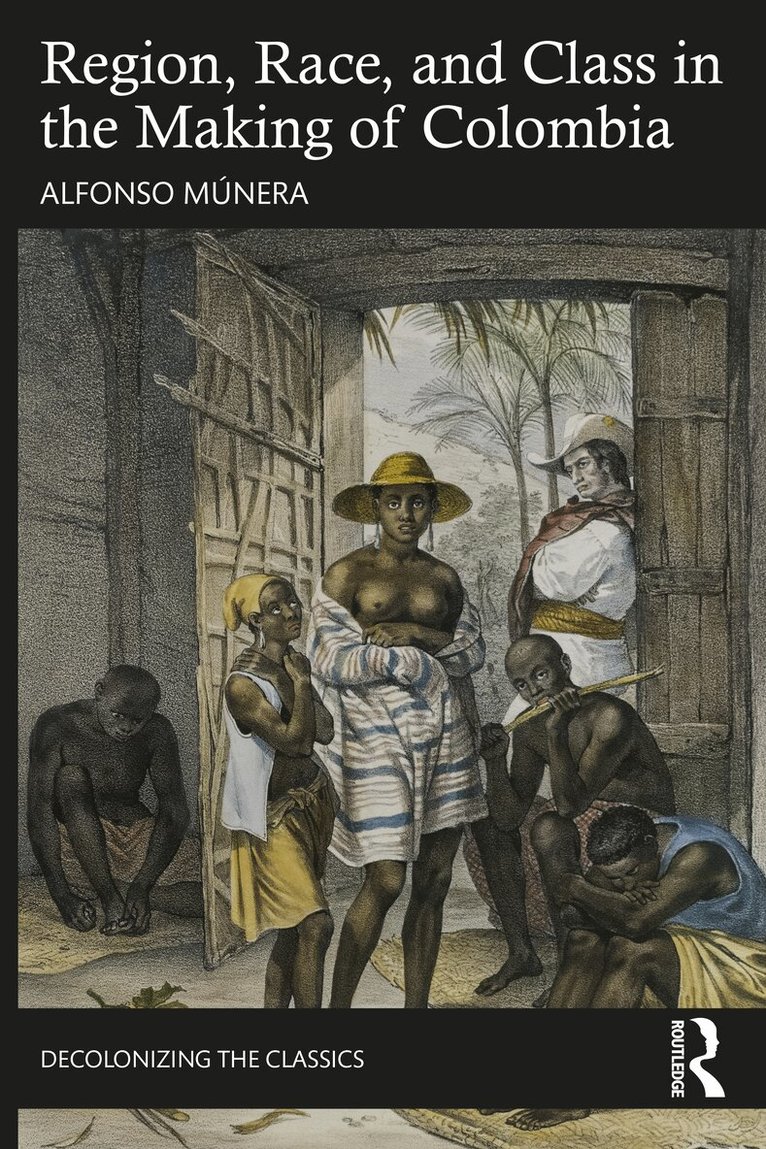
    Region, Race, and Class in the Making of Colombia

    AvAlfonso Múnera

    Häftad, Engelska, 2024

    Del i serien Decolonizing the Classics

    643 kr

    Beställningsvara. Skickas inom 10-15 vardagar. Fri frakt över 249 kr.

    Fler format och utgåvor

    E-bok

    760 kr

    E-bok

    762 kr

    Inbunden

    2 493 kr

    Beskrivning

    This pioneering translation of Alfonso Múnera’s seminal work El fracaso de la nación presents a new interpretation and innovative perspective on canonical Colombian history and the failure of the Colombian nation to English-speaking readers.Mainstream historiography depicts Colombian independence as the achievement of European-descendent elites only, downplaying the role and importance of regional subaltern classes. Múnera’s well-researched account challenges theoretical, political, and cultural interventions and shows that these subaltern groups were pivotal to achieving independence from Spain. It was their organizing and pressing for freedom from colonial domination that ultimately brought about independence in Cartagena and later to the whole country. Yet Múnera demonstrates that these differing regional elites meant that a single, coherent unity across New Granada was not possible, a point that would ultimately doom subsequent nation-building efforts.Offering a truly decolonizing perspective, one that has remained hidden from official accounts of Colombian independence, scholars and researchers in political science, history, sociology, and anthropology will welcome the opportunity to read this work for the first time in translation.

    Produktinformation

    • Utgivningsdatum:2024-12-18
    • Mått:152 x 229 x 10 mm
    • Vikt:320 g
    • Format:Häftad
    • Språk:Engelska
    • Serie:Decolonizing the Classics
    • Antal sidor:158
    • Förlag:Taylor & Francis Ltd
    • ISBN:9781032463360

    Utforska kategorier

    • Kolonialism och imperialism inom Historia och arkeologi
    • Amerikas historia inom Historia och arkeologi
    • Nationell befrielse och självständighet inom Historia och arkeologi

    Mer om författaren

    Alfonso Múnera is a historian, researcher, lecturer, and former ambassador. Born in Cartagena in 1953, Múnera earned a law degree from the University of Cartagena in 1981 and an MA and PhD in Latin American studies and US history from the University of Connecticut in 1995. In 1981, he began teaching at the University of Cartagena, where he served as vice rector of research (2007–2010) and founded the International Institute for Caribbean Studies in 2005. Múnera has been a visiting professor in Spain and the United States at institutions such as Pablo de Olavide University (1999), the University of Wisconsin (2003–2004), and the University of Seville (2006). Múnera is one of Latin America's most recognized and respected historians and in 2010, was named as one of 12 renowned Afro-Colombians. His critique of the construction of the Colombian nation and the processes of independence, and his criticism of official history make him an outstanding researcher.

    Recensioner i media

    "In this myth-busting classic on the formation of the Colombian nation, Alfonso Múnera brilliantly decenters traditional understandings of the archive by viewing it from the perspective of the country’s Caribbean region. Far from being the straightforward realisation of an "imagined community", Múnera argues that nation-building in Colombia was a deeply-fractured process in which the interests of the region’s elites played a crucial role, alongside the vital but oft-neglected influence of the subaltern classes, the artisans and mulatos of Cartagena. This English translation now makes an influential text accessible to an even wider audience."Peter Wade, University of Manchester"What a pleasure to see the long-overdue translation of this classic work of Latin American and Atlantic history. Alfonso Múnera has been one of the leading voices in promoting the inclusion of Black agency and actors in the region’s history. English-speaking audiences now have access to his pathbreaking research and to his lucid and compelling storytelling."George Reid Andrews, Distinguished Professor of History, University of Pittsburgh

    Innehållsförteckning

    • Introduction  1. New Granada and the Problem of Central Authority  2. The Colombian Caribbean: Authority and Social Control in a Frontier Region  3. Cartagena de Indias: Progress and Crisis in a Former Trading Post of Enslaved People  4. Economic Implications of the Conflict between Cartagena and Santa Fe de Bogotá  5. Cartagena’s Struggle for Political Autonomy  6. Black and Mulatto Artisans and Independence of the Republic of Cartagena, 1810–1816  Conclusions  Bibliography