Decolonizing the Classics - Böcker
Visar alla böcker i serien Decolonizing the Classics. Handla med fri frakt och snabb leverans.
10 produkter
10 produkter
578 kr
Skickas inom 10-15 vardagar
Jacob Gorender's (1923–2013) 1978 book, Colonial Slavery (O Escravismo Colonial), comes alive for English language readers thanks to Bernd Reiter and Alejandro Reyes's brilliant translation.Gorender argued that slave-holding societies produced an economic system sui generis, not fitting into any of the established societal categories offered by Karl Marx and Max Weber. As such, Gorender proposed a theory of colonial slavery as the structuring force of slave-holding societies. For him, slave-holding societies are different from other societies in that slavery structured them differently. This is of the utmost relevance to this day as it allows for a new and different way to explain contemporary racial inequalities in post-slavery societies. An accomplished interpreter of Brazilian social formation, Gorender was motivated by the need to understand the historical roots of class domination and the emergence of Brazilian capitalist society. His presentation of rich historical data, rigorous theoretical and analytical framework, and militant action as an active member of the Brazilian Communist Party are the hallmarks of his writing.Colonial Slavery: An Abridged Translation is a must-read for researchers, teachers, and students of history, sociology, economics, politics, as well as activists of the Black movement and other movements committed to anti-racism.
2 166 kr
Skickas inom 10-15 vardagar
Jacob Gorender's (1923–2013) 1978 book, Colonial Slavery (O Escravismo Colonial), comes alive for English language readers thanks to Bernd Reiter and Alejandro Reyes's brilliant translation.Gorender argued that slave-holding societies produced an economic system sui generis, not fitting into any of the established societal categories offered by Karl Marx and Max Weber. As such, Gorender proposed a theory of colonial slavery as the structuring force of slave-holding societies. For him, slave-holding societies are different from other societies in that slavery structured them differently. This is of the utmost relevance to this day as it allows for a new and different way to explain contemporary racial inequalities in post-slavery societies. An accomplished interpreter of Brazilian social formation, Gorender was motivated by the need to understand the historical roots of class domination and the emergence of Brazilian capitalist society. His presentation of rich historical data, rigorous theoretical and analytical framework, and militant action as an active member of the Brazilian Communist Party are the hallmarks of his writing.Colonial Slavery: An Abridged Translation is a must-read for researchers, teachers, and students of history, sociology, economics, politics, as well as activists of the Black movement and other movements committed to anti-racism.
646 kr
Skickas inom 10-15 vardagar
The crowning achievement of Afro-Colombian author Manuel Zapata Olivella, Changó, Decolonizing the African Diaspora depicts the African American experience from a perspective of gods who stand over the world and watch.The centennial anniversary release of this ground-breaking postcolonial text remains a passionate tour de force to make sense of our past, present, and future. A new introduction by Professor William Luis positions the book in contemporary politics and reasserts this book’s importance in Afro-Spanish American literature. Ranging from Brazil to New England but centered in the Caribbean, where countless enslaved people once arrived from West Africa, this book recounts scenes from four centuries of involuntary displacement and servitude of the muntu, the people. Through the voices of Benkos Biojo in Colombia, Henri Christophe in Haiti, Simon Bolivar in Venezuela, Jose Maria Morelos in Mexico, the Aleijadinho in Brazil, or Malcolm X in Harlem, Zapata Olivella conveys, in luminous verse and prose, the breadth of heroism, betrayal, and suffering common to the history of people of African descent in the Western hemisphere.Readers and critics of postcolonial literatures will relish the opportunity to experience Zapata Olivella's masterpiece in English; students of world cultures will appreciate this extraordinary tapestry, woven from equal strands of myth and history.
2 419 kr
Skickas inom 10-15 vardagar
The crowning achievement of Afro-Colombian author Manuel Zapata Olivella, Changó, Decolonizing the African Diaspora depicts the African American experience from a perspective of gods who stand over the world and watch.The centennial anniversary release of this ground-breaking postcolonial text remains a passionate tour de force to make sense of our past, present, and future. A new introduction by Professor William Luis positions the book in contemporary politics and reasserts this book’s importance in Afro-Spanish American literature. Ranging from Brazil to New England but centered in the Caribbean, where countless enslaved people once arrived from West Africa, this book recounts scenes from four centuries of involuntary displacement and servitude of the muntu, the people. Through the voices of Benkos Biojo in Colombia, Henri Christophe in Haiti, Simon Bolivar in Venezuela, Jose Maria Morelos in Mexico, the Aleijadinho in Brazil, or Malcolm X in Harlem, Zapata Olivella conveys, in luminous verse and prose, the breadth of heroism, betrayal, and suffering common to the history of people of African descent in the Western hemisphere.Readers and critics of postcolonial literatures will relish the opportunity to experience Zapata Olivella's masterpiece in English; students of world cultures will appreciate this extraordinary tapestry, woven from equal strands of myth and history.
561 kr
Skickas inom 10-15 vardagar
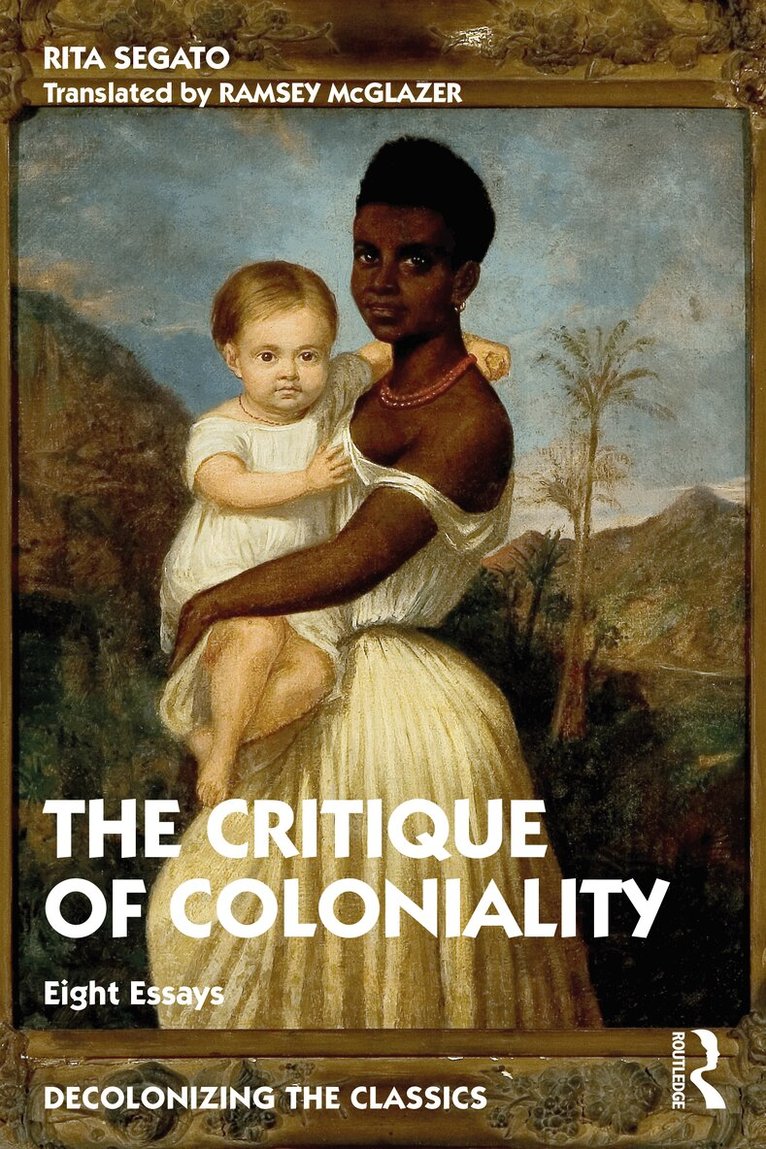
This translation of Rita Segato’s seminal book La crítica de la colonialidad en ocho ensayos offers an anthropological and critical perspective on the coloniality of power as theorized by the Peruvian thinker Aníbal Quijano.Segato begins with an overview of Quijano’s conceptual framework, emphasizing the power and richness of his theory and its relevance to a range of fields. Each of the seven subsequent chapters presents a scenario in which a persistent colonial structure or form of subjectivity can be identified. These essays address urgent issues of gender, sexuality, race and racism, and indigenous forms of life. They set the decolonial perspective to work, and are connected by two central preoccupations: the critical analysis of coloniality and the effort to reimagine anthropology as "responsive anthropology," a practice at once answerable and useful to the communities previously regarded as the "objects" of ethnographic thought.The Critique of the Coloniality makes important and original contributions to our understanding of colonial and decolonial processes, drawing on the author’s experience of feminist and antiracist movements and struggles for indigenous and human rights. This book will appeal to students and scholars working in anthropology, Latin American studies, political theory, feminist and gender studies, indigenous studies, and anticolonial, post-colonial, and decolonial thought.
2 103 kr
Skickas inom 10-15 vardagar
This translation of Rita Segato’s seminal book La crítica de la colonialidad en ocho ensayos offers an anthropological and critical perspective on the coloniality of power as theorized by the Peruvian thinker Aníbal Quijano.Segato begins with an overview of Quijano’s conceptual framework, emphasizing the power and richness of his theory and its relevance to a range of fields. Each of the seven subsequent chapters presents a scenario in which a persistent colonial structure or form of subjectivity can be identified. These essays address urgent issues of gender, sexuality, race and racism, and indigenous forms of life. They set the decolonial perspective to work, and are connected by two central preoccupations: the critical analysis of coloniality and the effort to reimagine anthropology as "responsive anthropology," a practice at once answerable and useful to the communities previously regarded as the "objects" of ethnographic thought.The Critique of the Coloniality makes important and original contributions to our understanding of colonial and decolonial processes, drawing on the author’s experience of feminist and antiracist movements and struggles for indigenous and human rights. This book will appeal to students and scholars working in anthropology, Latin American studies, political theory, feminist and gender studies, indigenous studies, and anticolonial, post-colonial, and decolonial thought.
2 445 kr
Skickas inom 10-15 vardagar
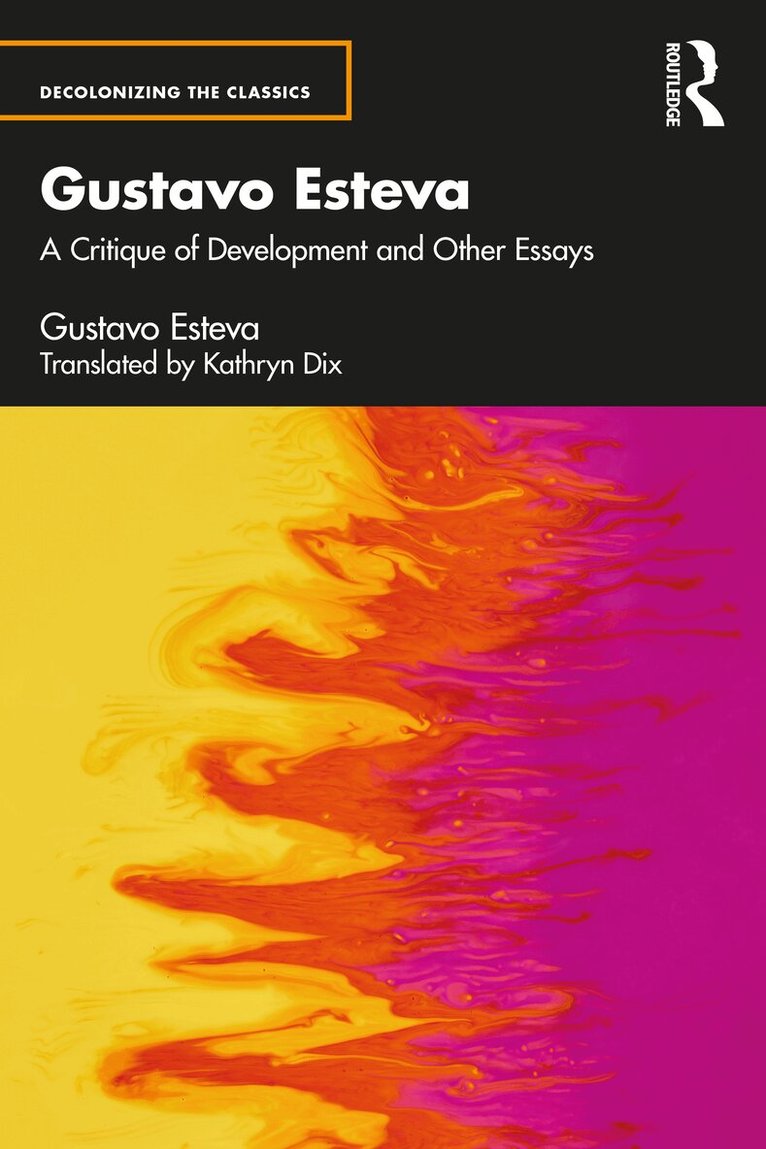
In his reflections on decolonization and post-development, Gustavo Esteva forged a unique synthesis of critical theory and political economy. This book presents more than half a century of "reflection in action" in the form of essays, books, and interventions in national and international forums and newspaper articles—most published here for the very first time. It showcases Esteva’s evolving thought on economic theory, social change, revolutionary subjectivity, transition, development, the challenges of a new era and personal and communal autonomy, all associated with the challenges and advances in the construction of a new society. Through this translation, Esteva’s writings engage with many of the important cultural and political debates of the present day and retain their power both to provoke and move the reader. Readers will see a thinker at work, formulating local, grassroots alternatives as they are emerging in Mexico and Latin America, with a keen sensibility to what happens in other regions of the world. Gustavo Esteva: A Critique of Development and Other Essays offers a lucid insight into the climatic and sociopolitical collapses we face and will be of interest to students and scholars of critical theory, post-colonial and de-colonial studies, and post-development studies.
676 kr
Skickas inom 10-15 vardagar
In his reflections on decolonization and post-development, Gustavo Esteva forged a unique synthesis of critical theory and political economy. This book presents more than half a century of "reflection in action" in the form of essays, books, and interventions in national and international forums and newspaper articles—most published here for the very first time. It showcases Esteva’s evolving thought on economic theory, social change, revolutionary subjectivity, transition, development, the challenges of a new era and personal and communal autonomy, all associated with the challenges and advances in the construction of a new society. Through this translation, Esteva’s writings engage with many of the important cultural and political debates of the present day and retain their power both to provoke and move the reader. Readers will see a thinker at work, formulating local, grassroots alternatives as they are emerging in Mexico and Latin America, with a keen sensibility to what happens in other regions of the world. Gustavo Esteva: A Critique of Development and Other Essays offers a lucid insight into the climatic and sociopolitical collapses we face and will be of interest to students and scholars of critical theory, post-colonial and de-colonial studies, and post-development studies.
2 166 kr
Skickas inom 10-15 vardagar
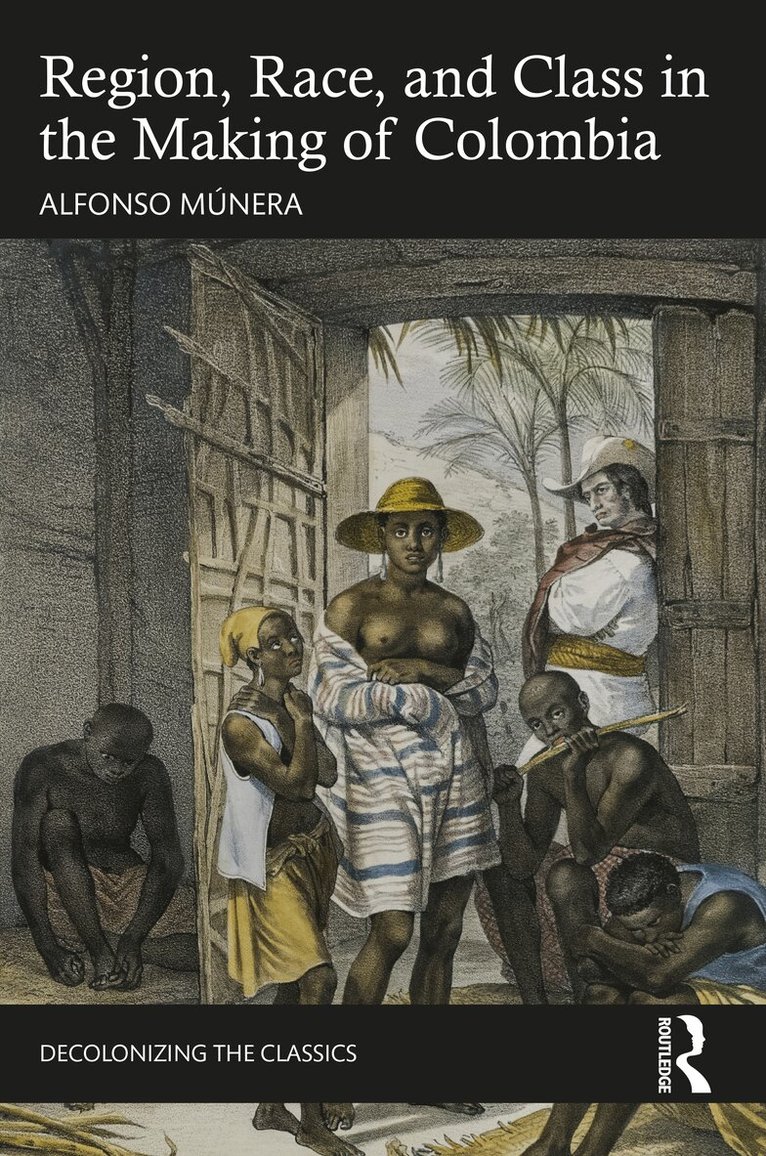
This pioneering translation of Alfonso Múnera’s seminal work El fracaso de la nación presents a new interpretation and innovative perspective on canonical Colombian history and the failure of the Colombian nation to English-speaking readers.Mainstream historiography depicts Colombian independence as the achievement of European-descendent elites only, downplaying the role and importance of regional subaltern classes. Múnera’s well-researched account challenges theoretical, political, and cultural interventions and shows that these subaltern groups were pivotal to achieving independence from Spain. It was their organizing and pressing for freedom from colonial domination that ultimately brought about independence in Cartagena and later to the whole country. Yet Múnera demonstrates that these differing regional elites meant that a single, coherent unity across New Granada was not possible, a point that would ultimately doom subsequent nation-building efforts.Offering a truly decolonizing perspective, one that has remained hidden from official accounts of Colombian independence, scholars and researchers in political science, history, sociology, and anthropology will welcome the opportunity to read this work for the first time in translation.
592 kr
Skickas inom 10-15 vardagar
This pioneering translation of Alfonso Múnera’s seminal work El fracaso de la nación presents a new interpretation and innovative perspective on canonical Colombian history and the failure of the Colombian nation to English-speaking readers.Mainstream historiography depicts Colombian independence as the achievement of European-descendent elites only, downplaying the role and importance of regional subaltern classes. Múnera’s well-researched account challenges theoretical, political, and cultural interventions and shows that these subaltern groups were pivotal to achieving independence from Spain. It was their organizing and pressing for freedom from colonial domination that ultimately brought about independence in Cartagena and later to the whole country. Yet Múnera demonstrates that these differing regional elites meant that a single, coherent unity across New Granada was not possible, a point that would ultimately doom subsequent nation-building efforts.Offering a truly decolonizing perspective, one that has remained hidden from official accounts of Colombian independence, scholars and researchers in political science, history, sociology, and anthropology will welcome the opportunity to read this work for the first time in translation.