• Fri frakt över 249 kr
  • •
  • Snabba leveranser
  • •
  • Billiga böcker
Kundservice

Du är på sajten för privatpersoner.

Företag, bibliotek eller offentlig verksamhet?

Du handlar på classic.bokus.com, där alla dina funktioner finns intakta.
Till classic.bokus.com
Bokus logotyp. Gå till startsidan.
  • Erbjudanden
  • Nyheter
  • Student
  • Topplistor
  • Barn & ungdom
  • Bokus Play
  • E-böcker
  • Pocketböcker
  • Spel & pussel

Må bättre, för mindre! Upp till 50% rabatt på hälsoböcker

Sidfot

Mina sidor

    Hjälp

    • Kundservice
    • Vanliga frågor och svar
    • Frakt och leverans
    • Retur vid ångerrätt
    • Reklamera vara
    • Betalning
    • Köpvillkor
    • Allmänna villkor
    • Information om webbplatsens tillgänglighet

    Om Bokus

    • Om oss
    • Pressrum
    • För studenter
    • För företag
    • För bibliotek och offentlig verksamhet
    • För leverantörer
    • Hållbarhet

    Populärt

    • Aktuella erbjudanden
    • Presentkort
    • Studentlitteratur
    • Nya böcker
    • Topplistor
    • Signerade böcker
    • Engelska böcker

    Inspiration

    • Boktips
    • BookTok
    • Populära bokserier
    • Barnbokskaraktärer
    • Populära författare
    Logotyp för Bokus
    Följ oss på Facebook (extern länk)Följ oss på Instagram (extern länk)Följ oss på YouTube (extern länk)Följ oss på TikTok (extern länk)
    bokus @ CookiesAnpassa cookiesIntegritetspolicyKöpvillkor
    Till Citymail hemsida (extern länk)Till Budbee hemsida (extern länk)Till Postnord hemsida (extern länk)Till Schenker hemsida (extern länk)Till Early Bird hemsida (extern länk)Till Walleys hemsida (extern länk)
    1. Juridik
    2. Särskilda rättsområden
    3. Miljö-, transport- och planeringsrätt
    4. Miljörätt

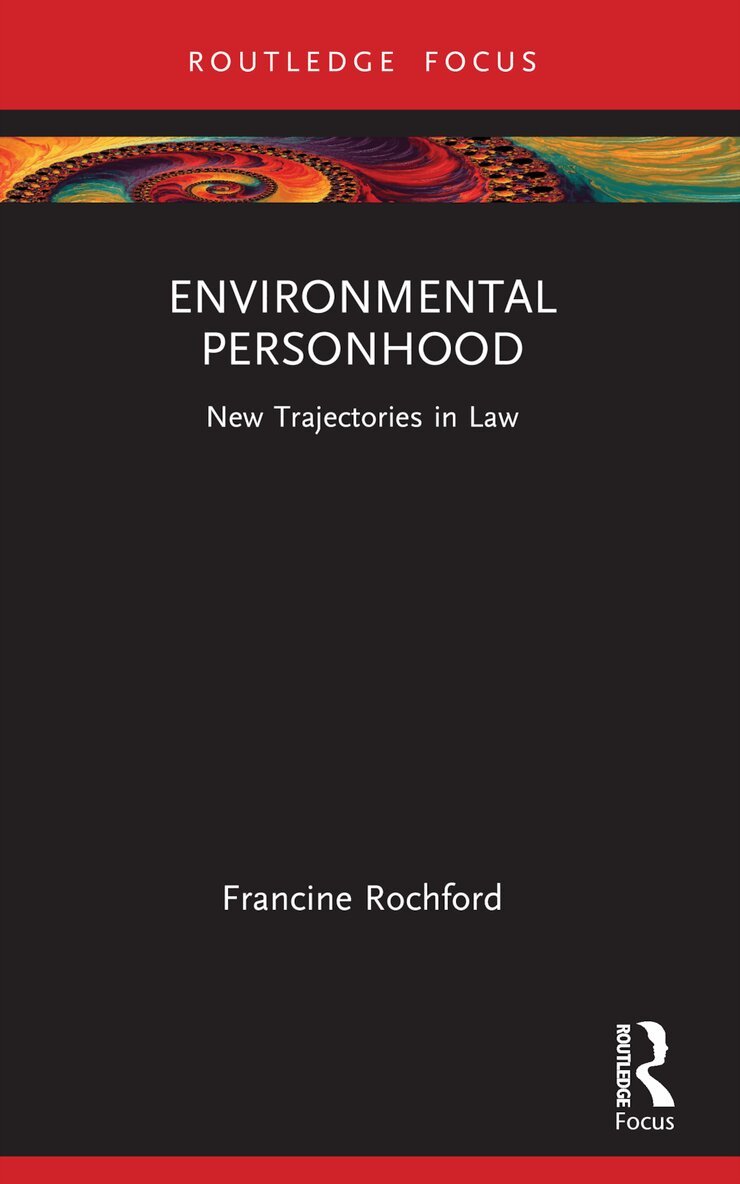
    Environmental Personhood

    New Trajectories in Law

    AvFrancine Rochford

    Häftad, Engelska, 2025

    Del i serien New Trajectories in Law

    331 kr

    Beställningsvara. Skickas inom 10-15 vardagar. Fri frakt över 249 kr.

    Fler format och utgåvor

    Inbunden

    889 kr

    E-bok

    386 kr

    E-bok

    386 kr

    Beskrivning

    This book examines the increasingly widespread movement to recognise the environment as a legal person.Several countries have now recognized that nature, or parts of nature, have juristic personhood. In this book, the concept of legal personhood and its incidents are interrogated with a view to determining whether this is, or could be, a positive contribution to modern environmental problems. Surveying historical and current positions on the juristic concept of legal personhood, the book engages recent legislation and case law, in order to consider the attempt in several countries to vest personhood in rivers, river basins and ecosystems. Comparing approaches in a range of countries – including New Zealand, India, Ecuador, the United States and Australia, it addresses the methods employed, the purported aims, the mechanisms for enforcement, and the entrenchment of legal protections. Throughout, the book elicits the difficult relationship between an historically anthropocentric idea of personhood and its extension beyond the human; concluding that the attribution of personhood to the environment is an important, but limited, contribution to environmental sustainability.Accessibly written, this book will appeal to scholars, students and others with interests in environmental law, environmental science and public policy, and ecology more generally.

    Produktinformation

    • Utgivningsdatum:2025-09-29
    • Mått:138 x 216 x 6 mm
    • Vikt:140 g
    • Format:Häftad
    • Språk:Engelska
    • Serie:New Trajectories in Law
    • Antal sidor:100
    • Förlag:Taylor & Francis Ltd
    • ISBN:9781032482828

    Utforska kategorier

    • Miljörätt inom Juridik
    • Juridik: metod och teori inom Juridik

    Mer om författaren

    Francine Rochford is Associate Professor, La Trobe University, Melbourne, Australia.

    Innehållsförteckning

    • 1. Introduction 2. The idea of the legal person 3. Case studies: Modern incidents of environmental personhood 4. Themes and contradictions 4. Conclusions