• Fri frakt över 249 kr
  • •
  • Snabba leveranser
  • •
  • Billiga böcker
Kundservice

Du är på sajten för privatpersoner.

Företag, bibliotek eller offentlig verksamhet?

Du handlar på classic.bokus.com, där alla dina funktioner finns intakta.
Till classic.bokus.com
Bokus logotyp. Gå till startsidan.
  • Erbjudanden
  • Nyheter
  • Student
  • Topplistor
  • Barn & ungdom
  • Bokus Play
  • E-böcker
  • Pocketböcker
  • Spel & pussel

10% rabatt på allt med kod: NYSTART10 →

Sidfot

Mina sidor

    Hjälp

    • Kundservice
    • Vanliga frågor och svar
    • Frakt och leverans
    • Retur vid ångerrätt
    • Reklamera vara
    • Betalning
    • Köpvillkor
    • Allmänna villkor
    • Information om webbplatsens tillgänglighet

    Om Bokus

    • Om oss
    • Pressrum
    • För studenter
    • För företag
    • För bibliotek och offentlig verksamhet
    • För leverantörer
    • Hållbarhet

    Populärt

    • Aktuella erbjudanden
    • Presentkort
    • Studentlitteratur
    • Nya böcker
    • Topplistor
    • Signerade böcker
    • Engelska böcker

    Inspiration

    • Boktips
    • BookTok
    • Populära bokserier
    • Barnbokskaraktärer
    • Populära författare
    Logotyp för Bokus
    Följ oss på Facebook (extern länk)Följ oss på Instagram (extern länk)Följ oss på YouTube (extern länk)Följ oss på TikTok (extern länk)
    bokus @ CookiesAnpassa cookiesIntegritetspolicyKöpvillkor
    Till Citymail hemsida (extern länk)Till Budbee hemsida (extern länk)Till Postnord hemsida (extern länk)Till Schenker hemsida (extern länk)Till Early Bird hemsida (extern länk)Till Walleys hemsida (extern länk)
    1. Medicin
    2. Veterinärmedicin

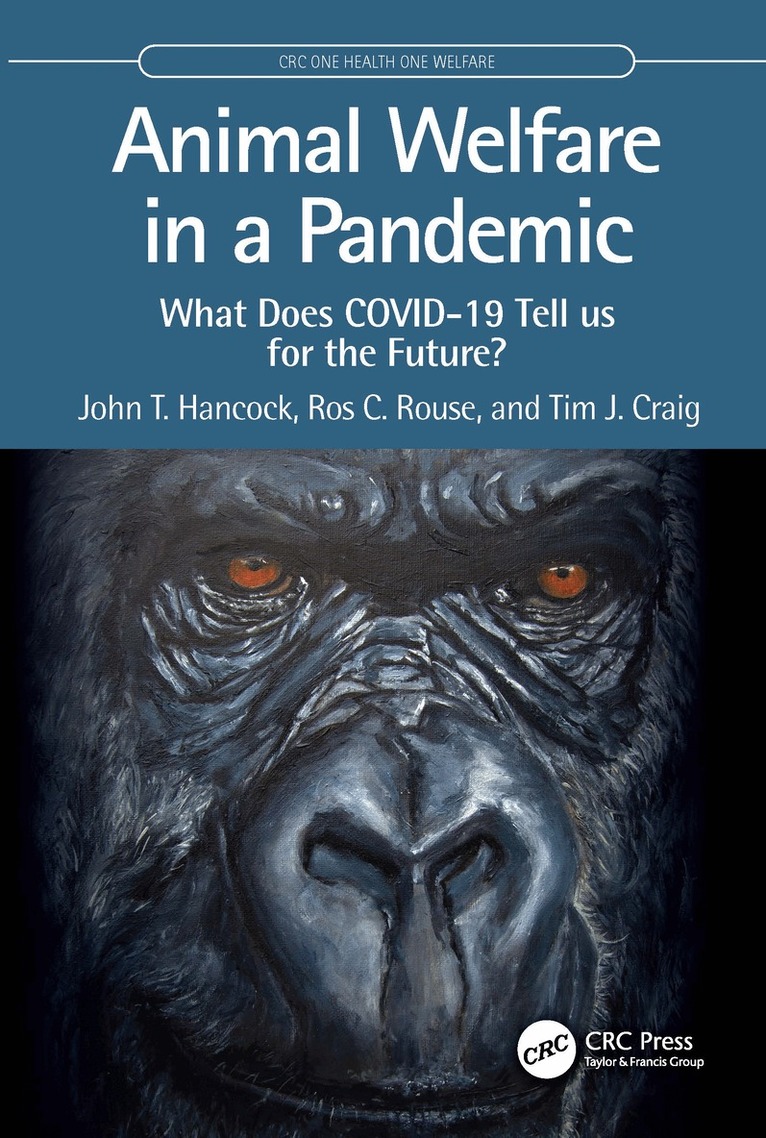
    Animal Welfare in a Pandemic

    What Does COVID-19 Tell us for the Future?

    AvJohn T. Hancock,Ros C. Rouse

    Häftad, Engelska, 2024

    Del i serien CRC One Health One Welfare

    788 kr

    Beställningsvara. Skickas inom 10-15 vardagar. Fri frakt över 249 kr.

    Fler format och utgåvor

    Inbunden

    2 117 kr

    Beskrivning

    Animal Welfare in a Pandemic explores the impact of COVID-19 on a wide array of animals, from those in the wild to companion and captive animals. During the height of the pandemic, a range of animals were infected, and many died, but this was hard to predict, even using up-to-date bioinformatics. Lockdowns around the world had, and continue to have, a major effect on animals’ welfare, influencing pet ownership and care, as well as impacting on the work of conservation institutes due to the lack of visitors and funding and lack of tourist presence in the wild which impacted on anti-poaching efforts. Some of the vast amount of personal protection equipment (PPE) that was distributed was discarded, creating both dangers and occasional opportunities for wild animals. With the rollout of human vaccines, some countries started developing animal vaccines, only some of which were deployed. In summary, the pandemic had a wide-ranging influence on animal welfare around the world. This is reviewed to highlight what can be learned to protect and enhance animal welfare in future epidemics/pandemics, and contribute to a genuinely One Health approach where the health and welfare of both humans and animals are considered holistically.This book is authored by members of the University of the West of England, Bristol, who span a range of expertise in Biological Sciences, Social Sciences, Animal Welfare, and Ethics.

    Produktinformation

    • Utgivningsdatum:2024-04-29
    • Mått:152 x 229 x 17 mm
    • Vikt:380 g
    • Format:Häftad
    • Språk:Engelska
    • Serie:CRC One Health One Welfare
    • Antal sidor:236
    • Förlag:Taylor & Francis Ltd
    • ISBN:9781032521091

    Utforska kategorier

    • Veterinärmedicin inom Medicin
    • Infektionssjukdomar och smittsamma sjukdomar inom Medicin
    • Sociala och etiska frågor inom Samhälle och politik

    Mer om författaren

    John T. Hancock is Professor of Cell Signalling at the University of West of England, Bristol (UWE) UK. He studied at the University of Bristol where he obtained a BSc(Hons) in Biochemistry (1984) and then a PhD (1987). He stayed at Bristol where he held post-doctoral research positions for six years, before he moved to UWE in 1993. He has been at UWE ever since. John has a long-standing interest in how small relatively reactive molecules are able to partake in cell signalling events in cells. This often centres around the chemistry of reduction and oxidation (redox). He has authored several editions of the textbook Cell Signalling, published by Oxford University Press, as well as publishing over two hundred academic articles. He holds several editorial positions with journals, most notably being the Editor-in-Chief of the journal Oxygen. Recently, John has published the book Why Elephants Cry: How Observing Unusual Animal Behaviours Can Predict the Weather (and other Environmental Phenomena) with CRC Press. He has also written several articles on COVID-19, including about the impact of the pandemic on animals and animal welfare, and it was this which initiated the writing of this book.Tim J. Craig originally studied Molecular and Cellular Biochemistry at the University of Oxford, graduating in 2000, before studying for a PhD at the University of Liverpool on the molecular mechanisms of neurotransmitter release. His first postdoctoral position was in ion channel physiology at the University of Oxford (2004-2009) followed by a senior postdoctoral position at the University of Bristol (2009-2015), during which he worked on many aspects of molecular neuroscience, including synaptic plasticity and neurotransmitter release. Since 2015, he has had an academic position at the University of the West of England, Bristol, where he is currently an Associate Professor of Neuroscience. In this role he teaches on many different courses, and provides most of the neuroscience teaching on the Biological and Biomedical Sciences degree courses. His research currently focusses on the role of dietary factors in neuronal health and function.Ros C. Rouse originally studied Psychology at the University of Bristol. She is a science policy expert with extensive Research Council experience. Ros currently concentrates on promoting integrity in research at the University of the West of England, and is a member of the University’s Ethics and Integrity Committee. She has a strong personal commitment to the welfare of animals, and believes that every animal counts. Ros is committed to a vision of One Health in which the health and wellbeing of animals is considered, as well as the impact of their health on humans. Ros has co-authored several articles on COVID-19 and animals. Ros is also an artist, focussing on wildlife and the natural world.

    Innehållsförteckning

    • DedicationAcknowledgementsPrefaceAuthor BiographiesChapter 1: The Coronavirus Disease 2019 (COVID-19) PandemicChapter 2: Can the Susceptibility of Animals to SARS-CoV-2 be Predicted?Chapter 3: Animals Which Were Infected in the Real WorldChapter 4: Animal VaccinesChapter 5: Animal Conservation and the PandemicChapter 6: The Indirect Effects of COVID-19 on AnimalsChapter 7: Animals, Pandemics and the FutureChapter 8: Final thoughtsIndex