• Fri frakt över 249 kr
  • •
  • Snabba leveranser
  • •
  • Billiga böcker
Kundservice

Du är på sajten för privatpersoner.

Företag, bibliotek eller offentlig verksamhet?

Du handlar på classic.bokus.com, där alla dina funktioner finns intakta.
Till classic.bokus.com
Bokus logotyp. Gå till startsidan.
  • Erbjudanden
  • Nyheter
  • Student
  • Topplistor
  • Barn & ungdom
  • Bokus Play
  • E-böcker
  • Pocketböcker
  • Spel & pussel

10% studentrabatt med kod TERM26

Sidfot

Mina sidor

    Hjälp

    • Kundservice
    • Vanliga frågor och svar
    • Frakt och leverans
    • Retur vid ångerrätt
    • Reklamera vara
    • Betalning
    • Köpvillkor
    • Allmänna villkor
    • Information om webbplatsens tillgänglighet

    Om Bokus

    • Om oss
    • Pressrum
    • För studenter
    • För företag
    • För bibliotek och offentlig verksamhet
    • För leverantörer
    • Hållbarhet

    Populärt

    • Aktuella erbjudanden
    • Presentkort
    • Studentlitteratur
    • Nya böcker
    • Topplistor
    • Signerade böcker
    • Engelska böcker

    Inspiration

    • Boktips
    • BookTok
    • Populära bokserier
    • Barnbokskaraktärer
    • Populära författare
    Logotyp för Bokus
    Följ oss på Facebook (extern länk)Följ oss på Instagram (extern länk)Följ oss på YouTube (extern länk)Följ oss på TikTok (extern länk)
    bokus @ CookiesAnpassa cookiesIntegritetspolicyKöpvillkor
    Till Citymail hemsida (extern länk)Till Budbee hemsida (extern länk)Till Postnord hemsida (extern länk)Till Schenker hemsida (extern länk)Till Early Bird hemsida (extern länk)Till Walleys hemsida (extern länk)
    1. Samhälle och politik
    2. Samhälle och kultur
    3. Kultur och medier
    4. Referensverk och tvärvetenskap

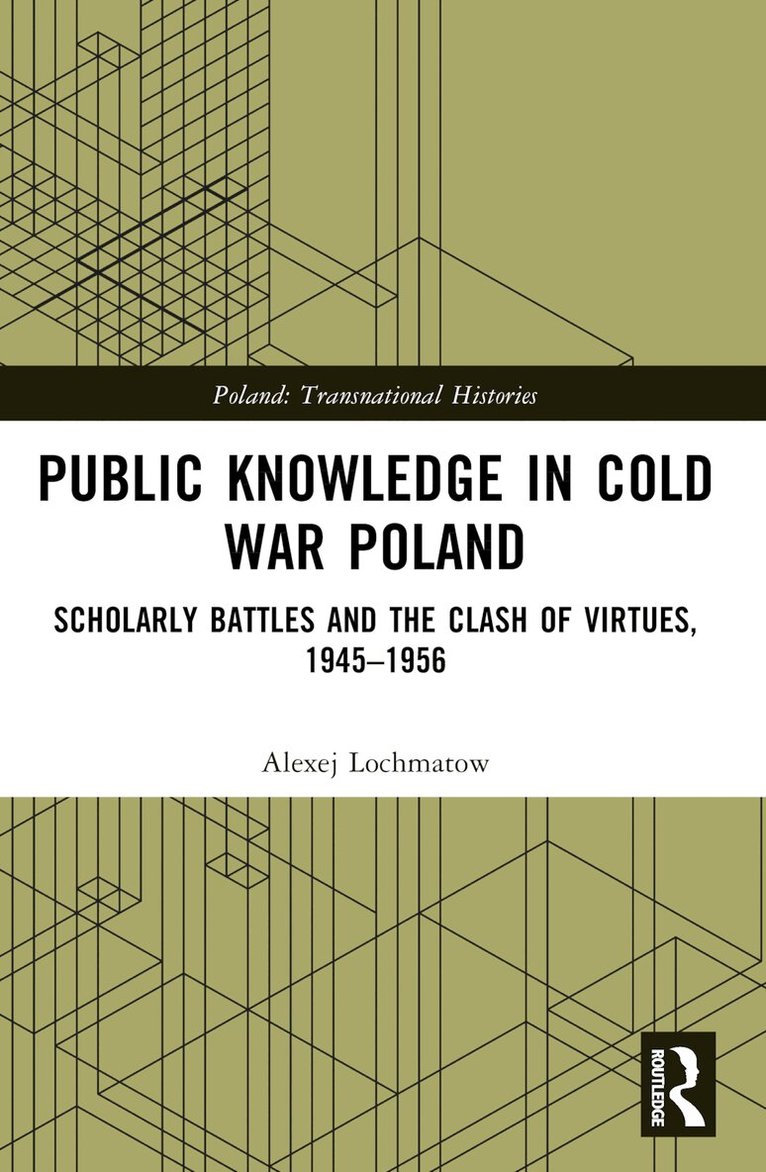
    Public Knowledge in Cold War Poland

    Scholarly Battles and the Clash of Virtues, 1945–1956

    AvAlexej Lochmatow

    Häftad, Engelska, 2025

    Del i serien Poland: Transnational Histories

    705 kr

    Beställningsvara. Skickas inom 10-15 vardagar. Fri frakt över 249 kr.

    Fler format och utgåvor

    E-bok

    829 kr

    E-bok

    829 kr

    Inbunden

    2 434 kr

    Beskrivning

    This book explores the public debates among scholars that took place in Early Cold War Poland. The author challenges the traditional narrative on the ‘Sovietisation’ of Central and Eastern European countries and proposes to see this process not as a spread of Marxist ideology or a Soviet institutional model, but as an attempt to force scholars to rapidly adopt new academic and civic virtues. This book argues that this project failed to succeed in Poland and shows how the struggle against these new virtues united both Marxist and non-Marxist scholars. While covering the arc of Polish scholarly debates, the author invites the reader to go beyond Poland and to use ‘virtues’ as a framework for reflections on both the foundations of scholarly practice and the ‘nature’ of authoritarian regimes with their ambition to teach scholars how to be ‘virtuous.’

    Produktinformation

    • Utgivningsdatum:2025-08-29
    • Mått:156 x 234 x 17 mm
    • Vikt:440 g
    • Format:Häftad
    • Språk:Engelska
    • Serie:Poland: Transnational Histories
    • Antal sidor:258
    • Förlag:Taylor & Francis Ltd
    • ISBN:9781032549538

    Utforska kategorier

    • Referensverk och tvärvetenskap inom Samhälle och politik
    • Europas historia inom Historia och arkeologi

    Mer om författaren

    Alexej Lochmatow is a Walter Benjamin Research Fellow at the University of Erfurt. He got his PhD from the University of Cologne and the Tadeusz Manteuffel Institute of History of the Polish Academy of Sciences. His research interest lies in the history of science and humanities, public knowledge, and intelligence research.

    Recensioner i media

    'It might seem that the communist takeover in Poland after WWII has been thoroughly covered by historians, but Alexej Lochmatow shows that in fact it has not—precisely because everything about those years has been shoehorned into an oversimplified narrative of “communist takeover.” Obviously no one would deny that the absorption of Poland into the Soviet sphere of influence cast a long shadow, but the scholarship of the past decade or so has revealed that the there was a great deal more variety, indeterminacy, and space for local agency than we once imagined. Public Knowledge in Cold War Poland is an outstanding contribution to this trend.'Brian Porter-Szűcs, Arthur F. Thurnau Professor of History and Director of Undergraduate Studies, University of Michigan—Ann Arbor'Alexej Lochmatow’s work is a very competent and often brilliant introduction to the subject matter, especially for a reader unfamiliar with it. However, it will also be valuable for insiders and specialists thanks to the analytical tools used and the interpretative perspective proposed by the author. These are the features that make the value of this book go beyond a simple reconstruction of intellectual life in a certain Central European country in a certain post-war decade'Łukasz Bertram, Institute of Political Studies, Polish Academy of Sciences, Warszawa'The book would be of interest to scholars studying the history of science and scholarship in both Poland and other post-socialist Central and Eastern European countries. For the English-speaking reader, the study provides the contexts and excurses essential for bringing such a ‘national’ history to a ‘foreign’ audience in a comprehensible way. Polish readers would gain not only from the already mentioned original methodological perspective, but also the wide-ranging transborder bibliography the monograph offers. Moreover, the chosen theoretical framework and the shift of focus to the agency of the Polish actors, in a relationship usually described as dominated by the Soviet Union, opens the possibility of a comparative approach to the material.'Violetta Korsakova, Jagiellonian University

    Innehållsförteckning

    • 1. From the War to the ‘Gentle Revolution’ 2. The Many Faces of the Soviet Union 3. The Teachers of Virtues: The French and the Early Post-War Project 4. The Polish Intelligentsia and an Anti-Authoritarian Vision of Society 5. Between ‘Outdated’ Marxism and ‘Updated’ Catholicism 6. The ‘Failed’ Quest for Unity 7. The School of ‘New Virtues’ 8. ‘1956’ as a ‘Diagnosis’ and ‘Prognosis’. Epilogue: The Concept of Virtues as a Lens.