• Fri frakt över 249 kr
  • •
  • Snabba leveranser
  • •
  • Billiga böcker
Kundservice

Du är på sajten för privatpersoner.

Företag, bibliotek eller offentlig verksamhet?

Du handlar på classic.bokus.com, där alla dina funktioner finns intakta.
Till classic.bokus.com
Bokus logotyp. Gå till startsidan.
  • Erbjudanden
  • Nyheter
  • Student
  • Topplistor
  • Barn & ungdom
  • Bokus Play
  • E-böcker
  • Pocketböcker
  • Spel & pussel

10% rabatt på allt med kod: NYSTART10 →

Sidfot

Mina sidor

    Hjälp

    • Kundservice
    • Vanliga frågor och svar
    • Frakt och leverans
    • Retur vid ångerrätt
    • Reklamera vara
    • Betalning
    • Köpvillkor
    • Allmänna villkor
    • Information om webbplatsens tillgänglighet

    Om Bokus

    • Om oss
    • Pressrum
    • För studenter
    • För företag
    • För bibliotek och offentlig verksamhet
    • För leverantörer
    • Hållbarhet

    Populärt

    • Aktuella erbjudanden
    • Presentkort
    • Studentlitteratur
    • Nya böcker
    • Topplistor
    • Signerade böcker
    • Engelska böcker

    Inspiration

    • Boktips
    • BookTok
    • Populära bokserier
    • Barnbokskaraktärer
    • Populära författare
    Logotyp för Bokus
    Följ oss på Facebook (extern länk)Följ oss på Instagram (extern länk)Följ oss på YouTube (extern länk)Följ oss på TikTok (extern länk)
    bokus @ CookiesAnpassa cookiesIntegritetspolicyKöpvillkor
    Till Citymail hemsida (extern länk)Till Budbee hemsida (extern länk)Till Postnord hemsida (extern länk)Till Schenker hemsida (extern länk)Till Early Bird hemsida (extern länk)Till Walleys hemsida (extern länk)
    1. Juridik
    2. Internationell rätt
    3. Folkrätt

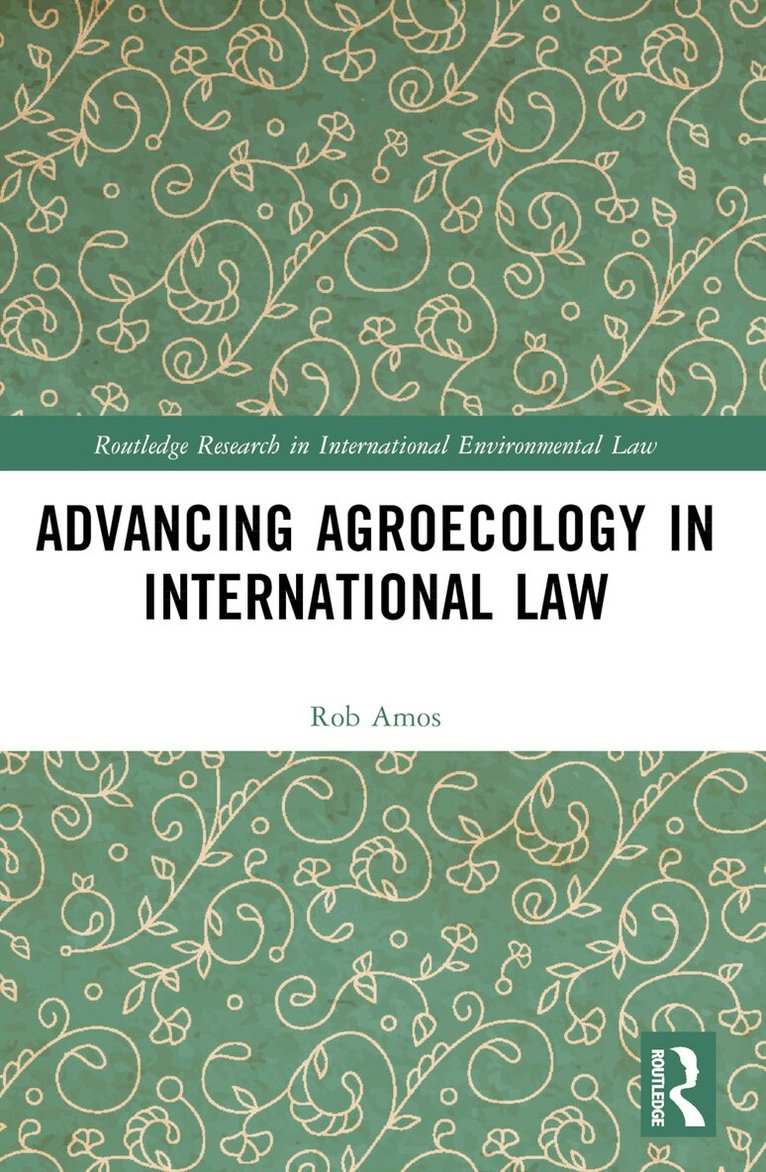
    Advancing Agroecology in International Law

    AvRob Amos

    Häftad, Engelska, 2025

    Del i serien Routledge Research in International Environmental Law

    574 kr

    Beställningsvara. Skickas inom 10-15 vardagar. Fri frakt över 249 kr.

    Fler format och utgåvor

    E-bok

    679 kr

    E-bok

    650 kr

    Inbunden

    2 227 kr

    Beskrivning

    Producing enough food is a basic human priority and a critical challenge in the face of a growing population and the deteriorating ecological health of the planet. Modern agricultural practices promise to maximise the productive efficiency of available land but are one of the main drivers of agro- and biodiversity loss. Agroecology, which places ecological sustainability and diversity at the heart of agriculture, is one response to these challenges. It presents agriculture not only as the process through which food is produced but as a dynamic socioecological phenomenon that exists through networks comprising natural and human stakeholders at global, national and subnational levels. Drawing on a combination of agroecological and legal literature, this book explores where there is space in international law to pursue agroecology. Using a range of case studies, it demonstrates how concepts, mechanisms and regulatory approaches in the law advance, and can be reformed to further advance, an agroecological legal framework that allows humanity to meet its agricultural needs in a way that protects the natural and cultural diversity that is fundamental to the ecological integrity of the planet.

    Produktinformation

    • Utgivningsdatum:2025-01-30
    • Mått:156 x 234 x 18 mm
    • Vikt:530 g
    • Format:Häftad
    • Språk:Engelska
    • Serie:Routledge Research in International Environmental Law
    • Antal sidor:268
    • Förlag:Taylor & Francis Ltd
    • ISBN:9781032595665

    Utforska kategorier

    • Folkrätt inom Juridik
    • Internationell rätt: transport och handel inom Juridik

    Mer om författaren

    Rob Amos is a Lecturer in Law at Greenwich University, UK.

    Recensioner i media

    Rob Amos makes an important and timely intervention on the impacts of agriculture on biodiversity at a time of planetary crisis. His creative approach and justification for international law’s facilitation of agroecology recognises the importance of reconceptualising how humans, and law, interact with the environment.Dr Emily Webster, University of Cambridge (UK)This is a much-needed work on a hugely important topic. Through carefully selected case studies, Advancing Agroecology in International Law provides a thought-provoking and detailed analysis of the ability of international legal frameworks to support a transition to agroecology. It is essential reading for anyone interested in creating food systems that feed us while also sustaining the planet.Dr Helena Howe, University of Sussex (UK)Rob Amos has produced a work of rigorous and measured scholarship on a topic that implicates us all: the deeply-rooted interconnections between global agriculture, the global environment, and international law. His case study on the climate crisis’s impacts on Kiribati is both a cautionary tale and a convincing argument that the agroecology framework can help map a way forward.Prof. Mehmet Konar-Steenberg, Mitchell Hamline School of Law (Minnesota, USA).An in depth dive into international law and what this means for agroecology. From clearly defining legal concepts to highlighting conflicting policy goals, Rob Amos's case studies allow us to understand and question how international law may help encourage agroecological systems.Ellen Fay, Executive Co-Director of the Sustainable Soils Alliance (SSA)

    Innehållsförteckning

    • Foreword xiiPreface and Acknowledgements xivTable of International Treaties and Agreements xvPART 1Protecting Diversity 1Introduction: Agroecology and the Law 3Defining Agroecology 5Locating Agroecology in the Law 8The Structure of This Book 121 Conservation of Agrobiodiversity 14International Conservation Law and Agriculture 14The Convention on Biological Diversity 16The UN Food and Agriculture Organisation 29Conclusions 332 Monocultures and Genetic Diversity 34The Rise of the Monoculture 34Invasive/Alien Species and Disease 35Intellectual Property Rights and Crop Genetic Diversity 39Protecting Traditional Agricultural Knowledge 50Conclusions 553 Genetically Modified Organisms and Organic Agriculture 56GMOs in Socioecological Networks 56Organic Agriculture and GMOs in the Context of Agroecology 57Responding to the Risks of GMOs 61Creating Space for GM Crops in Agroecological Networks 74Conclusions 764 Landscapes 78Defining ‘Landscape’ 78A Right to Landscape? 80International Programmes for Landscape Protection 83Conclusions 90PART 2Supporting Socioecological Relationships 915 Ecosystem Services 93Ecosystem Services and Agroecology 93Ecosystem Services and International Conservation Law 95Incorporating Ecosystem Services into International Law 99Conclusions 1106 Soil Conservation and Land Degradation 112Soil and Sustainability 112Soil Conservation in International Law 113A Soil Treaty? 117Land Degradation and Desertification 122Conclusions 1297 Water Conservation 131Our Changing Perceptions of Water 131Natural Water Infrastructure 132Protecting Freshwater Ecosystems in International Law 135Aquaculture 143Conclusions 1488 Climate Change 150Agriculture and Climate Change 150The UN Framework Convention on Climate Change 152Climate Change Adaptation in Kiribati 154Conclusions 163PART 3Agroecology in a Globalised World 1659 Environmental Assessment 167The Origins of Environmental Assessment 167Defining Environmental Assessment 168Environmental Assessment in International Law 177(Re)Introducing Ecology to Environmental Assessment 184Conclusions 18810 Transboundary Pollution 189Agriculture and Pollution 189Transboundary Air Pollution 191Persistent Organic Pollutants 199Unified Approaches to Hazardous Substances and Pollutants 203Conclusions 20711 International Trade 209Neoliberalism and Agroecology 209Agroecology, Trade and the Environment in the WTO 211The WTO’s Rules on Agricultural Trade 215Regulating the Drivers of Zoonotic Disease 221Conclusions 230PART 4Agroecology in Society 23112 Tracing a Path from Food Security to Food Justice 233Food (In)Security and International Law 233Food Security 235The Right to Food 239Food Sovereignty 242Food Justice 246Conclusions 251Conclusion: Finding Space for Agroecology 253Index 263