• Fri frakt över 249 kr
  • •
  • Snabba leveranser
  • •
  • Billiga böcker
Kundservice

Du är på sajten för privatpersoner.

Företag, bibliotek eller offentlig verksamhet?

Du handlar på classic.bokus.com, där alla dina funktioner finns intakta.
Till classic.bokus.com
Bokus logotyp. Gå till startsidan.
  • Erbjudanden
  • Student
  • Topplistor
  • Barn & ungdom
  • Bokus Play
  • E-böcker
  • Ljudböcker
  • Pocketböcker
  • Spel och pussel

5% studentrabatt – använd koden KURSBOK27 →

Sidfot

Mina sidor

    Hjälp

    • Kundservice
    • Vanliga frågor och svar
    • Frakt och leverans
    • Retur vid ångerrätt
    • Reklamera vara
    • Betalning
    • Köpvillkor
    • Allmänna villkor
    • Information om webbplatsens tillgänglighet

    Om Bokus

    • Om oss
    • Pressrum
    • För studenter
    • För företag
    • För bibliotek och offentlig verksamhet
    • För leverantörer
    • Hållbarhet

    Populärt

    • Aktuella erbjudanden
    • Presentkort
    • Studentlitteratur
    • Nya böcker
    • Topplistor
    • Signerade böcker
    • Engelska böcker

    Inspiration

    • Boktips
    • BookTok
    • Barnbokskaraktärer
    • Populära författare
    Logotyp för Bokus
    Följ oss på Facebook (extern länk)Följ oss på Instagram (extern länk)Följ oss på YouTube (extern länk)Följ oss på TikTok (extern länk)
    bokus @ CookiesAnpassa cookiesIntegritetspolicyKöpvillkor
    Till Citymail hemsida (extern länk)Till Budbee hemsida (extern länk)Till Postnord hemsida (extern länk)Till Schenker hemsida (extern länk)Till Early Bird hemsida (extern länk)Till Walleys hemsida (extern länk)
    1. Data och IT
    2. Systemvetenskap och AI
    3. Artificiell intelligens

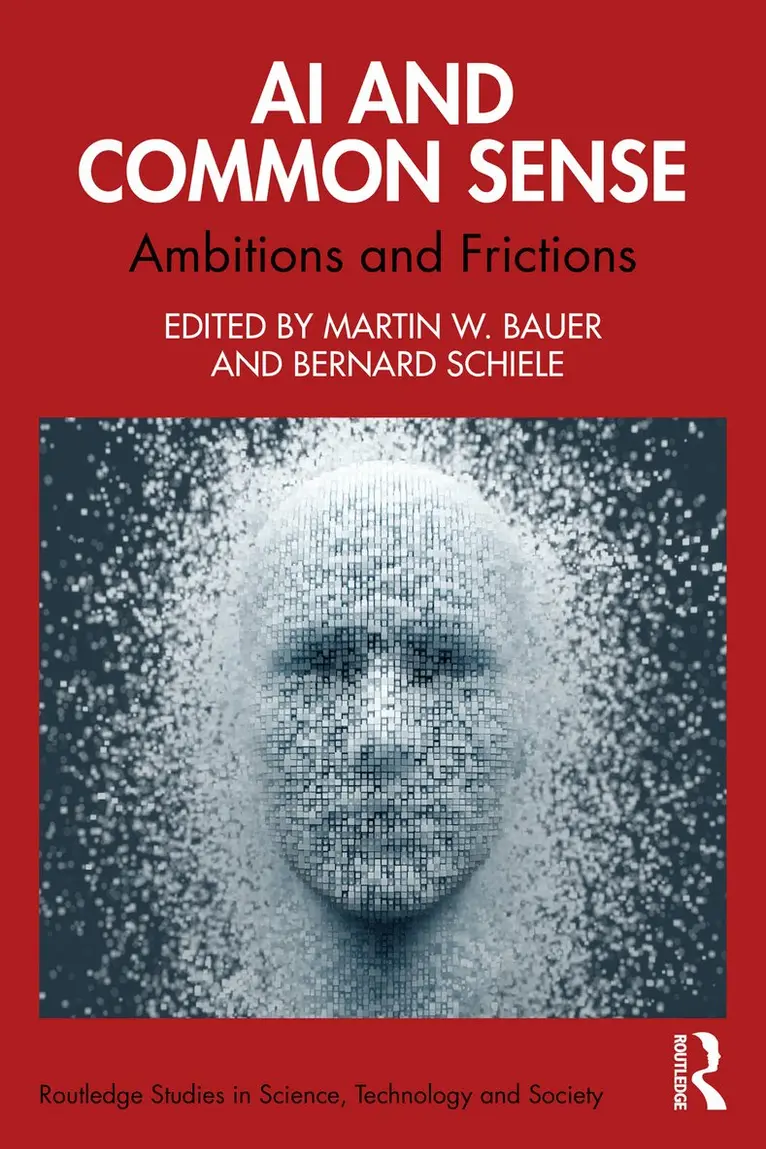
    AI and Common Sense

    Ambitions and Frictions

    AvMartin W. Bauer,Bernard Schiele

    Inbunden, Engelska, 2024

    Del i serien Routledge Studies in Science, Technology and Society

    2 410 kr

    Beställningsvara. Skickas inom 10-15 vardagar. Fri frakt över 249 kr.

    Beskrivning

    Common sense is the endless frontier in the development of artificial intelligence, but what exactly is common sense, can we replicate it in algorithmic form, and if we can – should we?Bauer, Schiele and their contributors from a range of disciplines analyse the nature of common sense, and the consequent challenges of incorporating into artificial intelligence models. They look at different ways we might understand common sense and which of these ways are simulated within computer algorithms. These include sensory integration, self-evident truths, rhetorical common places, and mutuality and intentionality of actors within a moral community. How far are these possible features within and of machines? Approaching from a range of perspectives including Sociology, Political Science, Media and Culture, Psychology and Computer Science, the contributors lay out key questions, practical challenges and "common sense" concerns underlying the incorporation of common sense within machine learning algorithms for simulating intelligence, socialising robots, self-driving vehicles, personnel selection, reading, automatic text analysis, and text production.A valuable resource for students and scholars of Science–Technology–Society Studies, Sociologists, Psychologists, Media and Culture Studies, human–computer interaction with an interest in the post-human, and programmers tackling the contextual questions of machine learning.

    Produktinformation

    • Utgivningsdatum:2024-06-28
    • Mått:156 x 234 x 20 mm
    • Vikt:600 g
    • Format:Inbunden
    • Språk:Engelska
    • Serie:Routledge Studies in Science, Technology and Society
    • Antal sidor:266
    • Förlag:Taylor & Francis Ltd
    • ISBN:9781032626185

    Utforska kategorier

    • Artificiell intelligens inom Data och IT
    • Sociologi inom Samhälle och politik

    Mer om författaren

    Martin W. Bauer is Professor of Social Psychology and Research Methodology at the London School of Economics and Political Science (LSE). He investigates "common sense" in relation to science and emerging technologies in the international MACAS (Mapping the Cultural Authority of Science) network. He is a Fellow of the German National Academy of Technical Sciences (acatech). Recent publications include The Psychology of Social Influence: Modes and Modalities of Shifting Common Sense (2021, with Gordon Sammut); Atom, Bytes & Genes: Public Resistance and Techno-scientific Responses (2015).Bernard Schiele (PhD) is a Professor of Communications in the Faculty of Communication at the University of Québec at Montréal (Canada). He has been working for a number of years on the socio-dissemination of S&T. Among other books he has recently published are Science Communication Today (2015, with Joëlle Le Marec and Patrick Baranger); Communicating Science, A Global Perspective (2020 with Toss Gascoigne and colleagues); Science Culture in a Diverse World: Knowing, Sharing, Caring (2021, with Xuan Liu and Martin Bauer); Le musée dans la société [The Museum in Society] (2021), and Science Communication: Taking a Step Back to Move Forward (2023, with Martin Bauer).

    Innehållsförteckning

    • Introductory CommentWhen AI meets common sense, frictions will arisePart 1: The scene and the argument of common sense1. AI with common sense: What concept of common sense?2. Self-awareness and common sense: The paradox of AI. A dispassionate lookPart 2: Egocentric common sense: AI with additional features3. Giving AI some common sense4. Human interaction with robots5. Towards robots with common sense6. Common sense, artificial intelligence and psychologyPart 3: Inter-subjective common sense: public discourse7. Giambatistta Vico’s dialogical common sense8. The a-sociability of AI: Knowledge, social interactions, and the dynamics of common sense9. Exploring the common wisdom on artificial intelligence and its political consequences: The case of Germany10. Associations of AI and common sense in the news11. Meanwhile in Japan: The possibility of Techno-animism for engaging deliberation for emerging technologyPart 4: Unsettling or highlighting common sense?12. Common-sense attributions of AI agency: Evidence from an experiment with ChatGPT13. The challenges and opportunities in large language models: Navigating the perils of stochastic and scholastic parrots in artificial understanding and common sense14. Artificial intelligence in personnel selection: Reactions of researchers, practitioners and applicants15. Self-driving vehicles (SDVs) and common sensePart 5: Conclusion16. AI goes to the movies: Fast, intermediate and slow common sense