• Fri frakt över 249 kr
  • •
  • Snabba leveranser
  • •
  • Billiga böcker
Kundservice

Du är på sajten för privatpersoner.

Företag, bibliotek eller offentlig verksamhet?

Du handlar på classic.bokus.com, där alla dina funktioner finns intakta.
Till classic.bokus.com
Bokus logotyp. Gå till startsidan.
  • Erbjudanden
  • Student
  • Topplistor
  • Barn & ungdom
  • Bokus Play
  • E-böcker
  • Ljudböcker
  • Pocketböcker
  • Spel och pussel

5% studentrabatt – använd koden KURSBOK27 →

Sidfot

Mina sidor

    Hjälp

    • Kundservice
    • Vanliga frågor och svar
    • Frakt och leverans
    • Retur vid ångerrätt
    • Reklamera vara
    • Betalning
    • Köpvillkor
    • Allmänna villkor
    • Information om webbplatsens tillgänglighet

    Om Bokus

    • Om oss
    • Pressrum
    • För studenter
    • För företag
    • För bibliotek och offentlig verksamhet
    • För leverantörer
    • Hållbarhet

    Populärt

    • Aktuella erbjudanden
    • Presentkort
    • Studentlitteratur
    • Nya böcker
    • Topplistor
    • Signerade böcker
    • Engelska böcker

    Inspiration

    • Boktips
    • BookTok
    • Barnbokskaraktärer
    • Populära författare
    Logotyp för Bokus
    Följ oss på Facebook (extern länk)Följ oss på Instagram (extern länk)Följ oss på YouTube (extern länk)Följ oss på TikTok (extern länk)
    bokus @ CookiesAnpassa cookiesIntegritetspolicyKöpvillkor
    Till Citymail hemsida (extern länk)Till Budbee hemsida (extern länk)Till Postnord hemsida (extern länk)Till Schenker hemsida (extern länk)Till Early Bird hemsida (extern länk)Till Walleys hemsida (extern länk)
    1. Samhälle och politik
    2. Samhälle och kultur

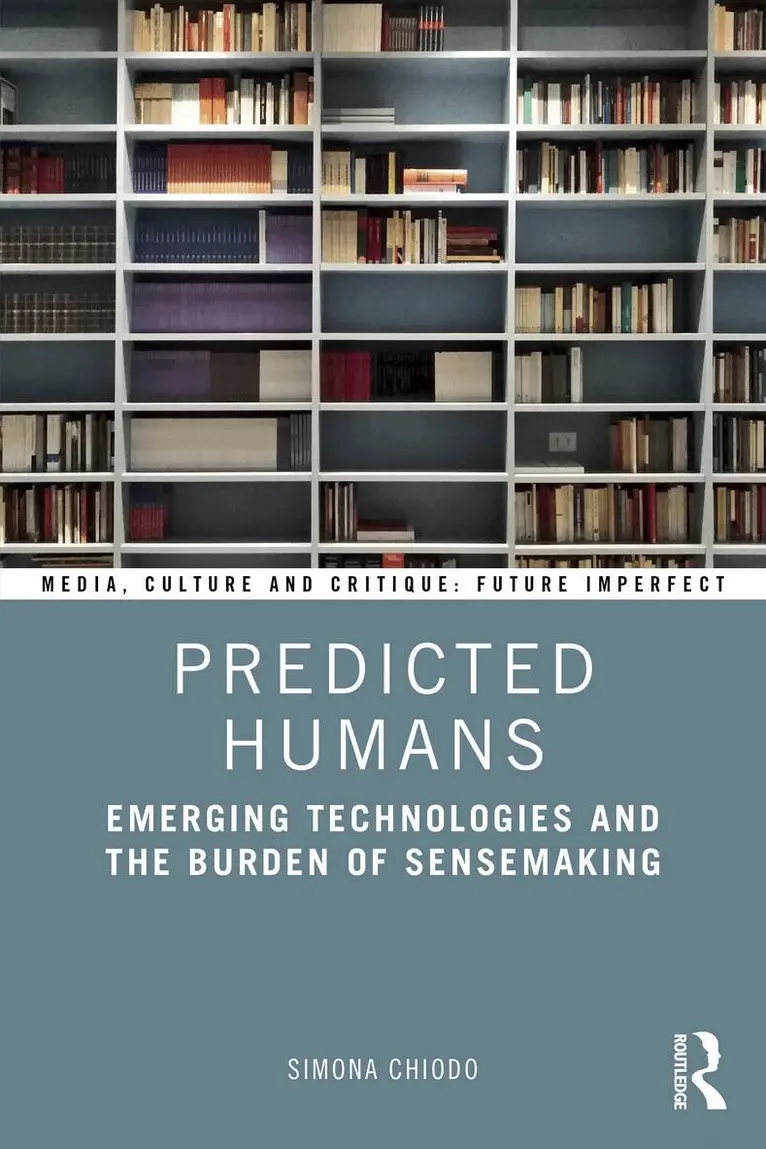
    Predicted Humans

    Emerging Technologies and the Burden of Sensemaking

    AvSimona Chiodo

    Häftad, Engelska, 2024

    Del i serien Media, Culture and Critique: Future Imperfect

    608 kr

    Beställningsvara. Skickas inom 10-15 vardagar. Fri frakt över 249 kr.

    Fler format och utgåvor

    Inbunden

    2 410 kr

    E-bok

    721 kr

    E-bok

    721 kr

    Beskrivning

    Predicting our future as individuals is central to the role of much emerging technology, from hiring algorithms that predict our professional success (or failure) to biomarkers that predict how long (or short) our healthy (or unhealthy) life will be. Yet, much in Western culture, from scripture to mythology to philosophy, suggests that knowing one’s future may not be in the subject’s best interests and might even lead to disaster. If predicting our future as individuals can be harmful as well as beneficial, why are we so willing to engage in so much prediction, from cradle to grave?This book offers a philosophical answer, reflecting on seminal texts in Western culture to argue that predicting our future renders much of our existence the automated effect of various causes, which, in turn, helps to alleviate the existential burden of autonomously making sense of our lives in a more competitive, demanding, accelerated society. An exploration of our tendency in a technological era to engineer and so rid ourselves of that which has hitherto been our primary reason for being – making life plans for a successful future, while faced with epistemological and ethical uncertainties – Predicted Humans will appeal to scholars of philosophy and social theory with interests in questions of moral responsibility and meaning in an increasingly technological world.

    Produktinformation

    • Utgivningsdatum:2024-06-14
    • Mått:156 x 234 x 12 mm
    • Vikt:240 g
    • Format:Häftad
    • Språk:Engelska
    • Serie:Media, Culture and Critique: Future Imperfect
    • Antal sidor:140
    • Förlag:Taylor & Francis Ltd
    • ISBN:9781032643113

    Utforska kategorier

    • Samhälle och kultur inom Samhälle och politik
    • Sociologi inom Samhälle och politik
    • Filosofiska discipliner inom Filosofi och religion

    Mer om författaren

    Simona Chiodo is Professor of Philosophy at Politecnico di Milano. She was Visiting Professor at the University of Cambridge and at the University of Edinburgh, Visiting Scholar at the University of Pittsburgh and spent research stays at Harvard University. She was also Academic Visitor at the Massachusetts Institute of Technology. She is a member of the Technology Foresight Centre of Politecnico di Milano. Her last works focus on the relationship between technological innovation and human autonomy.

    Innehållsförteckning

    • Introduction 1. To be predicted, or not to be predicted: that is the question 2. Death clocks and other emerging technologies to predict our future 3. Prediction and the automation of our future 4. Prediction and the unbearable burden of sensemaking 5. Should we have the right not to be predicted? 6. Concluding remarks: predicted humans, individualism and their future