• Fri frakt över 249 kr
  • •
  • Snabba leveranser
  • •
  • Billiga böcker
Kundservice

Du är på sajten för privatpersoner.

Företag, bibliotek eller offentlig verksamhet?

Du handlar på classic.bokus.com, där alla dina funktioner finns intakta.
Till classic.bokus.com
Bokus logotyp. Gå till startsidan.
  • Erbjudanden
  • Nyheter
  • Student
  • Topplistor
  • Barn & ungdom
  • Bokus Play
  • E-böcker
  • Pocketböcker
  • Spel & pussel

10% rabatt på allt med kod: NYSTART10 →

Sidfot

Mina sidor

    Hjälp

    • Kundservice
    • Vanliga frågor och svar
    • Frakt och leverans
    • Retur vid ångerrätt
    • Reklamera vara
    • Betalning
    • Köpvillkor
    • Allmänna villkor
    • Information om webbplatsens tillgänglighet

    Om Bokus

    • Om oss
    • Pressrum
    • För studenter
    • För företag
    • För bibliotek och offentlig verksamhet
    • För leverantörer
    • Hållbarhet

    Populärt

    • Aktuella erbjudanden
    • Presentkort
    • Studentlitteratur
    • Nya böcker
    • Topplistor
    • Signerade böcker
    • Engelska böcker

    Inspiration

    • Boktips
    • BookTok
    • Populära bokserier
    • Barnbokskaraktärer
    • Populära författare
    Logotyp för Bokus
    Följ oss på Facebook (extern länk)Följ oss på Instagram (extern länk)Följ oss på YouTube (extern länk)Följ oss på TikTok (extern länk)
    bokus @ CookiesAnpassa cookiesIntegritetspolicyKöpvillkor
    Till Citymail hemsida (extern länk)Till Budbee hemsida (extern länk)Till Postnord hemsida (extern länk)Till Schenker hemsida (extern länk)Till Early Bird hemsida (extern länk)Till Walleys hemsida (extern länk)
    1. Samhälle och politik
    2. Samhälle och kultur
    3. Sociala och etiska frågor

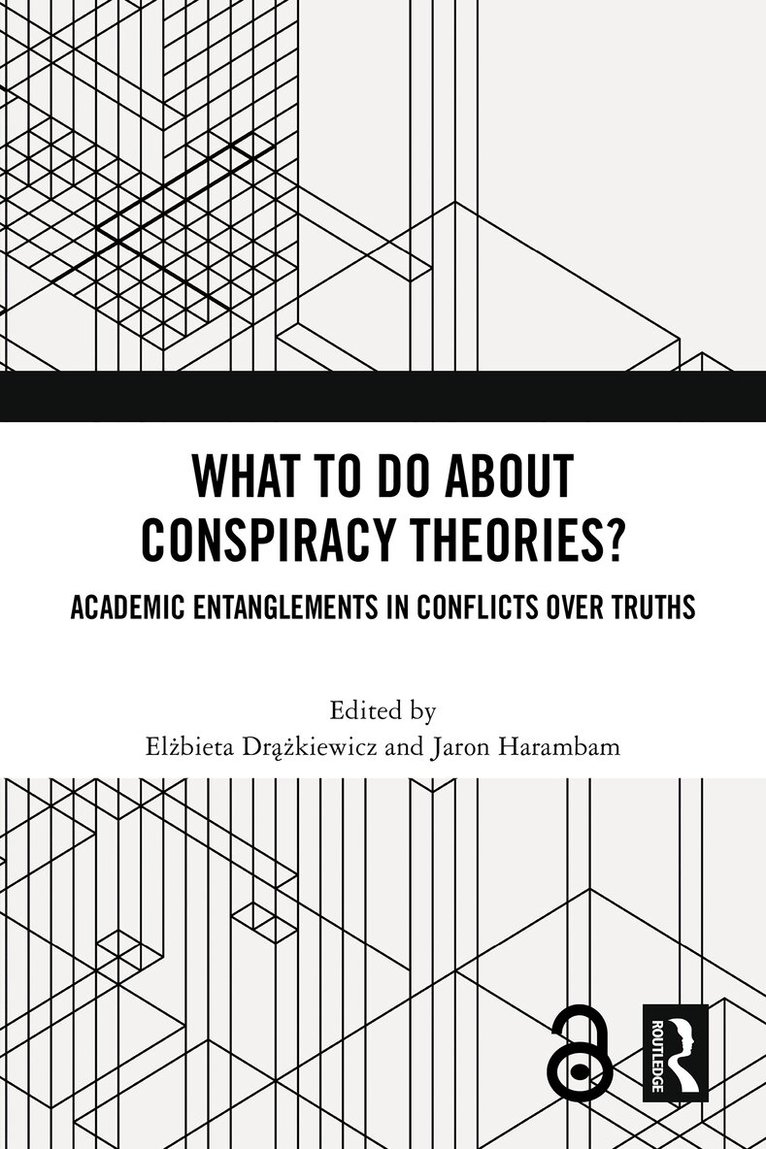
    What To Do About Conspiracy Theories?

    Academic Entanglements in Conflicts Over Truths

    AvElżbieta Drążkiewicz,Jaron Harambam

    Häftad, Engelska, 2025

    681 kr

    Beställningsvara. Skickas inom 10-15 vardagar. Fri frakt över 249 kr.

    Beskrivning

    Increasingly social activists, journalists and policy makers have expressed concern over the proliferation of conspiracy theories in the public space. There is a growing fear of their impact on social cohesion and democracy, their power to erode trust in state institutions and science. These concerns often come with an expectation that it is the responsibility of academics to engage with conspiracy beliefs by countering them. But should they?In this book, contributors show that like everything that relates to conspiracy theories, even the answer to this question is not straightforward and can vary across disciplines and schools, can be influenced by disciplinary ethical codes of conduct, research methodologies, and specific approaches to conspiracy theories. Foregrounding a variety of approaches, from across disciplines (psychology, anthropology, sociology and media studies), academic seniority (from young scholars to full professors), and countries (USA, Ireland, UK, The Netherlands, Sweden, and Greece), the chapters in this book are in deep conversation with each other, offering multiple alternative takes on the issue of what should academics do with conspiracy theories. Together, the book embodies several bold and compelling provocations to dealing differently with conspiracy theories.This timely volume introduces perspectives of scholars representing media studies, anthropology, psychology and sociology and discusses case studies concerning politics, health, environment and security. It will be a key resource for researchers, scholars and practitioners engaged in these fields and will also appeal to anyone interested in conspiracy theories and other related phenomena such as disinformation or fake news. This book was originally published as a special issue of the Journal for Cultural Research. The Open Access version of this book, available at https://www.taylorfrancis.com/books/oa-edit/10.4324/9781032647463/conspiracy-theories-el%C5%BCbieta-dr%C4%85%C5%BCkiewicz-jaron-harambam?context=ubx&refId=34db6a37-3391-401b-bef8-10dd2351c582 has been made available under a Creative Commons [Attribution- Non Commercial- No Derivatives (CC- BY- NC- ND)] 4.0 International license. A version of the open access title is also available on the OAPEN platform: https://library.oapen.org/handle/20.500.12657/88254.

    Produktinformation

    • Utgivningsdatum:2025-07-30
    • Mått:174 x 246 x 8 mm
    • Vikt:260 g
    • Format:Häftad
    • Språk:Engelska
    • Antal sidor:122
    • Förlag:Taylor & Francis Ltd
    • ISBN:9781032647456

    Utforska kategorier

    • Sociala och etiska frågor inom Samhälle och politik

    Mer om författaren

    Elżbieta Drążkiewicz is an anthropologist leading the ERC project CONSPIRATIONS investigating conflicts over conspiracy theories in Europe. She specializes in organisational, political, and economic anthropology. Her research also includes studies of foreign aid and development management and public health governance. She is an author of Institutionalised Dreams: The Art of Managing Foreign Aid (2020).Jaron Harambam is Assistant Professor of Media, Truth Politics and Digitalization at the Sociology Department of the University of Amsterdam. His research deals with public disputes over truth in a digitalized public sphere. More specifically, he studies conspiracy theories, news and platform politics, and AI (content moderation, search/recommender systems). Central to his research is the participation of multiple stakeholders to design our (future) digital worlds along democratic and public values. He is the author of Contemporary Conspiracy Culture: Truth and Knowledge in an Era of Epistemic Instability (2020). He is editor-in-chief of the open-access Dutch-Belgian peer-reviewed journal Tijdschrift Sociologie, and member of the European network of scholars working on conspiracy theories, COST COMPACT.

    Innehållsförteckning

    • Introduction: What should academics do about conspiracy theories? Moving beyond debunking to better deal with conspiratorial movements, misinformation and post-truth 1. Conspiracist cognition: chaos, convenience, and cause for concern 2. Evaluating conspiracy claims as public sphere communication 3. Conspiracy theories in political-economic context: lessons from parents with vaccine and other pharmaceutical concerns 4. Taking vaccine regret and hesitancy seriously. The role of truth, conspiracy theories, gender relations and trust in the HPV immunisation programmes in Ireland 5. Towards an ecological ethics of academic responsibility: debunking power structures through relationality in Greek environmentalism 6. Against modernist illusions: why we need more democratic and constructivist alternatives to debunking conspiracy theories