• Fri frakt över 249 kr
  • •
  • Snabba leveranser
  • •
  • Billiga böcker
Kundservice

Du är på sajten för privatpersoner.

Företag, bibliotek eller offentlig verksamhet?

Du handlar på classic.bokus.com, där alla dina funktioner finns intakta.
Till classic.bokus.com
Bokus logotyp. Gå till startsidan.
  • Erbjudanden
  • Nyheter
  • Student
  • Topplistor
  • Barn & ungdom
  • Bokus Play
  • E-böcker
  • Pocketböcker
  • Spel & pussel

10% rabatt på allt med kod: NYSTART10 →

Sidfot

Mina sidor

    Hjälp

    • Kundservice
    • Vanliga frågor och svar
    • Frakt och leverans
    • Retur vid ångerrätt
    • Reklamera vara
    • Betalning
    • Köpvillkor
    • Allmänna villkor
    • Information om webbplatsens tillgänglighet

    Om Bokus

    • Om oss
    • Pressrum
    • För studenter
    • För företag
    • För bibliotek och offentlig verksamhet
    • För leverantörer
    • Hållbarhet

    Populärt

    • Aktuella erbjudanden
    • Presentkort
    • Studentlitteratur
    • Nya böcker
    • Topplistor
    • Signerade böcker
    • Engelska böcker

    Inspiration

    • Boktips
    • BookTok
    • Populära bokserier
    • Barnbokskaraktärer
    • Populära författare
    Logotyp för Bokus
    Följ oss på Facebook (extern länk)Följ oss på Instagram (extern länk)Följ oss på YouTube (extern länk)Följ oss på TikTok (extern länk)
    bokus @ CookiesAnpassa cookiesIntegritetspolicyKöpvillkor
    Till Citymail hemsida (extern länk)Till Budbee hemsida (extern länk)Till Postnord hemsida (extern länk)Till Schenker hemsida (extern länk)Till Early Bird hemsida (extern länk)Till Walleys hemsida (extern länk)
    1. Språk och ordböcker
    2. Språkvetenskap och lingvistik

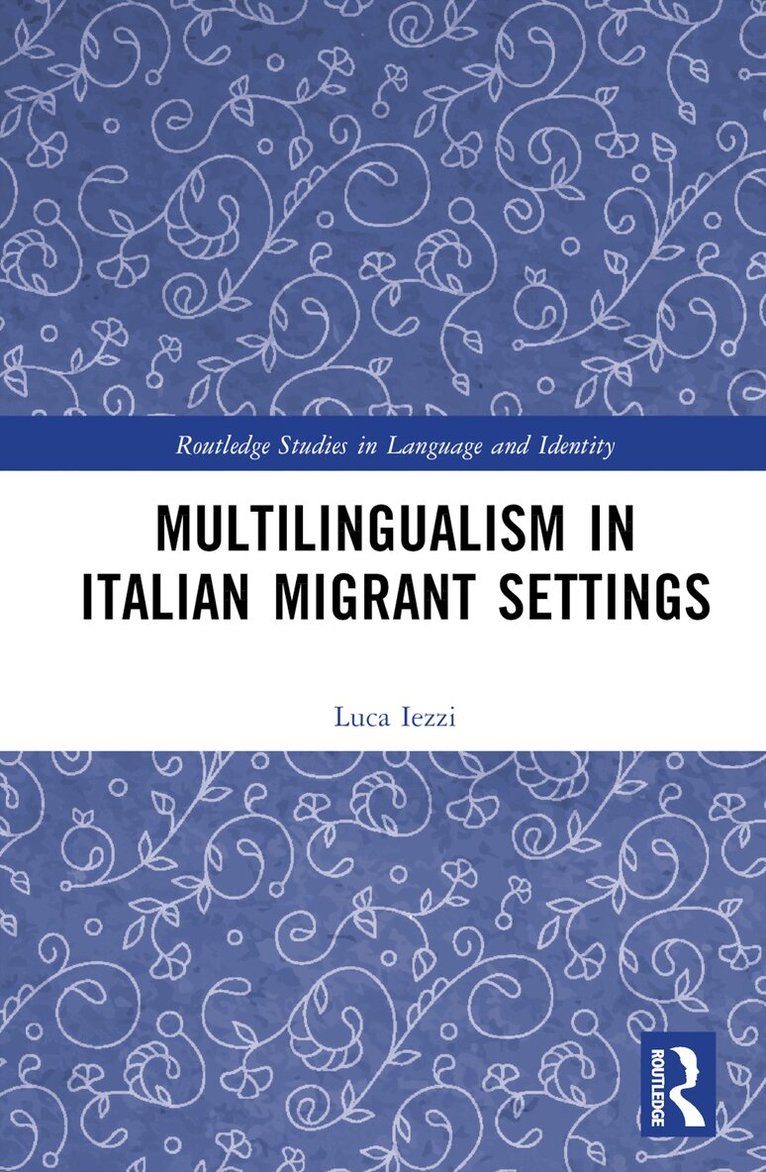
    Multilingualism in Italian Migrant Settings

    AvLuca Iezzi

    Inbunden, Engelska, 2024

    Del i serien Routledge Studies in Language and Identity

    2 056 kr

    Beställningsvara. Skickas inom 10-15 vardagar. Fri frakt över 249 kr.

    Fler format och utgåvor

    Häftad

    638 kr

    E-bok

    805 kr

    E-bok

    805 kr

    Beskrivning

    Multilingualism in Italian Migrant Settings investigates the plural linguistic practices of the migrants in a particular refugee centre in Italy, the CAS (centri di accoglienza straordinaria; “extraordinary refugee centre”).This book offers a practical and rigorous study of contact situations surrounding migrants from areas with complex repertoires. Language is inherently connected to migration, especially through its role as a principal tool for communication.This volume places multilingualism in migratory contexts to comprehend how plurilingual migrants move freely between languages, and to evaluate their role in the linguistic landscape of the host country.This monograph will appeal to scholars specialising in sociolinguistics and contact linguistics. The volume will also be informative for postgraduate students in the field of sociolinguistics, with a focus on migration and language use.

    Produktinformation

    • Utgivningsdatum:2024-09-26
    • Mått:156 x 234 x 13 mm
    • Vikt:450 g
    • Format:Inbunden
    • Språk:Engelska
    • Serie:Routledge Studies in Language and Identity
    • Antal sidor:146
    • Förlag:Taylor & Francis Ltd
    • ISBN:9781032684642

    Utforska kategorier

    • Språkvetenskap och lingvistik inom Språk och ordböcker
    • Antropologi inom Samhälle och politik

    Mer om författaren

    Luca Iezzi is a postdoctoral fellow at “G. d’Annunzio” University of Chieti-Pescara (Italy). His major research interests include the sociolinguistics of immigration in Italy, contact phenomena in spoken and written communication, as well as maintenance and shift of minority languages in societal and educational contexts. He has authored various research articles and book chapters on these topics. He has also taught English, and holds several Cambridge TESOL certifications.

    Innehållsförteckning

    • List of figures and tablesAcknowledgementsINTRODUCTION: Beyond borders: global changes and linguistic challenges in migratory contextsCHAPTER 1: The European migrant crisis1.1 Migrations and migratory policies in Europe1.2 Unauthorised migrations in Italy1.3 Migration and languageCHAPTER 2: The sociolinguistics of (im)migration2.1 Multilingualism, speech community, and repertoires2.2 The sociolinguistics of (im)migration across time and space2.3 Multilingualism in postcolonial countries2.4 Status and function of a language2.4.1 Geopolitical factors2.4.2 Socio-demographical factors2.4.3 Linguistic factors2.5 Language ideologies and attitudesCHAPTER 3: Language contact 3.1 Language maintenance and shift3.2 Contact in speech3.2.1 Structural approaches to CS3.2.2 Functional approaches to CS3.3 From CS to grammaticalisation3.4 Contact in language3.4.1 Matter replication3.4.2 At the boundary between switching and matter replication3.4.3 Pattern replication3.5 Structure, function and cognition: the usage-based approachCHAPTER 4: Linguistic ethnography and multilingualism 4.1 Objectives of the research4.1.1 Research methods4.2 Data transcription4.2.1 Language transcription4.2.2 Graphic and phonetic correspondences4.2.3 Morphemic glossing4.3 The pilot study4.3.1 The CAS4.3.2 Methodology4.3.3 Data analysis4.3.4 Discussion4.4 The main study4.4.1 Informants and linguistic biographies4.4.2 Other subjectsCHAPTER 5: The urban variety of Punjabi5.1 Population in Pakistan5.2 The languages of the Pakistan5.2.1 English, the conquerors’ language5.2.2 The privileging of Urdu as national language5.2.3 Urdu and Punjabi5.3 Urban Punjabi5.3.1 Borrowing vs CS5.3.2 Instances of switching phenomena within the urban variety5.4 DiscussionCHAPTER 6: Italian within the speech community 6.1 Code choice in the CAS (centro di accoglienza straordinaria)6.2 Instances of code mixing within the urban variety6.3 DiscussionCHAPTER 7: Ideologies and attitudes 7.1 Language proficiency in the CAS(centro di accoglienza straordinaria)7.2 Interviews7.3 Ideologies and attitudes7.3.1 Urdu7.3.2 English7.3.3 Italian7.3.4 Minority languages7.4 Some reflections on the linguistic repertoire of the migrantsCONCLUSIONS: Beyond challenge: understanding multilingualism in a time of changeReferencesAppendix I: QuestionnaireAppendix II: GDPRIndex