Inbunden, Engelska, 2025
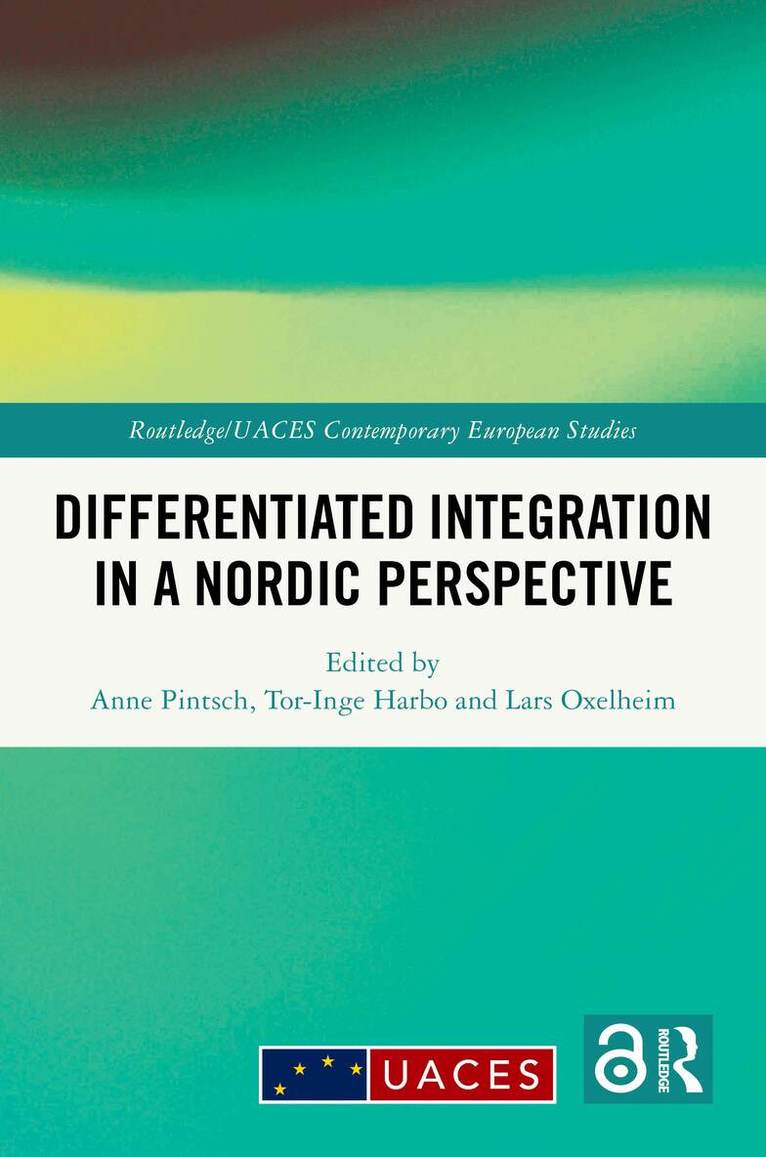
Differentiated Integration in a Nordic Perspective
Av Anne Pintsch, Tor-Inge Harbo, Lars Oxelheim
Del i serien Routledge/UACES Contemporary European Studies
2297 kr
Beställningsvara. Skickas inom 10-15 vardagar. Fri frakt över 249 kr.
Fler format och utgåvor
Beskrivning
Produktinformation
- Utgivningsdatum: 2025-02-13
- Mått: 156 x 234 x 18 mm
- Vikt: 520 g
- Format: Inbunden
- Språk: Engelska
- Serie: Routledge/UACES Contemporary European Studies
- Antal sidor: 236
- Förlag: Taylor & Francis Ltd
- ISBN: 9781032691015
Utforska kategorier
Mer om författaren
Anne Pintsch is Associate Professor at the Department of Political Science and Management at the University of Agder, Norway.Tor-Inge Harbo is Professor of Law at the University of Agder, Norway.Lars Oxelheim is Professor of International Business and Finance at University of Agder, Norway, affiliated researcher at the Research Institute of Industrial Economics (IFN), Stockholm, and Professor Emeritus at Lund University, Sweden.
Recensioner i media
“Understanding differentiation in the European Union requires an in-depth look at the Nordic region, which has been experimenting with new modes of cooperation over the past decades. This timely volume offers fresh insights into the matter, by examining diverse policy areas - from economic and social issues to politics, administration, and law. This makes it essential reading for scholars and practitioners interested in the future of European integration, especially in light of the ongoing challenges that may require more flexible forms of cooperation.”Benjamin Leruth, The University of Melbourne, Australia“500 years after the dissolution of the Kalmar Union, the five Nordic countries are yet again united in one and the same defence union, due to Finland’s and Sweden’s accession to NATO. This is promoting further and future Nordic integration in other areas. It is also helpful to the fulfilment of the vision of the Nordic heads of government that the Nordic region should be the world’s best integrated region by 2030. However, my work as Sweden’s representative in the Nordic Council of Ministers’ Freedom of Movement Council shows that much remains to be done to fulfil the vision, not least to fully integrate the Nordic labour markets. The evolution of Nordic differentiation after World War II contains several significant lessons that are of importance to further Nordic integration, as shown in this valuable volume. Thus, it is also highly relevant for the next steps towards a better, or even fully, integrated Nordic region, as well as to integration processes elsewhere.”Anders Ahnlid, Director-General of National Board of Trade, Sweden
Betyg & recensioner
0 recensioner
Inga recensioner tillgängliga.