• Fri frakt över 249 kr
  • •
  • Snabba leveranser
  • •
  • Billiga böcker
Kundservice

Du är på sajten för privatpersoner.

Företag, bibliotek eller offentlig verksamhet?

Du handlar på classic.bokus.com, där alla dina funktioner finns intakta.
Till classic.bokus.com
Bokus logotyp. Gå till startsidan.
  • Erbjudanden
  • Student
  • Topplistor
  • Barn & ungdom
  • Bokus Play
  • E-böcker
  • Ljudböcker
  • Pocketböcker
  • Spel och pussel

Pocketfynda! Hundratals böcker för 49 kr/st →

Sidfot

Mina sidor

    Hjälp

    • Kundservice
    • Vanliga frågor och svar
    • Frakt och leverans
    • Retur vid ångerrätt
    • Reklamera vara
    • Betalning
    • Köpvillkor
    • Allmänna villkor
    • Information om webbplatsens tillgänglighet

    Om Bokus

    • Om oss
    • Pressrum
    • För studenter
    • För företag
    • För bibliotek och offentlig verksamhet
    • För leverantörer
    • Hållbarhet

    Populärt

    • Aktuella erbjudanden
    • Presentkort
    • Studentlitteratur
    • Nya böcker
    • Topplistor
    • Signerade böcker
    • Engelska böcker

    Inspiration

    • Boktips
    • BookTok
    • Barnbokskaraktärer
    • Populära författare
    Logotyp för Bokus
    Följ oss på Facebook (extern länk)Följ oss på Instagram (extern länk)Följ oss på YouTube (extern länk)Följ oss på TikTok (extern länk)
    bokus @ CookiesAnpassa cookiesIntegritetspolicyKöpvillkor
    Till Citymail hemsida (extern länk)Till Budbee hemsida (extern länk)Till Postnord hemsida (extern länk)Till Schenker hemsida (extern länk)Till Early Bird hemsida (extern länk)Till Walleys hemsida (extern länk)
    1. Djur och Natur
    2. Naturböcker
    3. Växtböcker

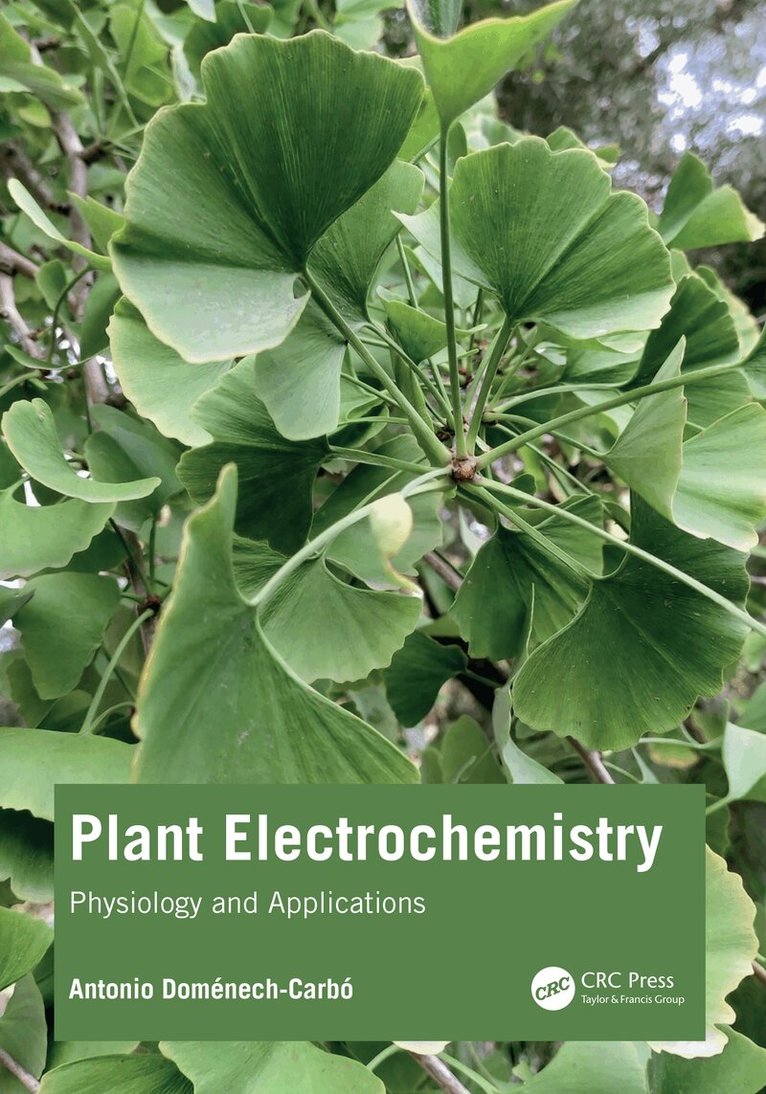
    Plant Electrochemistry

    Physiology and Applications

    AvAntonio Doménech-Carbó

    Inbunden, Engelska, 2025

    1 754 kr

    Beställningsvara. Skickas inom 10-15 vardagar. Fri frakt över 249 kr.

    Fler format och utgåvor

    Häftad

    Kommande

    E-bok

    989 kr

    E-bok

    989 kr

    Beskrivning

    The book comprehensively views the intersection between electrochemistry and botany. It attempts to inform people about the capacity of electrochemistry to provide information of interest to plant science. This includes electrophysiology, plant communication, and plant defense responses, as well as chemoecological and phylogenetic aspects. Conversely, the book also treats the capabilities of vegetal systems and vegetal-derived materials to be used in electrochemical applications for sensing, energy production and storage, and environmental issues.

    Produktinformation

    • Utgivningsdatum:2025-05-29
    • Mått:178 x 254 x 22 mm
    • Vikt:800 g
    • Format:Inbunden
    • Språk:Engelska
    • Antal sidor:318
    • Förlag:Taylor & Francis Ltd
    • ISBN:9781032697291

    Utforska kategorier

    • Växtböcker inom Djur och Natur
    • Biokemi inom Naturvetenskap och teknik
    • Analytisk kemi inom Naturvetenskap och teknik

    Mer om författaren

    Antonio Doménech-Carbó is Professor at the Department of Analytical Chemistry, University of Valencia, Spain. He is the author of more than 270 articles in indexed journals and several books.

    Innehållsförteckning

    • 1. Overview 1.1 Historical Perspective 1.2 Vegetal Electrochemistry 1.3 Plants in Electrochemistry 1.4 Electrochemical Methods 1.4.1 General Aspects 2 Electrophysiology I 2.1 Several General Considerations on Plant Physiology 2.2 Transport Through Cell Membranes 2.3 Transmembrane Potentials and Ion Fluxes 2.4 Ion Channels 2.5 Electrogenic Transport 2.6 Approach to Enzyme Electrochemistry 2.7 Concluding Remarks 3 Electrophysiology II 3.1 Introduction 3.2 Local Electrical Potentials 3.3 Action Potentials 3.4 Variation Potentials 3.5 System Potentials 3.6 Signaling 3.7 Plant Communication 3.8 Electromagnetic Fields 3.9 Environmental Applications 3.10 Concluding Remarks 4 Electrochemistry of Plants 4.1 Introduction 4.2 Thermochemical Aspects, Reversibility 4.3 Mechanistic Considerations 4.4 Solid-State Electrochemistry 4.5 In Situ Electrochemistry 4.6 Biofilms and Organelles 5 Electrochemistry of Vegetal Components I 5.1 Introduction 5.2 Phenolic Compounds 5.3 Quinones 5.4 Lignins, Lignans, and Tannins 5.5 Stilbenes Curcuminoids, Chalcones, Essential Oils, and Others 5.6 Ascorbic Acid 5.7 Carotenoids 5.8 Tocopherols, Calciferols, and Retinol 6 Electrochemistry of Vegetal Components II 6.1 Introduction 6.2 Amines 6.3 Indolic Compounds 6.4 Pyridines and Quinolines 6.5 Hydrogen Transfer Coenzymes 6.6 Nucleic Acids 6.7 Adenosine Phosphates 6.8 Aminoacids 7 Antioxidant Capacity 7.1 Introduction 7.2 Chemical and Electrochemical Assays 7.3 Methods Based on the Direct Measurement of Oxidation Potentials 7.4 Methods Based on the Reaction with Oxidants 7.5 Methods Based on the Reaction with Radical Scavengers 7.6 Methods Based on the Interaction with ROS 7.7 Individual Antioxidant Components of Plants 8 Electrochemistry of Proteins, Enzymes, and Photosynthesis 8.1 Introduction 8.2 Electrochemistry of Proteins 8.3 Electrochemistry of Enzymes 8.4 Electrochemistry of Chlorophylls 8.5 Natural Electron Transport in Thylakoid Membran 9 Electrochemistry of Reactive Oxygen Species (ROS) 9.1 Introduction 9.2 Role of ROS in Plant Biology 9.3 Oxygen Electrochemistry 9.4 Electrochemical Generation of ROS 9.5 Interaction of ROS with Plant Components 9.6 ROS Electrochemistry in Plants 9.7 Electrochemistry of RNS 10 Electrochemical Analysis of Biochemical Processes in Plants 10.1 Introduction 10.2 Oxygen Generation at Chloroplasts 10.3 Kinetic Analysis of ROS Generation/Reaction10.4 Reaction Kinetics with Electrogenerated ROS 10.5 Dynamic Pathway of Plant Compounds 10.6 Predation and Plant Communication 10.7 Intersecting Electrochemistry and Plant Science 11 Electrochemotaxonomy and Phylogenetics 11.1 Introduction 11.2 Electrochemical Taxonomy 11.3 Adaptive Mechanisms 11.4 Phylogenetic Aspects 11.5 Signaling Pathways and Phylogenetics 12 Nanoscale Plant Electrochemistry 12.1 Introduction 12.2 Electrochemistry of Cell Suspensions 12.3 Electrochemistry of Immobilized Cells 12.4 Electrochemical Imaging of Cells 12.5 Intracellular Electrochemistry 12.6 Single-Entity Electrochemistry 13 Electroanalysis of Plants/Plants in Electroanalysis 13.1 Overview 13.2 Electocatalysis 13.3 Detection of Individual Plant Components 13.4 In Situ Detection of Biomarkers of Plant Health and Stress 13.5 Detection of Contaminants, Pollutants, and Adulterations 13.6 Solid-State Techniques 13.7 Plants in Electroanalysis 13.8 Chirality14 Vegetal Matter in Energy Production and Storage 14.1 Introduction 14.2 Enzymatic Fuel Cells 14.3 Microbial Fuel Cells 14.4 Plant Fuel Cells 14.5 Extracellular Electron Transfer 14.6 Electrical Energy Storage (and Production) 14.7 Wearable Systems and Other Developments 15 Plants and Environment 15.1 General Aspects 15.2 Microbiologically Influenced Metal Corrosion 15.3 Biofilm Formation 15.4 Mechanisms of Bacterial-Influenced Corrosion 15.5 Electrochemical Monitoring of MIC 15.6 Other Biodeterioration Processes 15.7 Biofilm Corrosion Inhibition 15.8 Electrochemical Degradation of Pollutants 15.9 Biomass Valorization