• Fri frakt över 249 kr
  • •
  • Snabba leveranser
  • •
  • Billiga böcker
Kundservice

Du är på sajten för privatpersoner.

Företag, bibliotek eller offentlig verksamhet?

Du handlar på classic.bokus.com, där alla dina funktioner finns intakta.
Till classic.bokus.com
Bokus logotyp. Gå till startsidan.
  • Erbjudanden
  • Nyheter
  • Student
  • Topplistor
  • Barn & ungdom
  • Bokus Play
  • E-böcker
  • Pocketböcker
  • Spel & pussel

10% rabatt på allt med kod NYSTART10 →

Sidfot

Mina sidor

    Hjälp

    • Kundservice
    • Vanliga frågor och svar
    • Frakt och leverans
    • Retur vid ångerrätt
    • Reklamera vara
    • Betalning
    • Köpvillkor
    • Allmänna villkor
    • Information om webbplatsens tillgänglighet

    Om Bokus

    • Om oss
    • Pressrum
    • För studenter
    • För företag
    • För bibliotek och offentlig verksamhet
    • För leverantörer
    • Hållbarhet

    Populärt

    • Aktuella erbjudanden
    • Presentkort
    • Studentlitteratur
    • Nya böcker
    • Topplistor
    • Signerade böcker
    • Engelska böcker

    Inspiration

    • Boktips
    • BookTok
    • Populära bokserier
    • Barnbokskaraktärer
    • Populära författare
    Logotyp för Bokus
    Följ oss på Facebook (extern länk)Följ oss på Instagram (extern länk)Följ oss på YouTube (extern länk)Följ oss på TikTok (extern länk)
    bokus @ CookiesAnpassa cookiesIntegritetspolicyKöpvillkor
    Till Citymail hemsida (extern länk)Till Budbee hemsida (extern länk)Till Postnord hemsida (extern länk)Till Schenker hemsida (extern länk)Till Early Bird hemsida (extern länk)Till Walleys hemsida (extern länk)
    1. Samhälle och politik
    2. Politik och statsskick
    3. Internationella relationer

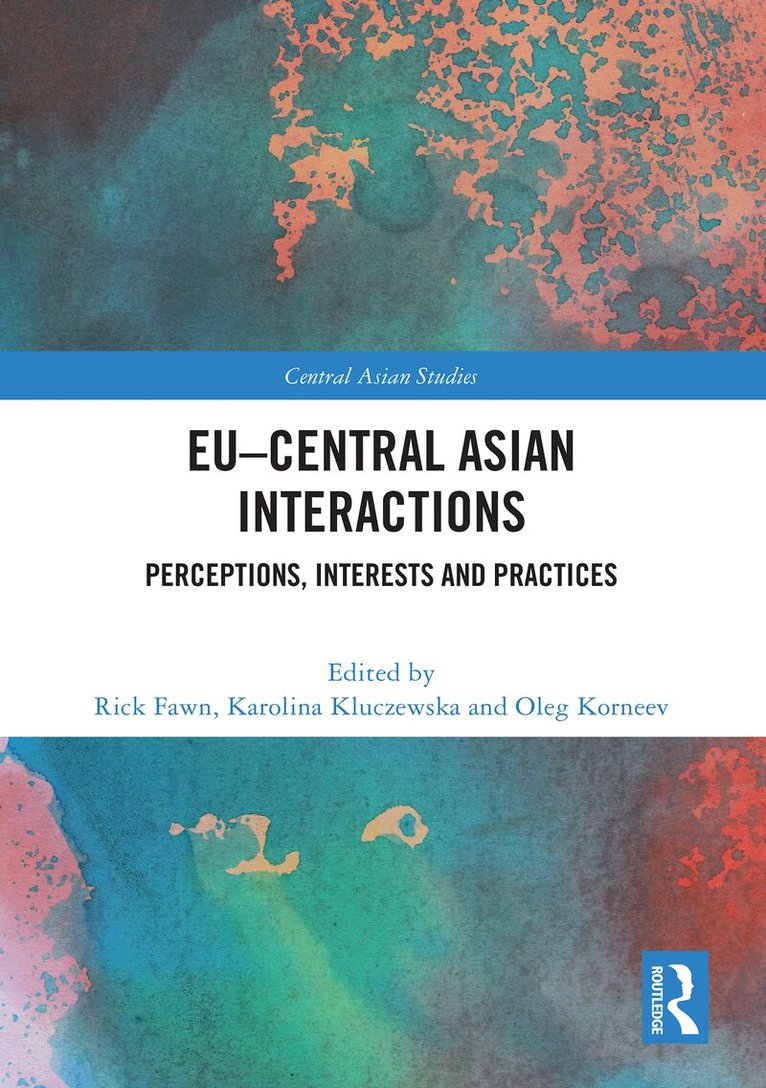
    EU–Central Asian Interactions

    Perceptions, Interests and Practices

    AvRick Fawn,Karolina Kluczewska

    Häftad, Engelska, 2025

    Del i serien Central Asian Studies

    681 kr

    Beställningsvara. Skickas inom 10-15 vardagar. Fri frakt över 249 kr.

    Beskrivning

    From limited interactions in the early 1990s, the EU and Central Asia now consider each other to be increasingly important. This book includes 12 chapters written by seasoned and policy-engaged researchers from across Eurasia and the wider world that analyse multiple levels of mutual interactions, understandings and misunderstandings across a range of policy areas. It shows why and in what ways exactly the EU and Central Asia matter to each other and why policymakers and researchers should pay more attention to their interactions.Central Asia falls under the broader external relations and security agenda of the EU, and over years it provided a testing ground for many EU policies, including the priority ones of region-building and resilience promotion. Looking at the EU, in turn, informs as to how Central Asian actors interact with external partners of the region, and how that can influence national policy agendas and consequently everyday life – bringing new approaches, insights and evidence also to the wide field of EU studies.This book is of key interest to scholars, practitioners and students of Central Asian history and politics, EU foreign policy, EU-Central Asia relations, and more broadly of EU studies, International Relations, regionalism and interregionalism as well as security studies. The chapters in this book were published over three issues of Central Asian Survey.

    Produktinformation

    • Utgivningsdatum:2025-12-26
    • Mått:174 x 246 x 14 mm
    • Vikt:470 g
    • Format:Häftad
    • Språk:Engelska
    • Serie:Central Asian Studies
    • Antal sidor:240
    • Förlag:Taylor & Francis Ltd
    • ISBN:9781032705828

    Utforska kategorier

    • Internationella relationer inom Samhälle och politik

    Mer om författaren

    Rick Fawn is Professor of International Relations at the University of St Andrews, United Kingdom. He has researched on Central Europe, the Balkans, Russia, the Caucasus, and Central Asia, and has given numerous invited briefings and keynote addresses internationally. His other books include Castle on a Hill: The Visegrad Group, Regionalism, and the Remaking Europe (2024).Karolina Kluczewska is Postdoctoral Researcher at the Ghent Institute for International and European Studies, Ghent University, Belgium, and Research Associate at the Institute of Middle East, Central Asia and Caucasus Studies, University of St Andrews, United Kingdom. Her research explores development politics and international interventions in Eurasia.Oleg Korneev is Associate Professor at the School of International Affairs, Higher School of Economics (HSE University, Moscow) and Associate Research Fellow at the Centre for European and Eurasian Legal Studies, Lobachevsky University, Nizhny Novgorod, Russia. His research focuses on international organizations, the European Union, expert knowledge, global and regional migration governance, international action against HIV/AIDS in Eurasia.

    Recensioner i media

    “Unpacking the black boxes of the ‘EU’ and ‘Central Asia’, this volume provides a rich account of interactions between both regions. It contributes significantly to ongoing efforts of decentring, pluralizing and decolonizing EU studies through careful examination of how NGOs, grassroots organizations, neighbourhood units such as the mahalla, scholars, businesses and other actors engage within the European-Central Asian space.”Jan Orbie, Ghent University, Belgium“EU–Central Asian interactions: perceptions, interests and practices systematically examines the seriously neglected topic of the EU’s relationships with central Asia. The book’s significance is in its broadening and deepening of our understanding of the dynamics of the Europe’s engagement with the region. Bringing together a superb collection of contributors, the volume challenges past thinking while opening new avenues for explaining and understanding the landscape of Europe’s relationship with Central Asia.”Richard G. Whitman, University of Kent, UK

    Innehållsförteckning

    • Preface 1. EU–Central Asian interactions: perceptions, interests and practices 2. The EU’s Central Asia policy: no chance for change? 3. Learning in, about and from the field? Symbolic functions of EU knowledge production on Central Asia 4. ‘Not here for geopolitical interests or games’: the EU’s 2019 strategy and the regional and inter-regional competition for Central Asia 5. The interplay of narratives on regionness, regionhood and regionality: European Union and Central Asia 6. The EU and China: how do they fit in Central Asia? 7. Bridge or base? Chinese perceptions of Central Asia under Europeanisation 8. Opportunity and threat perceptions of the EU in Kazakhstan and Kyrgyzstan 9. Overlap with contestation? Comparing norms and policies of regional organizations in the post-Soviet space 10. European Union, civil society and local ownership in Kyrgyzstan: analysing patterns of adaptation, reinterpretation and contestation in the prevention of violent extremism (PVE) 11. The EU and European transnational companies in Central Asia: relocating agency in the energy sector 12. Communal self-governance as an alternative to neoliberal governance: proposing a post-development approach to EU resilience-building in Central Asia