• Fri frakt över 249 kr
  • •
  • Snabba leveranser
  • •
  • Billiga böcker
Kundservice

Du är på sajten för privatpersoner.

Företag, bibliotek eller offentlig verksamhet?

Du handlar på classic.bokus.com, där alla dina funktioner finns intakta.
Till classic.bokus.com
Bokus logotyp. Gå till startsidan.
  • Erbjudanden
  • Nyheter
  • Student
  • Topplistor
  • Barn & ungdom
  • Bokus Play
  • E-böcker
  • Pocketböcker
  • Spel & pussel

10% rabatt på allt med kod NYSTART10 →

Sidfot

Mina sidor

    Hjälp

    • Kundservice
    • Vanliga frågor och svar
    • Frakt och leverans
    • Retur vid ångerrätt
    • Reklamera vara
    • Betalning
    • Köpvillkor
    • Allmänna villkor
    • Information om webbplatsens tillgänglighet

    Om Bokus

    • Om oss
    • Pressrum
    • För studenter
    • För företag
    • För bibliotek och offentlig verksamhet
    • För leverantörer
    • Hållbarhet

    Populärt

    • Aktuella erbjudanden
    • Presentkort
    • Studentlitteratur
    • Nya böcker
    • Topplistor
    • Signerade böcker
    • Engelska böcker

    Inspiration

    • Boktips
    • BookTok
    • Populära bokserier
    • Barnbokskaraktärer
    • Populära författare
    Logotyp för Bokus
    Följ oss på Facebook (extern länk)Följ oss på Instagram (extern länk)Följ oss på YouTube (extern länk)Följ oss på TikTok (extern länk)
    bokus @ CookiesAnpassa cookiesIntegritetspolicyKöpvillkor
    Till Citymail hemsida (extern länk)Till Budbee hemsida (extern länk)Till Postnord hemsida (extern länk)Till Schenker hemsida (extern länk)Till Early Bird hemsida (extern länk)Till Walleys hemsida (extern länk)
    1. Samhälle och politik
    2. Samhälle och kultur
    3. Kultur och medier
    4. Kulturvetenskap

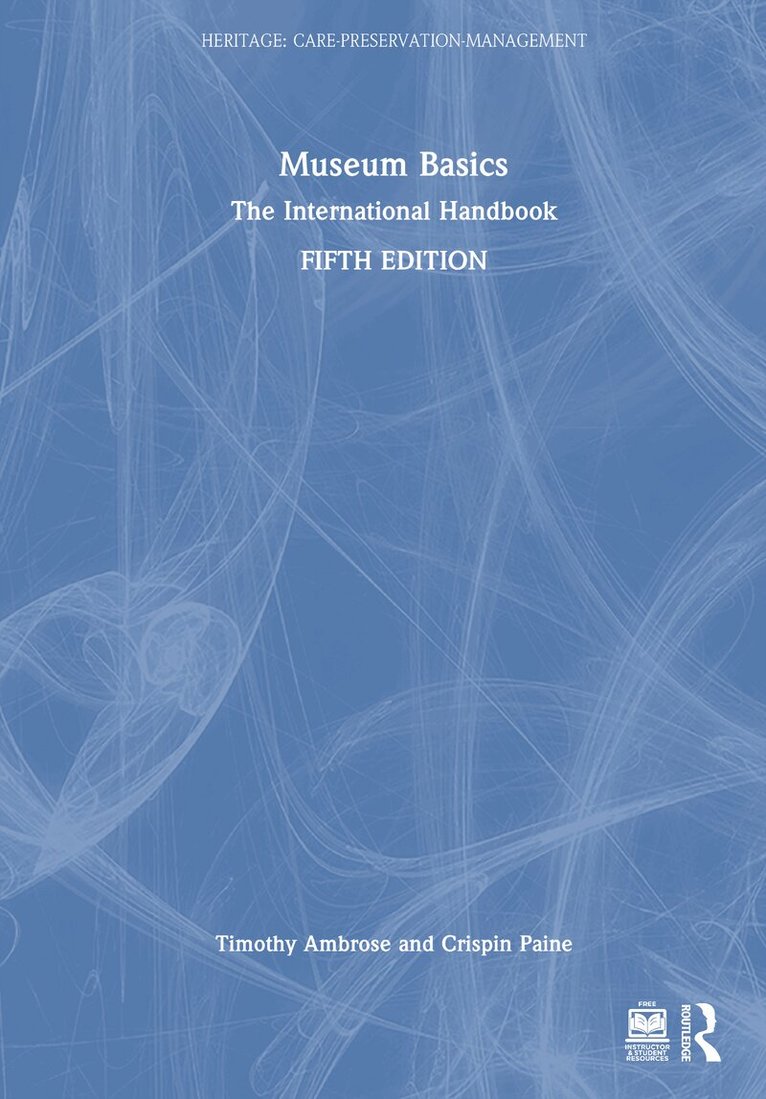
    Museum Basics

    The International Handbook

    AvTimothy Ambrose,Crispin Paine

    Inbunden, Engelska, 2025

    Del i serien Heritage: Care-Preservation-Management

    2 249 kr

    . Fri frakt över 249 kr.

    Fler format och utgåvor

    Häftad

    672 kr

    Häftad

    769 kr

    Inbunden

    Tillf. slut

    Beskrivning

    Museum Basics provides an accessible and comprehensive introduction to professional practice in museums, galleries and related heritage organisations.This new edition includes a number of international case studies from a diverse group of guest authors who work in a variety of museums around the world. Ambrose, Paine and their contributing authors respond to recent developments in the museum field and incorporate content on new technology, as well as political and social issues, such as decolonisation, climate change and social justice. The book also covers different approaches to museology and current methods in core areas, such as collections, exhibitions, policy, education and management. Using the same modular structure as previous editions, the book includes 130 units. A number of new units have been added, including material about museums and conflict, museums and communities, loans, maintaining displays and exhibitions and sensitive objects and human remains. This edition is supported by refreshed diagrams, an updated glossary and its own Instructor and Student Resources, which provide a wide range of additional material for readers.Museum Basics will be essential reading for students engaged in the study of museums, heritage, public history, culture, archaeology, anthropology and tourism, who are learning to critically examine the ideas and ideals around museum culture. Staff and volunteers working in museums, galleries and other heritage and cultural institutions will be able to use the book to identify best practices for their daily work.

    Produktinformation

    • Utgivningsdatum:2025-07-16
    • Mått:290 x 30 x 220 mm
    • Vikt:1 435 g
    • Format:Inbunden
    • Språk:Engelska
    • Serie:Heritage: Care-Preservation-Management
    • Antal sidor:428
    • Upplaga:5
    • Förlag:Taylor & Francis Ltd
    • ISBN:9781032738994

    Utforska kategorier

    • Kulturvetenskap inom Samhälle och politik
    • Historia: särskilda händelser och ämnen inom Historia och arkeologi
    • Referensverk och tvärvetenskap inom Samhälle och politik

    Mer om författaren

    Timothy Ambrose is an international consultant working in the field of museums and cultural heritage. He is a Fellow of the Society of Antiquaries of London and a Fellow of the UK Museums Association. He has a particular interest in the role of museums in place-making and destination development and has published widely on museums and cultural heritage.Crispin Paine is a former curator and museum consultant, now an author and museum volunteer. He is a Visiting Lecturer at the Open University, a Fellow of the Society of Antiquaries of London and a Fellow of the UK Museums Association. He has particular interests in local community museums and the material culture of religion.

    Innehållsförteckning

    • AcknowledgementsForewordSection 1 Introduction to museumsUnit 1.1 About this handbookUnit 1.2 About museumsUnit 1.3 Types of museumsUnit 1.4 Making the case for museumsSection 2 The museum and its responsibilitiesUnit 2.1 Museums and sustainabilityUnit 2.2 Museums and social justiceUnit 2.3 Museums and theoryUnit 2.4 Museums and ethicsUnit 2.5 Museums and decolonisationUnit 2.6 The role of museums in climate justiceUnit 2.7 Museums and conflictSection 3 The museum and its usersUnit 3.1 Museums are for peopleUnit 3.2 Museums and their locationUnit 3.3 Understanding your market contextUnit 3.4 Museums and their communitiesUnit 3.5 Equality, diversity and inclusionUnit 3.6 Special audiences: museums and people with disabilities and special needsUnit 3.7 Developing new audiencesUnit 3.8 Working with Friends’ organisations and volunteer groupsUnit 3.9 Researchers as usersUnit 3.10 Marketing and promoting your museumUnit 3.11 Public relations and the mediaSection 4 The museum and its servicesUnit 4.1 The museum visitUnit 4.2 Museum websitesUnit 4.3 Information servicesUnit 4.4 Facilities for visitorsUnit 4.5 Access and accessibilityUnit 4.6 Providing services: shops and sales pointsUnit 4.7 Providing services: food and drinkUnit 4.8 Providing facilities for hireUnit 4.9 Museum publicationsUnit 4.10 Social media and museumsSection 5 Learning in the museumUnit 5.1 Engagement and participationUnit 5.2 Learning in museumsUnit 5.3 Learning inside the museumUnit 5.4 Learning beyond the museumUnit 5.5 Learning resourcesUnit 5.6 Events and activities: creating programmesUnit 5.7 Learning partnershipsUnit 5.8 Evaluating learning programmesSection 6 Presenting and interpreting collectionsUnit 6.1 Introducing interpretationUnit 6.2 Planning new displays and exhibitionsUnit 6.3 Research for displays and exhibitionsUnit 6.4 Briefing a designerUnit 6.5 Display and exhibition design and productionUnit 6.6 Writing textUnit 6.7 Presentation techniques: graphicsUnit 6.8 Presentation techniques: three-dimensionalUnit 6.9 Presentation techniques: audio-visualUnit 6.10 Presentation techniques: interactivesUnit 6.11 Presentation techniques: replicas and reconstructionsUnit 6.12 Presentation techniques: using peopleUnit 6.13 Digital mediaUnit 6.14 Museum lightingUnit 6.15 Museum showcasesUnit 6.16 Evaluating displays and exhibitionsUnit 6.17 Maintaining displays and exhibitionsSection 7 Presenting and interpreting collections: collecting and collections developmentUnit 7.1 Types of collectionsUnit 7.2 Policies for collectingUnit 7.3 Sensitive objects and human remainsUnit 7.4 Policies for disposalUnit 7.5 Donations and purchasesUnit 7.6 LoansUnit 7.7 Collecting and field documentationUnit 7.8 Object researchUnit 7.9 Fieldwork and record centresUnit 7.10 Photography, video and 3D imagingUnit 7.11 Audio recording and oral historyUnit 7.12 The role of collections in researchUnit 7.13 Repatriation and ethical considerationsUnit 7.14 Museum archives and museum historySection 8 Managing and caring for collectionsUnit 8.1 Collections auditsUnit 8.2 Collections management plansUnit 8.3 Documentation systemsUnit 8.4 Conservation plansUnit 8.5 Preventive conservation: principlesUnit 8.6 Environmental monitoring and control: lightUnit 8.7 Environmental monitoring and control: humidity and temperatureUnit 8.8 Environmental monitoring and control: air pollution/pest and insect attackUnit 8.9 Materials testingUnit 8.10 Health hazards in collectionsUnit 8.11 Collections storage: principlesUnit 8.12 Collections storage: practiceUnit 8.13 Handling, packing and moving collectionsUnit 8.14 Remedial conservation: principlesUnit 8.15 Remedial conservation: practiceUnit 8.16 Disaster planningUnit 8.17 InsuranceUnit 8.18 Collections security: physical and electronicUnit 8.19 Collections security: systems and proceduresUnit 8.20 CopyrightSection 9 The museum and its buildingsUnit 9.1 Museums and their physical settingUnit 9.2 Museum buildings: form and functionUnit 9.3 Options analysis and feasibility assessmentUnit 9.4 Working with architectsUnit 9.5 Museum buildings: planning for accessUnit 9.6 Orientation and signage Unit 9.7 Atmosphere, pace and flow Unit 9.8 Museum buildings: physical securityUnit 9.9 Museum buildings: sustainabilityUnit 9.10 Museum buildings: management and maintenanceUnit 9.11 Moving the museumSection 10 The museum and its governance and managementUnit 10.1 Legal status, governance and management structures Unit 10.2 Working with othersUnit 10.3 NetworkingUnit 10.4 Policy development and management planningUnit 10.5 Developing a forward planUnit 10.6 Measuring performance in museumsUnit 10.7 Evaluating the museum’s successUnit 10.8 Project managementUnit 10.9 Financial managementUnit 10.10 Sources of incomeUnit 10.11 FundraisingUnit 10.12 Museum closureSection 11 The museum and its staffingUnit 11.1 Staff structuresUnit 11.2 Volunteers in museumsUnit 11.3 Recruiting museum staffUnit 11.4 Conditions of serviceUnit 11.5 Performance standards for the individualUnit 11.6 Job appraisal and assessing performanceUnit 11.7 Staff training and professional developmentUnit 11.8 Management of changeUnit 11.9 Internal communicationsUnit 11.10 Using consultants and outsourcingUnit 11.11 Health and safetyUnit 11.12 Administrative proceduresUnit 11.13 Information technology and the museumUnit 11.14 Hybrid workingSection 12 Supporting resourcesUnit 12.1 Sources of information and supportUnit 12.2 Resources for museums on the InternetGlossarySelect bibliographyIndex