Inbunden, Engelska, 2025
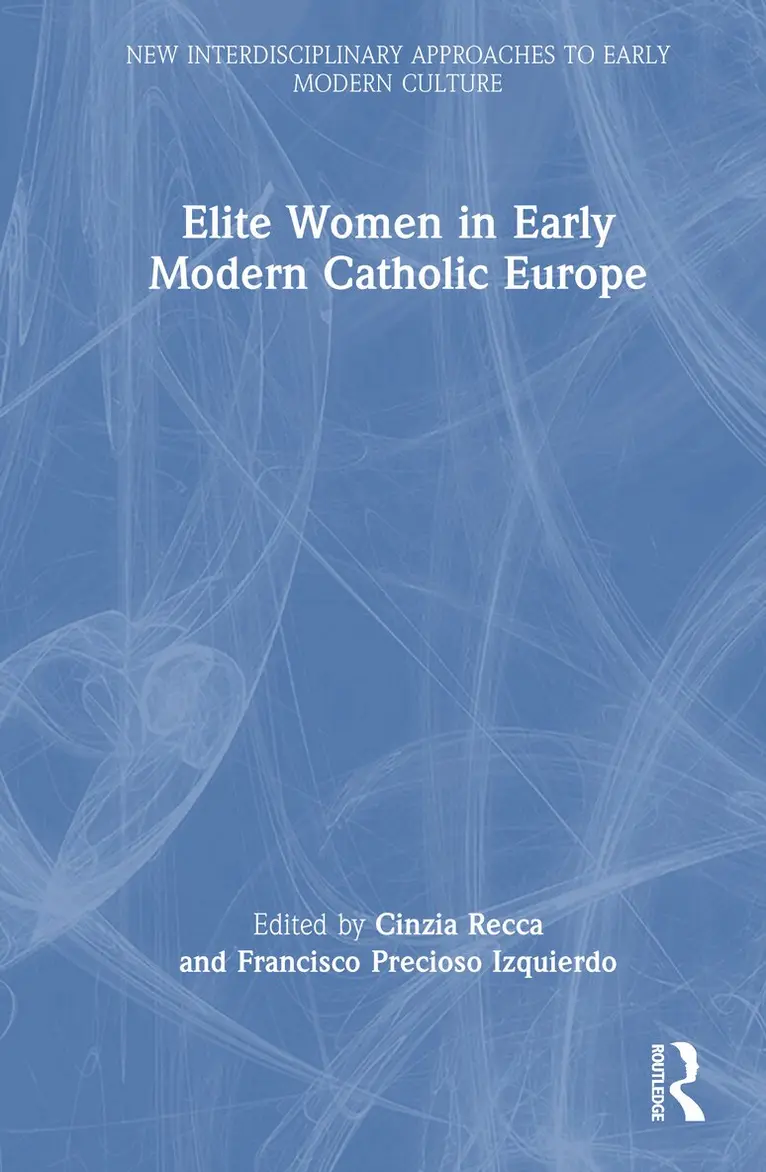
Elite Women in Early Modern Catholic Europe
Av Cinzia Recca, Francisco Precioso Izquierdo
Del i serien New Interdisciplinary Approaches to Early Modern Culture
2501 kr
Beställningsvara. Skickas inom 10-15 vardagar. Fri frakt över 249 kr.
Beskrivning
Produktinformation
- Utgivningsdatum: 2025-02-19
- Mått: 156 x 234 x 15 mm
- Vikt: 500 g
- Format: Inbunden
- Språk: Engelska
- Serie: New Interdisciplinary Approaches to Early Modern Culture
- Antal sidor: 176
- Förlag: Taylor & Francis Ltd
- ISBN: 9781032751702
Utforska kategorier
Mer om författaren
Cinzia Recca is reader in Early Modern History in the Department of Education at the University of Catania, Italy. Her main field of research includes the European Enlightenment, especially court studies and women's roles. In recent years, she has initiated a demanding research activity focused on the figure of Queen Maria Carolina of Naples through the analysis of unpublished sources (diary and correspondence). She is the author of The Diary of Maria Carolina of Naples, 1781–1785: New evidence of Queenship at Court (2017).Francisco Precioso Izquierdo is reader in Modern History at the University of Murcia, Spain. His field of research integrates the analysis of the noble elites of the Hispanic world at the end of the seventeenth century from a family, political, and cultural perspective. In recent years, his research has been oriented toward the study of the idea of nobility in Spanish society in the eighteenth century. He is the author of Melchor Macanaz. La derrota de un “héroe”. Poder político y movilidad familiar en la España Moderna (2017).
Recensioner i media
This collection comprises 10 chapters by scholars outside the Anglophone world, focusing on the actions of elite women in the transformation and preservation of social structures in Catholic Western Europe, including Spain, Italy, and France, from the mid-16th to the mid-19th century. Princesses, queens and future queens, wealthy aristocrats, and other high-ranking women arranged matrimonial alliances, created new lineages and then wrote about them, established charitable associations that also funded luxuries for themselves, established familial and friendship networks that stretched across political boundaries, wrote wills that determined the destiny of family assets and letters that sought to determine this, and trained their daughters and other younger family members to continue in their footsteps. These were women born into power and wealth, so it is unsurprising that, as the editors note, “women’s action in the social, political, or religious world is usually aimed at maintaining the status quo” (p. 7). Still, the range of their actions is surprising, particularly for those who might still think of Catholic Europe as offering fewer opportunities for women’s agency, influence, and power than Protestant areas. Recommended. Graduate students and faculty.M. E. Wiesner-Hanks, emerita, University of Wisconsin--Milwaukee CHOICE November 2025 Vol. 63 No. 3.
Betyg & recensioner
0 recensioner
Inga recensioner tillgängliga.