• Fri frakt över 249 kr
  • •
  • Snabba leveranser
  • •
  • Billiga böcker
Kundservice

Du är på sajten för privatpersoner.

Företag, bibliotek eller offentlig verksamhet?

Du handlar på classic.bokus.com, där alla dina funktioner finns intakta.
Till classic.bokus.com
Bokus logotyp. Gå till startsidan.
  • Erbjudanden
  • Nyheter
  • Student
  • Topplistor
  • Barn & ungdom
  • Bokus Play
  • E-böcker
  • Pocketböcker
  • Spel & pussel

10% rabatt på allt med kod NYSTART10 →

Sidfot

Mina sidor

    Hjälp

    • Kundservice
    • Vanliga frågor och svar
    • Frakt och leverans
    • Retur vid ångerrätt
    • Reklamera vara
    • Betalning
    • Köpvillkor
    • Allmänna villkor
    • Information om webbplatsens tillgänglighet

    Om Bokus

    • Om oss
    • Pressrum
    • För studenter
    • För företag
    • För bibliotek och offentlig verksamhet
    • För leverantörer
    • Hållbarhet

    Populärt

    • Aktuella erbjudanden
    • Presentkort
    • Studentlitteratur
    • Nya böcker
    • Topplistor
    • Signerade böcker
    • Engelska böcker

    Inspiration

    • Boktips
    • BookTok
    • Populära bokserier
    • Barnbokskaraktärer
    • Populära författare
    Logotyp för Bokus
    Följ oss på Facebook (extern länk)Följ oss på Instagram (extern länk)Följ oss på YouTube (extern länk)Följ oss på TikTok (extern länk)
    bokus @ CookiesAnpassa cookiesIntegritetspolicyKöpvillkor
    Till Citymail hemsida (extern länk)Till Budbee hemsida (extern länk)Till Postnord hemsida (extern länk)Till Schenker hemsida (extern länk)Till Early Bird hemsida (extern länk)Till Walleys hemsida (extern länk)
    1. Skönlitteratur
    2. Litteraturvetenskap
    3. Litteraturvetenskap

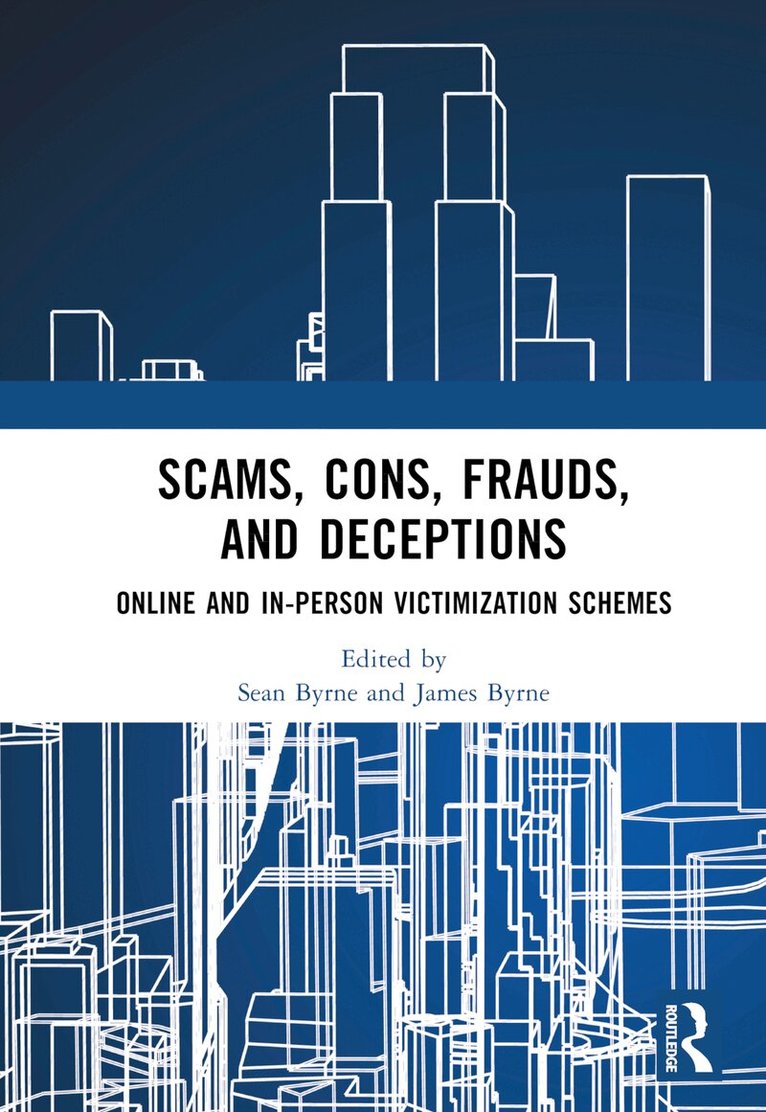
    Scams, Cons, Frauds, and Deceptions

    Online and In-person Victimization Schemes

    AvSean Byrne,James Byrne

    Häftad, Engelska, 2025

    783 kr

    Beställningsvara. Skickas inom 10-15 vardagar. Fri frakt över 249 kr.

    Beskrivning

    This unique volume presents cutting-edge research on the nature and extent of a wide range of scams, cons, frauds, and deceptive activities, including sextortion, the use of ransomware, phishing, identity theft, Ponzi schemes, online shopping fraud, gift card scams, and health care fraud targeting elderly victims. The contributions to this book raise and attempt to answer several intriguing questions:Why have governments in each global region failed to respond more aggressively to these crimes? What can/should the private sector and social media giants be doing?Can the current responses of both governments and the private sector be linked to the public’s ambivalence about how to respond to these forms of offending and victimization?Does a large segment of the public admire individuals who get involved in these activities, in large part due to the positive portrayal of scammers, fraudsters, and con artists in both literature and cinema?Or does the public’s view of the harm caused by these scams and cons vary, based on our view of who is victimized (e.g., individuals or corporations) and/or why they were chosen?Will governments – as they have done in the past – attempt to influence the public’s views by restricting access to books and movies that focus on the latest scams, cons, and frauds taking place on-line and in-person via book banning and other forms of censuring?And finally, should this discussion of the influence of books and cinema on the public’s views of scams, frauds, cons, and deception be broadened to include the government’s ongoing attempts to censure a wide range of books and films that may influence the public’s view of morality—and more recently, the public’s view of our government—due to their content?Timely and thought-provoking, this book will be a key resource for researchers, scholars, and practitioners in criminology and criminal justice, sociology, law, psychology, and social work, while also appealing to interdisciplinary researchers seeking insight into the relationship between positive portrayals of scammers, fraudsters, and con artists in literature and cinema, and the public’s perception of individuals who get involved in these activities. It was originally published as a special issue of Victims & Offenders.

    Produktinformation

    • Utgivningsdatum:2025-10-27
    • Mått:178 x 254 x 15 mm
    • Vikt:520 g
    • Format:Häftad
    • Språk:Engelska
    • Antal sidor:244
    • Förlag:Taylor & Francis Ltd
    • ISBN:9781032756486

    Utforska kategorier

    • Litteraturvetenskap inom Skönlitteratur
    • Samhälle och kultur inom Samhälle och politik
    • Sociologi inom Samhälle och politik

    Mer om författaren

    Sean Byrne is a graduate student at Boston University’s Graduate Program in English and American Literature, USA. His research centers around 19th and early 20th century novels.James M. Byrne is Professor Emeritus at the School of Criminology and Justice Studies at the University of Massachusetts Lowell, USA. He has written extensively on a range of topics related to technology-facilitated crime.

    Innehållsförteckning

    • Introduction: Scams, Cons, Frauds, and Deceptions 1. “If U Don’t Pay, they will Share the Pics”: Exploring Sextortion in the Context of Romance Fraud 2. Predicting Phishing Victimization: Comparing Prior Victimization, Cognitive, and Emotional Styles, and Vulnerable or Protective E-mail Strategies 3. Examining Personal and Altruistic Fear of Ransomware 4.“I Have Only Checked after the Event”: Consumer Approaches to Safe Online Shopping 5. Consumer Experiences with Gift Card Payment Scams: Causes, Consequences, and Implications for Consumer Protection 6. Non-Ideal Victims or Offenders? The Curious Case of Pyramid Scheme Participants 7. Hearing from the Forgotten Victims: A Content Analysis of the Consequences of Bernard L. Madoff’s Ponzi Scheme 8. Health Fraud against the Elderly in China: The Perspective of Vulnerability Manipulation 9. Decisions, Decisions: An Analysis of Identity Theft Victims’ Reporting to Police, Financial Institutions, and Credit Bureaus 10. How Does Immigration Status and Citizenship Affect Identity Theft Victimization Risk in the US? Insights from the 2018 National Crime Victimization Survey Identity Theft Supplement