• Fri frakt över 249 kr
  • •
  • Snabba leveranser
  • •
  • Billiga böcker
Kundservice

Du är på sajten för privatpersoner.

Företag, bibliotek eller offentlig verksamhet?

Du handlar på classic.bokus.com, där alla dina funktioner finns intakta.
Till classic.bokus.com
Bokus logotyp. Gå till startsidan.
  • Erbjudanden
  • Nyheter
  • Student
  • Topplistor
  • Barn & ungdom
  • Bokus Play
  • E-böcker
  • Pocketböcker
  • Spel & pussel

10% rabatt på allt med kod: NYSTART10 →

Sidfot

Mina sidor

    Hjälp

    • Kundservice
    • Vanliga frågor och svar
    • Frakt och leverans
    • Retur vid ångerrätt
    • Reklamera vara
    • Betalning
    • Köpvillkor
    • Allmänna villkor
    • Information om webbplatsens tillgänglighet

    Om Bokus

    • Om oss
    • Pressrum
    • För studenter
    • För företag
    • För bibliotek och offentlig verksamhet
    • För leverantörer
    • Hållbarhet

    Populärt

    • Aktuella erbjudanden
    • Presentkort
    • Studentlitteratur
    • Nya böcker
    • Topplistor
    • Signerade böcker
    • Engelska böcker

    Inspiration

    • Boktips
    • BookTok
    • Populära bokserier
    • Barnbokskaraktärer
    • Populära författare
    Logotyp för Bokus
    Följ oss på Facebook (extern länk)Följ oss på Instagram (extern länk)Följ oss på YouTube (extern länk)Följ oss på TikTok (extern länk)
    bokus @ CookiesAnpassa cookiesIntegritetspolicyKöpvillkor
    Till Citymail hemsida (extern länk)Till Budbee hemsida (extern länk)Till Postnord hemsida (extern länk)Till Schenker hemsida (extern länk)Till Early Bird hemsida (extern länk)Till Walleys hemsida (extern länk)
    1. Juridik
    2. Rättsvetenskap
    3. Kriminologi: juridiska aspekter

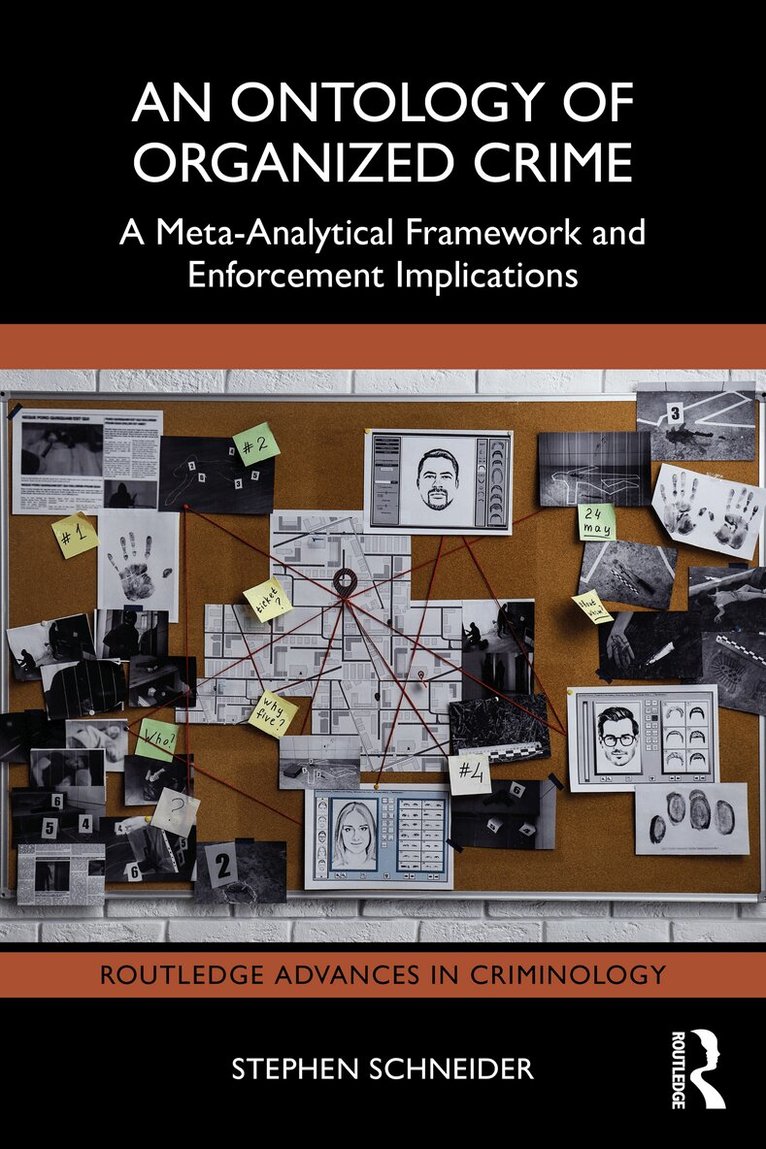
    Ontology of Organized Crime

    A Meta-Analytical Framework and Enforcement Implications

    AvStephen Schneider

    Häftad, Engelska, 2024

    Del i serien Routledge Advances in Criminology

    536 kr

    Beställningsvara. Skickas inom 10-15 vardagar. Fri frakt över 249 kr.

    Fler format och utgåvor

    Inbunden

    2 227 kr

    E-bok

    688 kr

    E-bok

    690 kr

    Beskrivning

    One of the most elusive pursuits in the study of organized crime is developing a definition, description, or conceptual model that captures its complexity, diversity, and ever-changing nature. This book takes a comprehensive approach to unraveling the intricacies and variations of organized crime, providing a detailed account of its many attributes. Based on a review of the theoretical literature, the author has created a holistic typology essential to understanding organized crime. The typology comprises 28 attributes divided into five thematic categories: associational (the relationship among the offenders that leads to some discernible structure), commercial (revenue-generating crimes), operational (support functions and expenditures), institutional (factors that sustain a criminal association and activities over time), and cultural/behavioral (the norms, values, and codes of organized crime and how they affect the actions of offenders). These categories are not simply used to classify the different attributes; each one represents a structural pillar of an organized criminal association. As a meta-analytical framework, the typology is the first to incorporate the foremost ways in which organized crime has been conceptualized in the literature: as an association of offenders, the crimes perpetrated, how organized crimes are carried out, and as a form of underworld governance. The book also adapts the static typology into a flexible and testable conceptual model that recognizes the many variations among organized criminal associations, and which can be used to determine when a group of offenders constitutes organized crime. Besides their theoretical and empirical purposes, the typology and conceptual model have been constructed as applied frameworks for informing strategic enforcement (setting priorities), tactical enforcement (targeting and denigrating the structural pillars of an organized criminal association), and policy purposes (as a basis for a comprehensive multi-sectoral control plan).This book is invaluable for students and scholars studying organized crime as well as criminal justice professionals looking for guidance on enforcement strategies and public policies.

    Produktinformation

    • Utgivningsdatum:2024-11-29
    • Mått:152 x 229 x 16 mm
    • Vikt:413 g
    • Format:Häftad
    • Språk:Engelska
    • Serie:Routledge Advances in Criminology
    • Antal sidor:292
    • Förlag:Taylor & Francis Ltd
    • ISBN:9781032780139

    Utforska kategorier

    • Kriminologi: juridiska aspekter inom Juridik
    • Socialpsykologi och gruppsykologi inom Psykologi och pedagogik
    • Organiserad brottslighet inom Samhälle och politik

    Mer om författaren

    Stephen Schneider is a professor of criminology at Saint Mary's University in Halifax, Canada. He is considered Canada’s foremost scholar on organized crime. In this context, he has worked as a researcher, writer, educator, criminal intelligence analyst, government policy specialist, and consultant. He is the author or co-author of five books, three of which are concerned with organized crime. This includes a textbook entitled Canadian Organized Crime (Canadian Scholars Press, Second Edition, 2022). He is also the author of the highly acclaimed, best-selling true crime book Iced: The Story of Organized Crime in Canada (HarperCollins, Second Edition, 2016). He has authored articles for peer-reviewed publications and conferences and research reports for government agencies. His research and consulting projects have included studies into money laundering, contraband smuggling, fraud, domestic marijuana production, organized criminal conspiracies at marine ports, human trafficking, organized robberies, corporate crime, and innovations in organized crime enforcement. He has also provided expert testimony in court cases for federal and provincial attorneys general in Canada.

    Innehållsförteckning

    • Introduction1 Typology Overview, Research Design, and Analytical Framework2 Literature Review: Definitions, Descriptions, Typologies, and Conceptual Models3 Associational Attributes4 Commercial Attributes5 Operational Attributes6 Institutional Attributes7 Cultural and Behavioral Attributes8 Adapting the Typology for Organized Crime Enforcement9 Redeveloping the Typology as a Conceptual Model for Research and Applied Purposes Conclusion