• Fri frakt över 249 kr
  • •
  • Snabba leveranser
  • •
  • Billiga böcker
Kundservice

Du är på sajten för privatpersoner.

Företag, bibliotek eller offentlig verksamhet?

Du handlar på classic.bokus.com, där alla dina funktioner finns intakta.
Till classic.bokus.com
Bokus logotyp. Gå till startsidan.
  • Erbjudanden
  • Nyheter
  • Student
  • Topplistor
  • Barn & ungdom
  • Bokus Play
  • E-böcker
  • Pocketböcker
  • Spel & pussel

10% rabatt på allt med kod NYSTART10 →

Sidfot

Mina sidor

    Hjälp

    • Kundservice
    • Vanliga frågor och svar
    • Frakt och leverans
    • Retur vid ångerrätt
    • Reklamera vara
    • Betalning
    • Köpvillkor
    • Allmänna villkor
    • Information om webbplatsens tillgänglighet

    Om Bokus

    • Om oss
    • Pressrum
    • För studenter
    • För företag
    • För bibliotek och offentlig verksamhet
    • För leverantörer
    • Hållbarhet

    Populärt

    • Aktuella erbjudanden
    • Presentkort
    • Studentlitteratur
    • Nya böcker
    • Topplistor
    • Signerade böcker
    • Engelska böcker

    Inspiration

    • Boktips
    • BookTok
    • Populära bokserier
    • Barnbokskaraktärer
    • Populära författare
    Logotyp för Bokus
    Följ oss på Facebook (extern länk)Följ oss på Instagram (extern länk)Följ oss på YouTube (extern länk)Följ oss på TikTok (extern länk)
    bokus @ CookiesAnpassa cookiesIntegritetspolicyKöpvillkor
    Till Citymail hemsida (extern länk)Till Budbee hemsida (extern länk)Till Postnord hemsida (extern länk)Till Schenker hemsida (extern länk)Till Early Bird hemsida (extern länk)Till Walleys hemsida (extern länk)
    1. Naturvetenskap och teknik
    2. Geovetenskap
    3. Regional planering
    • Nyhet

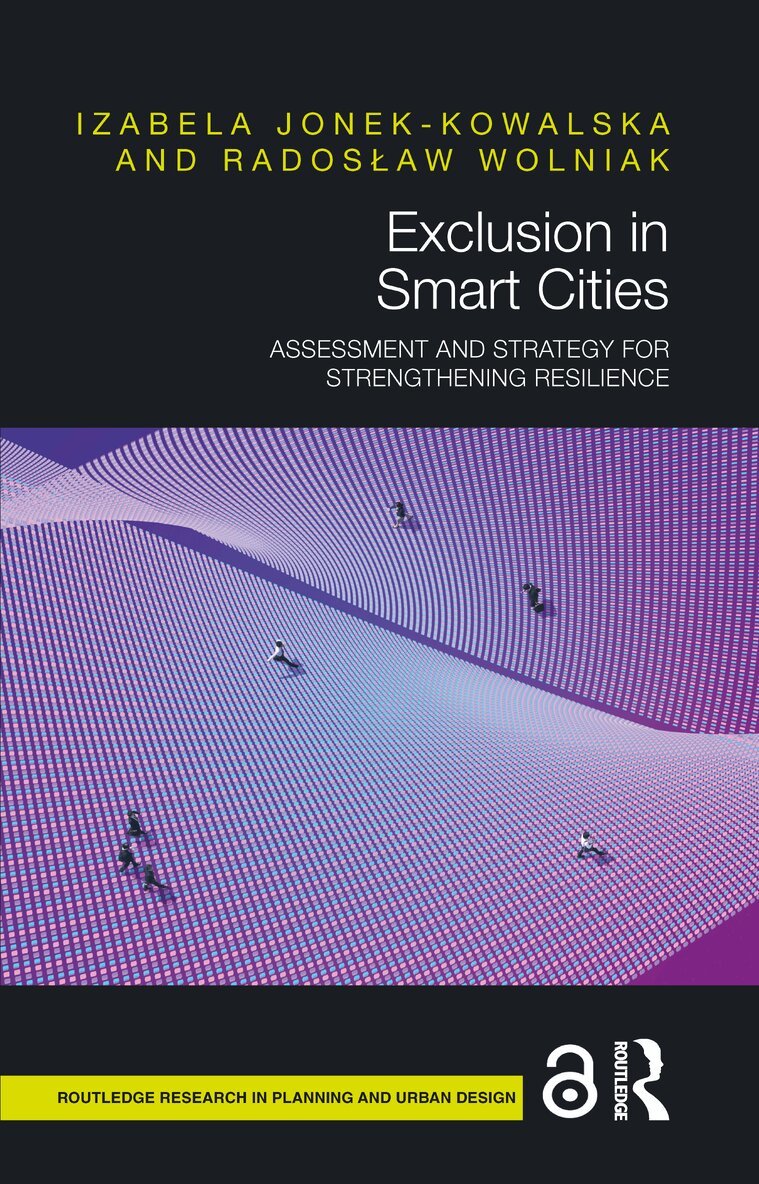
    Exclusion in Smart Cities

    Assessment and Strategy for Strengthening Resilience

    AvIzabela Jonek-Kowalska,Radosław Wolniak

    Häftad, Engelska, 2026

    Del i serien Routledge Research in Planning and Urban Design

    681 kr

    Beställningsvara. Skickas inom 10-15 vardagar. Fri frakt över 249 kr.

    Fler format och utgåvor

    Inbunden

    2 495 kr

    Beskrivning

    Smart Cities are fascinating, but they also have a dark side that little is said or written about. One issue is the possibility of generating various types of exclusion. For this reason, this book will develop principles for assessing the inclusiveness of Smart Cities and outline strategies for strengthening urban resistance to exclusion.The book will consider the essence, scale and types of exclusion and include analysis of inclusiveness in practice in the assessment and activities of Smart Cities. The research assesses Smart City literature, with particular emphasis on criticism of the Smart City concept and exclusion generated in smart urban structures, critically analyses the principles and indicators used in international inclusive Smart City rankings, highlights case studies on best practices for preventing exclusions in Smart Cities, and uses trend analysis to assess the scale and intensity of exclusion threats.This book can be used as a compendium of knowledge about exclusions in Smart Cities by both researchers and students, as well as all urban stakeholders, in particular city decision-makers.

    Produktinformation

    • Utgivningsdatum:2026-07-20
    • Mått:138 x 216 x 12 mm
    • Vikt:410 g
    • Format:Häftad
    • Språk:Engelska
    • Serie:Routledge Research in Planning and Urban Design
    • Antal sidor:224
    • Förlag:Taylor & Francis Ltd
    • ISBN:9781032814650

    Utforska kategorier

    • Regional planering inom Naturvetenskap och teknik
    • Diskriminering och rättvisa inom Samhälle och politik
    • Geografi inom Naturvetenskap och teknik

    Mer om författaren

    Izabela Jonek-Kowalska is Full Professor in the Department of Economics and Computer Sciences at Silesian University of Technology, Poland. For over 23 years she has been dealing with the economics of business entities, including finance and management of Smart Cities. Her research output includes over 400 publications with national and international publishers, as well as many undertakings and projects implemented in cooperation with the business environment. Izabela’s research interests include finance of business entities, Smart City risk management, and municipal and industrial economics.Radosław Wolniak is Full Professor in the Department of Economics and Informatics at Silesian University of Technology, Poland. For over 24 years he has been dealing with the issues of management, including Industry 4.0, Smart City, digitalization, and artificial intelligence. His scientific achievements include over 600 publications with national and international publishers, as well as many undertakings and projects implemented in cooperation with the business environment. Radosław’s research interests include management, Smart Cities, Industry 4.0, digitalization, innovativeness and artificial intelligence.

    Innehållsförteckning

    • List of figuresList of tablesIntroduction1. The concept of a Smart City in modern economies 1.1. Creation and assumptions of the Smart City concept1.2. Areas of Smart City development and evaluation 2. Bright and dark sides of Smart City 2.1. The role of Smart City in improving the quality of urban life 2.2. Criticism of the Smart City concept on the literature on the subject 3. Dimensions of exclusion in a Smart City3.1. The essence and causes of exclusion in a Smart City3.2. Research methodology of exclusion in a Smart City 4. The issue of exclusion in Smart City rankings 4.1. Characteristics of Smart City rankings 4.2. Assessment of areas and indicators of exclusion in selected Smart City rankings 5. Exclusivity and inclusiveness of Smart City in practice 5.1. Leaders and losers of inclusiveness in Smart City 5.2. Smart City inclusiveness best practices: case studies 6. Proposal for assessing the inclusiveness of Smart City 6.1. Areas and principles of measuring inclusiveness 6.2. Concept of the Smart City inclusiveness assessment 7. Long-term strategy for strengthening inclusiveness in the Smart City 7.1. Identification of future trends in exclusion in the Smart City 7.2. Strategy to strengthen resistance to exclusions in the Smart City 8. Inclusiveness versus exclusivity: discussion and conclusions 8.1. Discussion in the light of current research and practices 8.2. Summary, research limitations, and directions for further research ConclusionsIndex