• Fri frakt över 249 kr
  • •
  • Snabba leveranser
  • •
  • Billiga böcker
Kundservice

Du är på sajten för privatpersoner.

Företag, bibliotek eller offentlig verksamhet?

Du handlar på classic.bokus.com, där alla dina funktioner finns intakta.
Till classic.bokus.com
Bokus logotyp. Gå till startsidan.
  • Erbjudanden
  • Nyheter
  • Student
  • Topplistor
  • Barn & ungdom
  • Bokus Play
  • E-böcker
  • Pocketböcker
  • Spel & pussel

10% rabatt på allt med kod: NYSTART10 →

Sidfot

Mina sidor

    Hjälp

    • Kundservice
    • Vanliga frågor och svar
    • Frakt och leverans
    • Retur vid ångerrätt
    • Reklamera vara
    • Betalning
    • Köpvillkor
    • Allmänna villkor
    • Information om webbplatsens tillgänglighet

    Om Bokus

    • Om oss
    • Pressrum
    • För studenter
    • För företag
    • För bibliotek och offentlig verksamhet
    • För leverantörer
    • Hållbarhet

    Populärt

    • Aktuella erbjudanden
    • Presentkort
    • Studentlitteratur
    • Nya böcker
    • Topplistor
    • Signerade böcker
    • Engelska böcker

    Inspiration

    • Boktips
    • BookTok
    • Populära bokserier
    • Barnbokskaraktärer
    • Populära författare
    Logotyp för Bokus
    Följ oss på Facebook (extern länk)Följ oss på Instagram (extern länk)Följ oss på YouTube (extern länk)Följ oss på TikTok (extern länk)
    bokus @ CookiesAnpassa cookiesIntegritetspolicyKöpvillkor
    Till Citymail hemsida (extern länk)Till Budbee hemsida (extern länk)Till Postnord hemsida (extern länk)Till Schenker hemsida (extern länk)Till Early Bird hemsida (extern länk)Till Walleys hemsida (extern länk)
    1. Filosofi och religion
    2. Filosofi
    3. Filosofiska discipliner

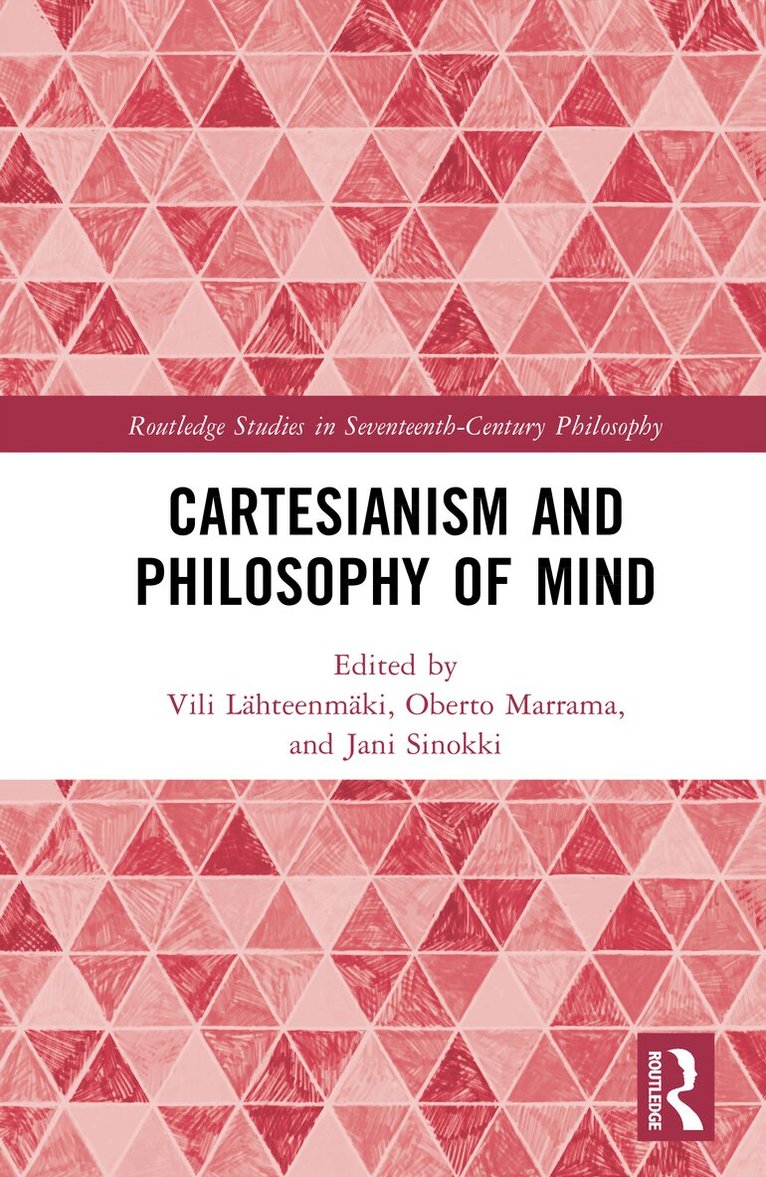
    Cartesianism and Philosophy of Mind

    AvVili Lähteenmäki,Oberto Marrama

    Inbunden, Engelska, 2025

    Del i serien Routledge Studies in Seventeenth-Century Philosophy

    2 421 kr

    Beställningsvara. Skickas inom 10-15 vardagar. Fri frakt över 249 kr.

    Beskrivning

    This book explores themes in the philosophy of mind as they emerge within the early modern Cartesian tradition. It brings together 13 contributions from international scholars to provide a fine‑grained account of how 17th‑century thinkers scrutinized and re‑interpreted Descartes’ doctrines about the nature and functions of the mind.Although it is well known that many of the challenges that philosophers confront today were already discussed by the Cartesians, historical Cartesianism remains underexplored and warrants deeper, careful study. There is much to be learned about how the Cartesian tradition understood phenomena such as consciousness, intentionality, embodiment, and moral agency—and the puzzles they raise. The chapters are divided into three thematic sections. Part 1 focuses on fundamental features of cognition, such as the nature of ideas and intentionality, as they were debated by early interlocutors of Descartes. Part 2 analyzes how Cartesian philosophers conceived of the relation between sensation and material objects, including the human body. Part 3 investigates the moral and social dimensions of the Cartesian mind, such as love and virtue.Cartesianism and Philosophy of Mind will be of interest to scholars and advanced students working on early modern philosophy and philosophy of mind.

    Produktinformation

    • Utgivningsdatum:2025-11-12
    • Mått:152 x 229 x 21 mm
    • Vikt:740 g
    • Format:Inbunden
    • Språk:Engelska
    • Serie:Routledge Studies in Seventeenth-Century Philosophy
    • Antal sidor:300
    • Förlag:Taylor & Francis Ltd
    • ISBN:9781032853079

    Utforska kategorier

    • Filosofiska discipliner inom Filosofi och religion

    Mer om författaren

    Vili Lähteenmäki is a Senior Lecturer at the University of Oulu and a Docent at the University of Jyväskylä. He mainly works on topics in the philosophy of mind and self in early modern philosophy. He has been a visiting researcher at Humboldt University of Berlin, the University of Queensland, and Harvard University. He is the director of the Academy of Finland project Thick Subjects: A Reconsideration of Early Modern Views of the Self (2020–25). In his published work, he has discussed early modern philosophy of mind widely, with a particular interest in early modern theories of consciousness.Oberto Marrama is a Marie Skłodowska‑Curie Fellow at Ca’ Foscari University of Venice and a Guest Research Fellow at the University of Oulu. His primary research area is early modern philosophy of mind. His publications have focused on the philosophies of Spinoza, Cavendish, Hobbes, and Descartes.Jani Sinokki is a postdoctoral researcher at the University of Turku. Sinokki works extensively in the philosophy of mind and language, with a focus on both historical and contemporary topics.

    Recensioner i media

    “This book offers an in-depth examination of the debates on mind in the Cartesian tradition, investigating the nature of ideas, consciousness, intentionality, sensory perception, as well as the social and moral dimensions of the Cartesian mind. It is an invaluable resource for anyone interested in the richness and intricacies of Cartesian philosophy of mind.”Sandrine Roux, University of Quebec in Montreal, Canada

    Innehållsförteckning

    • Introduction Part 1: Mind and Intentionality 1. Modernizing the Mind 2. Representation and Objective Reality 3. The Way of Ideas: Robert Desgabets’s Logical Turn of 1671 4. Early Modern Reflection and Late Scholasticism: Continuity or Split? 5. Consciousness and the Cogito: The Huet–Régis Controversy Part 2: Bodies and Perception 6. Signs Established by Nature: The System of Representation in Cartesian Sensory Ideas 7. Cordemoy and the Cartesian Analogy Between Language and Perception 8. Descartes, Arnauld, and Elisabeth on Thought’s Dependence on the Body 9. La force qu’a l’ame de mouvoir le corps: The Complicated Case of Louis de La Forge Part 3: Mind and Sociality 10. “Very Little Reason”: Stupid Minds in Descartes and Cartesianism 11. Malebranche on What We Owe to Each Other 12. The Cogito and the Social Dimension of Self-Knowledge: Claude Buffier 13. Astell as Cartesian: A Cautionary Tale